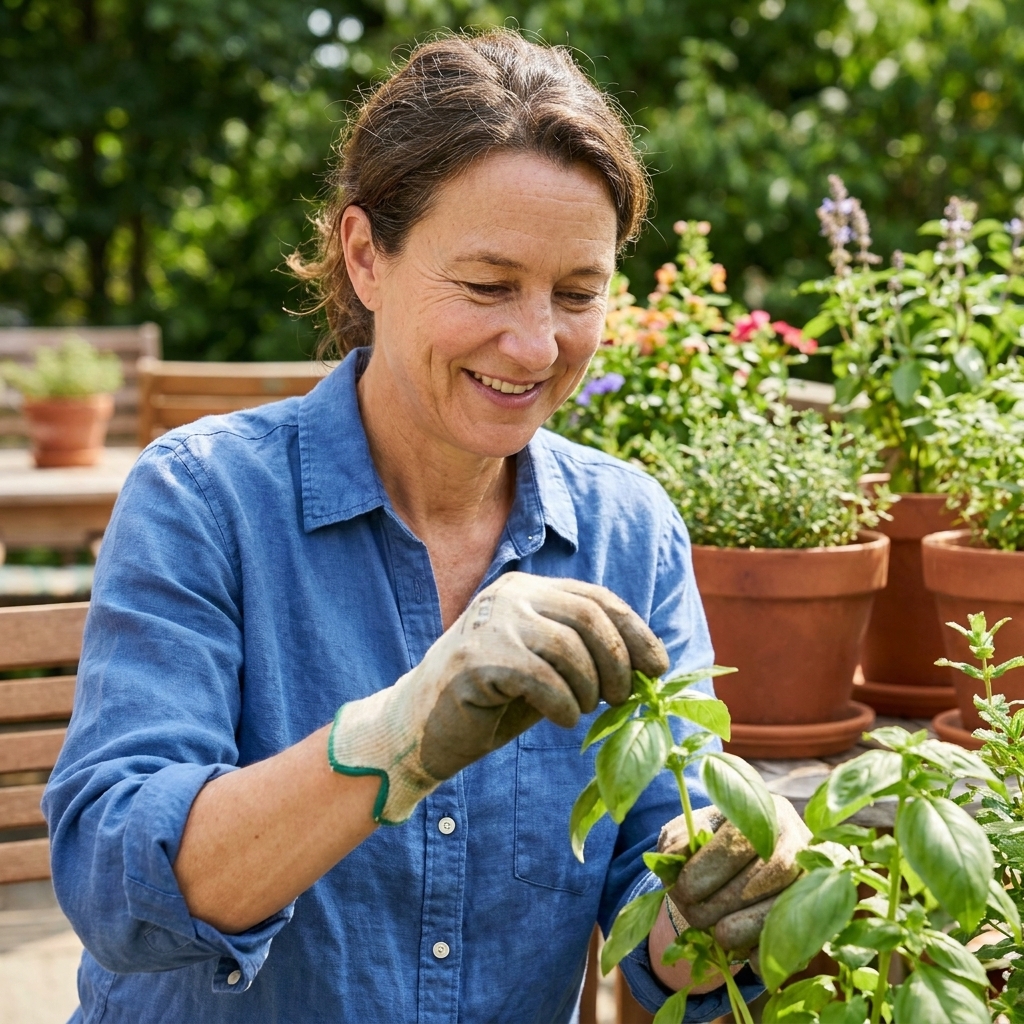
Herbs are generous plants, but flavor is a little bit shy. Cut at the wrong moment and your basil tastes like green water. Cut at the right moment and your whole kitchen smells like summer. The difference is mostly timing.
Below is the harvesting rhythm I use in my own beds and windowsill pots: the best time of day, the best stage of growth, and the small handling details that keep those aromatic compounds where they belong, in your leaves.
Why timing matters for herb flavor
Much of what we experience as “flavor” in herbs is aroma, and that aroma comes largely from volatile compounds (often called essential oils). Herbs also have non-volatile flavors, like bitterness, sweetness, and the oniony bite in chives, but aroma does a lot of the heavy lifting.
Those volatile compounds rise and fall with the plant’s daily cycle and its stage of growth. Timing helps you catch them before they drift away.
- Heat and sun increase volatilization, so aroma dissipates faster in the afternoon.
- Flowering redirects the plant’s energy, often changing taste and texture.
- Wet leaves are easier to scuff and bruise while you handle them, and extra moisture slows drying and invites spoilage in storage.
In other words, harvest is not just “when you have time.” It is part of preserving.
Best time of day to harvest herbs
Late morning is a practical sweet spot
If I could only give one rule, it would be this: harvest in late morning, after the dew has dried but before the day gets hot.
This is a rule of thumb, not a universal law. Essential oil levels can peak at slightly different times depending on the herb, weather, and how hot your afternoons get. But in real gardens, late morning reliably gives you dry leaves and strong aroma, which helps with storage and drying.
- Wait until leaves are dry. Wet leaves get damaged more easily and can mold faster when stored or dried.
- Aim before strong afternoon heat. In peak summer, I try to cut before midday.
- Pick a calm window if you can. It is simply easier to make clean cuts and keep your harvest tidy.
When early morning works
If your afternoons get very hot fast, early morning can be wonderful, as long as you let the plant dry off first. I often walk out with my coffee, check for dew, and give it a little time.
When evening is fine
Evening harvesting is fine if you are using herbs right away for dinner. For drying or longer storage, I still prefer late morning. Evening leaves can be a touch softer after a hot day and more prone to damage in a bag or container.
Best season and growth stage to harvest
Harvest before flowering (most leafy herbs)
For many leafy culinary herbs, the classic advice is true for a reason: harvest before the plant flowers. That is when leaves are usually at their most tender and strongly scented.
Once flower buds form, many herbs shift their chemistry. Some become more intense, some get bitter, and some get woody.
- Basil: Best before flower spikes open. Once flowering starts, pinch buds aggressively or harvest a larger portion and reset the plant.
- Cilantro: Best while it is still leafy. As soon as it starts to bolt, leaf flavor changes quickly.
- Dill: Leafy harvest is best before it focuses on seed heads, unless you are harvesting for dill seed.
A few useful exceptions
- Parsley: Not as urgent about flowering for day-to-day cooking. Harvest by taking the outer stems at the base, and let the center keep producing.
- Chives: Keep snipping as needed. For the best regrowth, cut leaves a couple inches above the soil instead of plucking individual blades.
- Rosemary and thyme: You can harvest through much of the season, but in cold-winter climates I avoid heavy cuts late in the season so tender new growth has time to harden off before frost.
Spring to early summer
In many climates, spring and early summer herbs taste especially fresh. Growth is fast, leaves are softer, and you can harvest often without stressing the plant.
Midsummer
Midsummer heat can make herbs grow quickly and also push them to flower. This is when I harvest a bit earlier in the day and a bit more often to keep plants in leafy mode.
Late summer to fall
As nights cool, many herbs slow down. This is the time for a more intentional harvest, especially if frost is on the horizon.
- Do a last big cut of basil, mint, and oregano before the first frost.
- Leave some growth on perennial herbs so they can store energy for next year.
Winter harvesting
If you grow herbs on a sunny windowsill or under a grow light, harvest timing is less about seasons and more about plant stress. Indoor herbs are slower growers, so take smaller snips and give them time to recover.
A quick harvest calendar
Different herbs peak at slightly different moments. Use this as a practical guide, then adjust based on what your plant is doing.
| Herb type | Best growth stage | Best time of day | Notes |
|---|---|---|---|
| Tender annuals (basil, cilantro, dill) | Leafy and vigorous, before flowering | Late morning | Harvest often to delay flowering |
| Woody perennials (rosemary, thyme, sage) | Newer growth, before heavy bloom | Late morning | Avoid cutting into old bare wood on rosemary |
| Soft perennials (mint, lemon balm, oregano) | Just before flowering | Late morning | Can handle bigger cuts, great for drying |
| Flower herbs (lavender, chamomile) | At early bloom | Late morning | Harvest when flowers are dry for best drying |
How to harvest without losing aroma
Use a clean, sharp cut
Sharp scissors or snips make a quick cut that heals faster. Crushing stems bruises leaves, and bruising is where aroma escapes first.
Harvest the right amount
- Most leafy herbs: You can often take up to about one third of the plant at a time during active growth, assuming it is vigorous and well-watered.
- Indoor herbs: Keep it lighter, more like a few sprigs at a time.
- Woody herbs: Focus on the soft green tips.
Pick stems, not single leaves
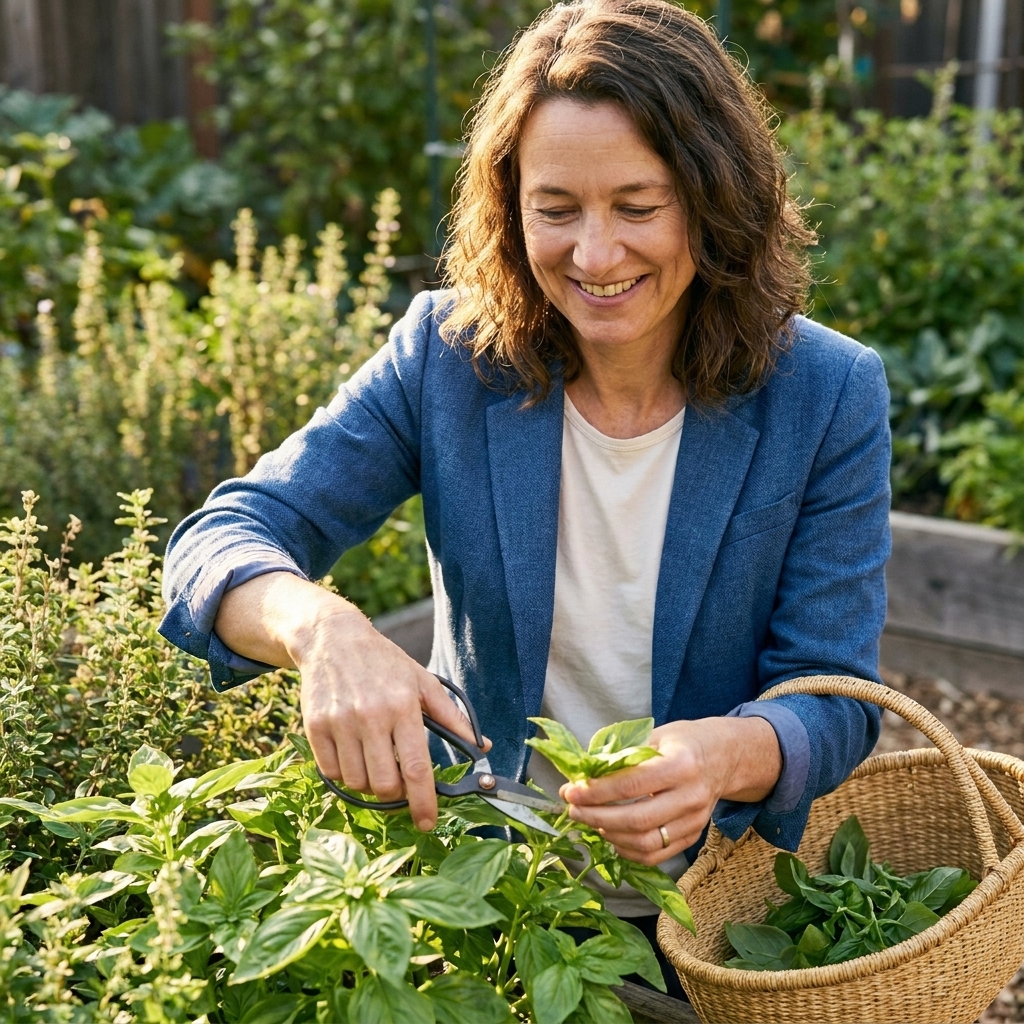
For basil, mint, oregano, and similar herbs, cutting a stem above a leaf pair encourages branching. You get a bushier plant and more future harvests.
Handle gently and keep herbs shaded
I bring a basket or bowl and keep it out of direct sun. A pile of herbs left baking on the patio table can lose aroma surprisingly fast.
Drying, freezing, and storage
Wash and dry without bruising
If your herbs need washing, be gentle. Swish them briefly in cool water, lift them out (do not soak them), then dry thoroughly. A salad spinner works well for sturdier herbs. For tender herbs, I pat and roll them in clean towels until they are truly dry to the touch. Extra water is the enemy of good storage.
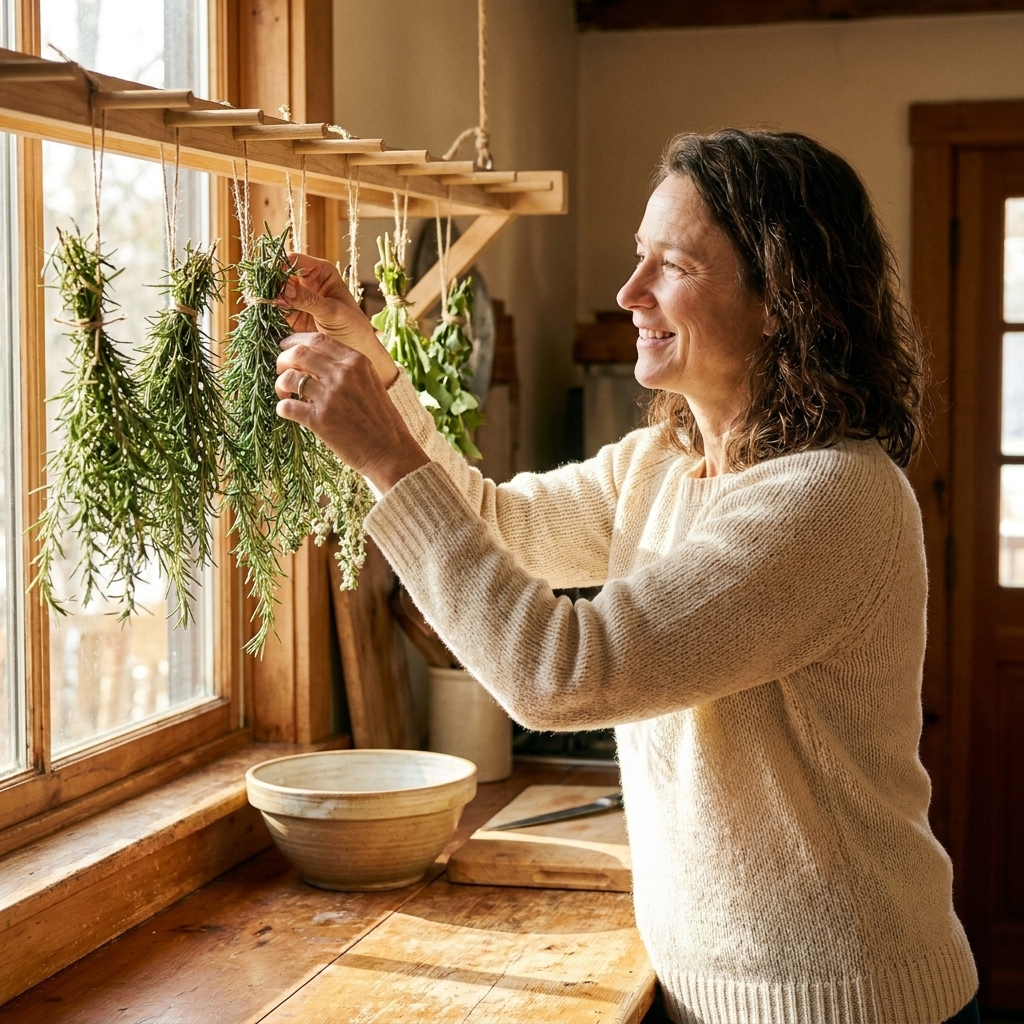
For drying
Drying works best when you harvest on a dry day and when leaves are fully dry to the touch.
- Skip harvest right after rain if you plan to air-dry.
- Harvest late morning for dry, aromatic material.
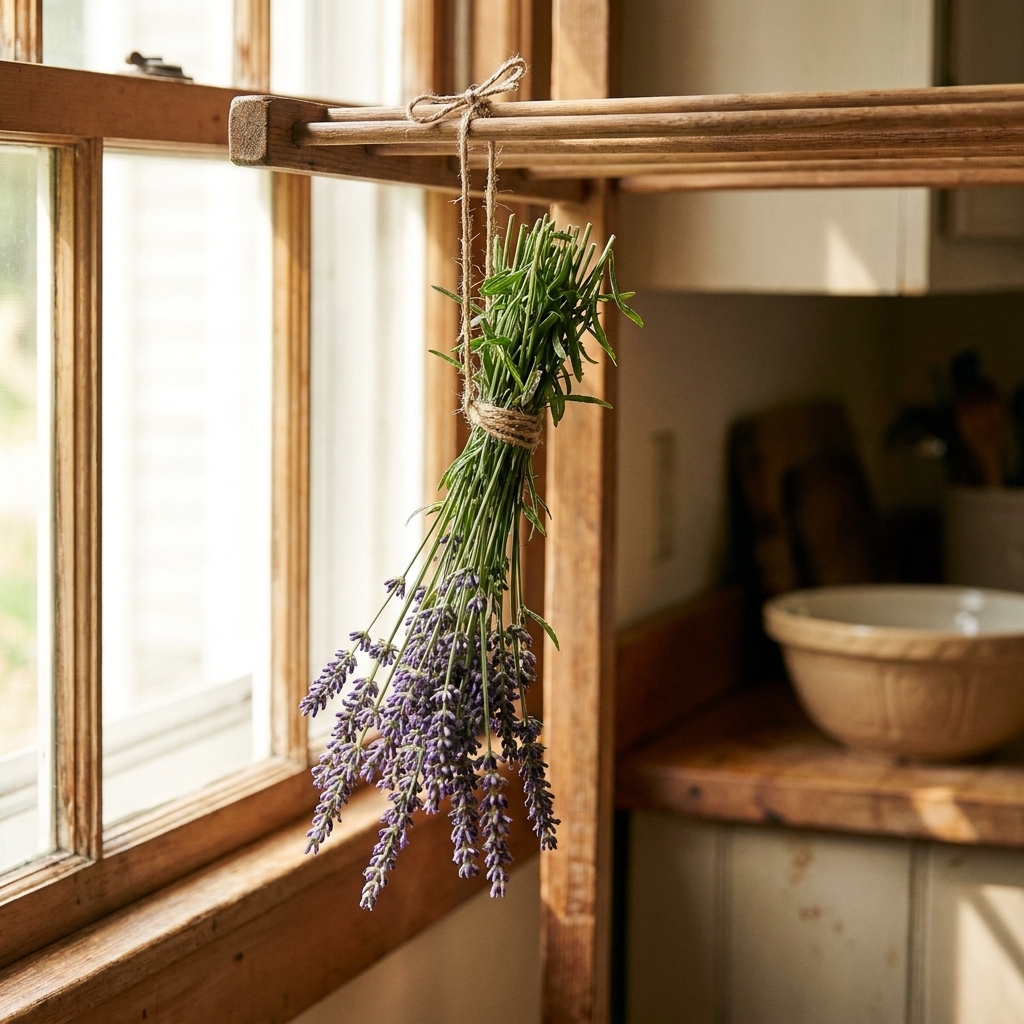
- Bundle loosely and hang in a dark, airy spot to protect aroma.
For freezing
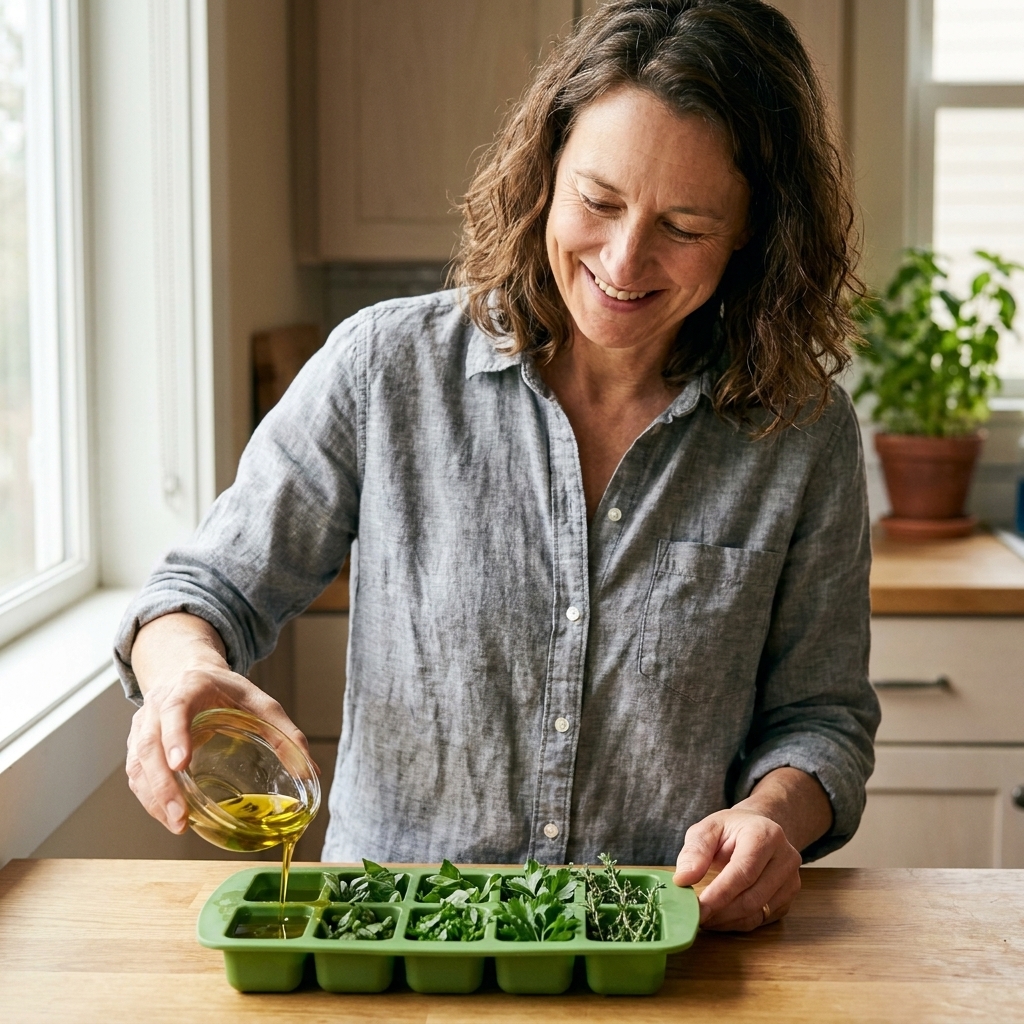
Freezing is forgiving and fantastic for basil, chives, dill, parsley, and cilantro.
- Harvest when aroma is strong, usually before flowering for the tender annuals.
- Dry well and freeze quickly. The longer herbs sit around, the more fragrance drifts away.
- Use oil or water cubes for chopped herbs if you want quick weeknight portions.
For short-term fridge storage
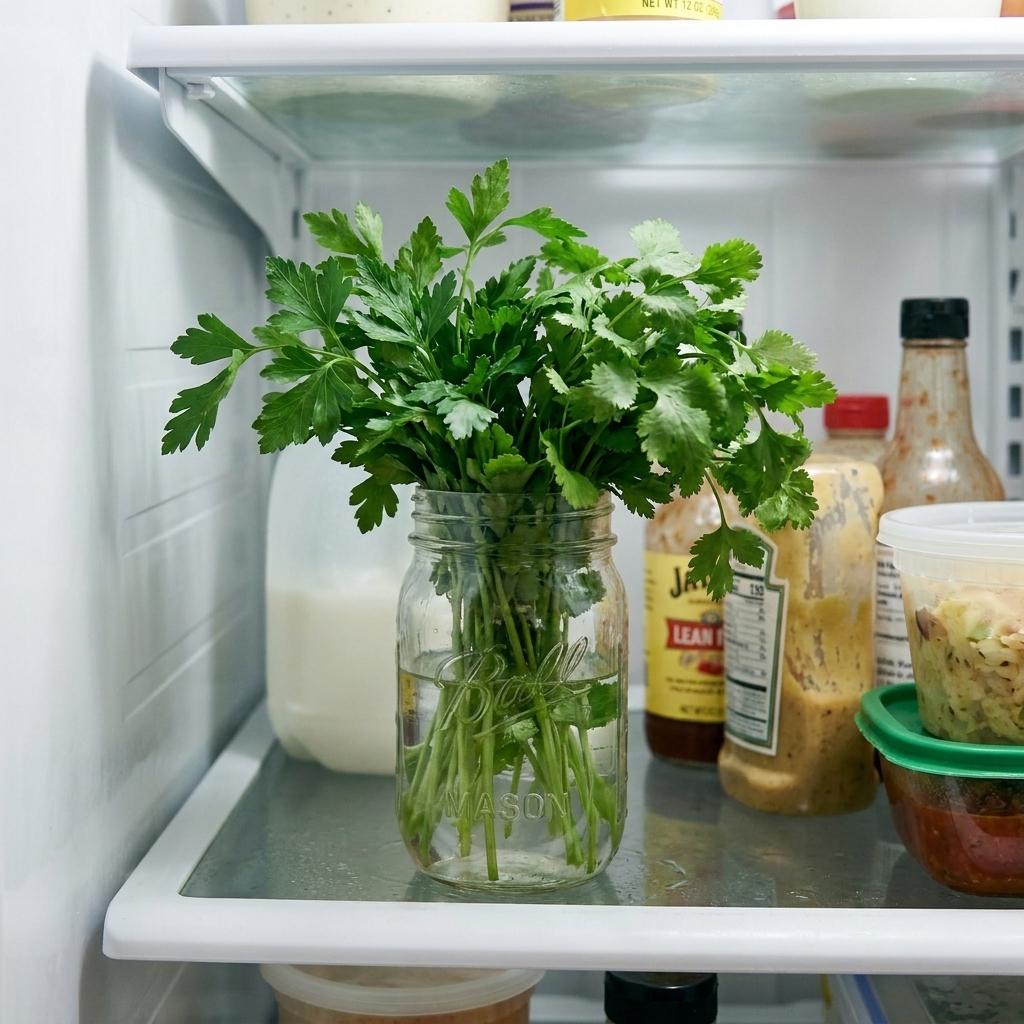
Treat tender herbs like flowers: trim stem ends, stand them in a jar with a little water, and loosely cover with a bag. For sturdier herbs like rosemary and thyme, wrap in a barely damp towel and store in a container.
A basil note: basil is famous for blackening in the refrigerator, especially if it gets cold. I usually store basil at room temperature like a bouquet (stems in water, loose bag over the top), and use it within a couple days.
Special cases
Harvesting herb flowers
For flower harvests, dryness matters even more than it does for leaves.
- Pick after dew dries.
- Choose early bloom for lavender if you want strong fragrance.
- Handle gently so petals do not brown or bruise.
Harvesting seeds
Let seed heads mature on the plant until they begin to dry and turn tan. Cut the whole head and finish drying in a paper bag so you catch any seeds that drop.
Harvesting roots
Root harvest is typically a late-season job, when the plant has had time to size up. Harvest on a day when the soil is not soggy, so roots lift cleanly and store better.
Troubleshooting weak flavor
You harvested after a hot afternoon
Try cutting earlier the next time and keep harvested herbs out of sun immediately.
The plant is flowering or bolting
Pinch buds early, harvest more frequently, and consider succession planting for herbs like cilantro and dill.
Your plant is stressed
Drought stress can make some herbs tougher or sharper tasting. Water consistently and harvest from healthy, plump growth.
You waited too long to use them
Herbs are most fragrant right after harvest. If you cannot use them within a day or two, dry or freeze them while they still smell strong in your hand.
The rules I actually follow
- Late morning, once leaves are dry.
- Before flowering for many leafy herbs, early bloom for flower harvests.
- Cut stems cleanly and harvest regularly to keep plants bushy.
- Preserve fast if you want pantry-level flavor.
If you have a go-to herb (or one that always seems to bolt), share it in the comments along with how you plan to use it. I read them, and it helps me cover the specific harvest timing questions that come up in real gardens.