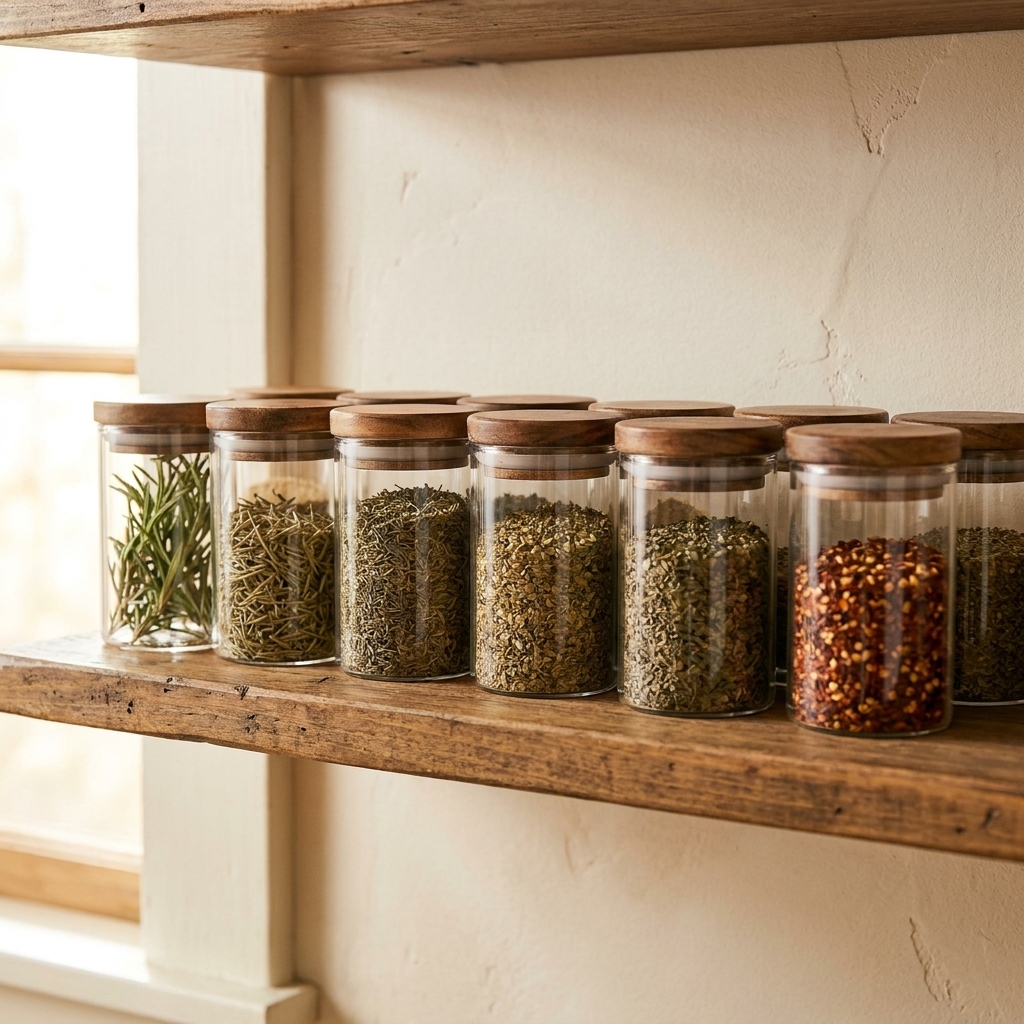
If you have ever bought a beautiful bunch of cilantro on Monday and found a sad, slippery mess by Thursday, you are not alone. Herbs are tender little things. They lose water fast, they hate being crushed, and once moisture gets trapped where it should not be, they turn slimy in a hurry.
Over the years, I have tried almost every fridge trick imaginable, usually after coming home from the garden with a basket of basil and nowhere to put it. The good news is this: with the right method, many herbs can stay crisp for anywhere from about a week to a few weeks. In ideal conditions, some last even longer. It is less about “the best container” and more about matching storage to the herb’s personality.
First, sort your herbs
Before you pick a storage method, take ten seconds to categorize what you have. This one step prevents most herb heartbreak.
- Tender, leafy herbs: cilantro, parsley, dill, mint, chives, tarragon
- Woody herbs: rosemary, thyme, oregano, sage, marjoram, savory
Tender herbs behave more like cut flowers. They like a little water and breathable protection. Woody herbs are sturdier, but they hate sitting in condensation. They do best wrapped and protected from drying out.
One big idea to keep in mind: most herbs like humidity, not wetness. You want them hydrated, not sealed up with puddles and condensation.
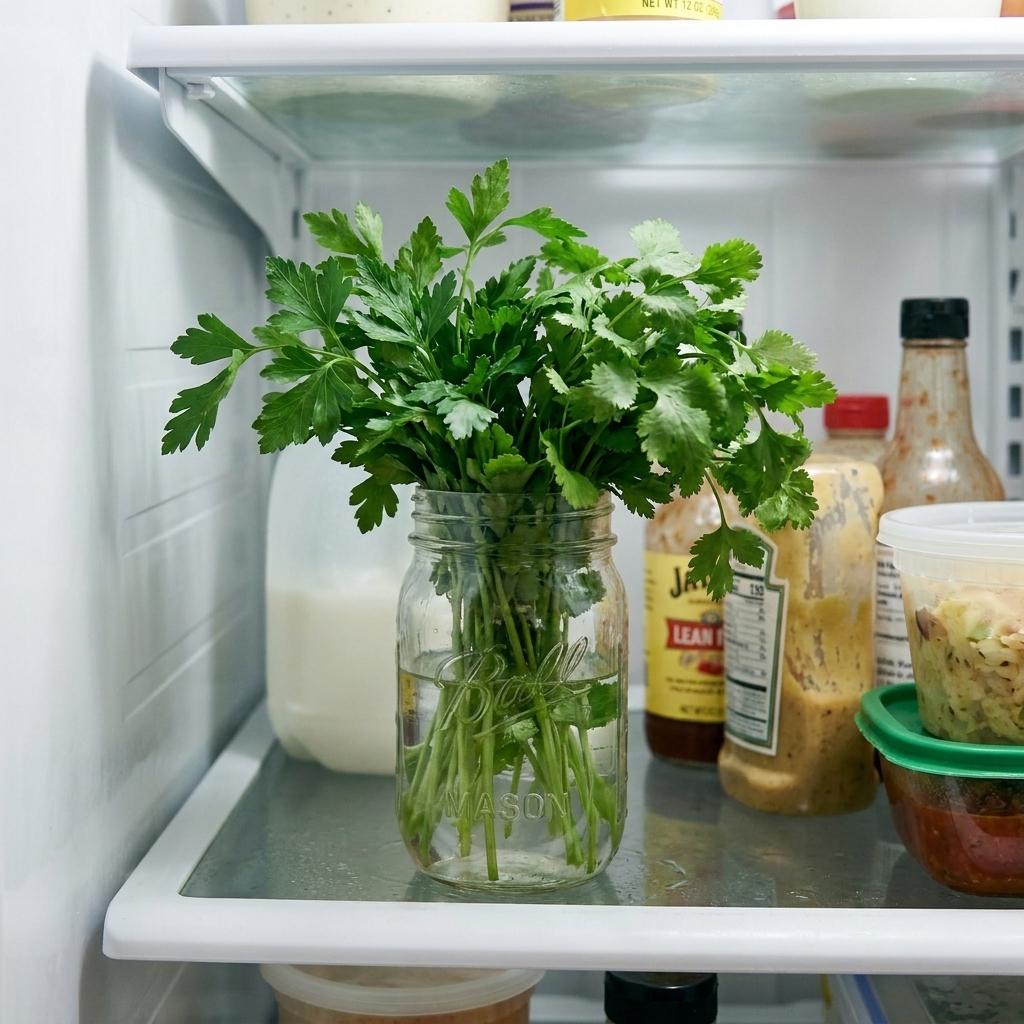
1) Jar bouquet
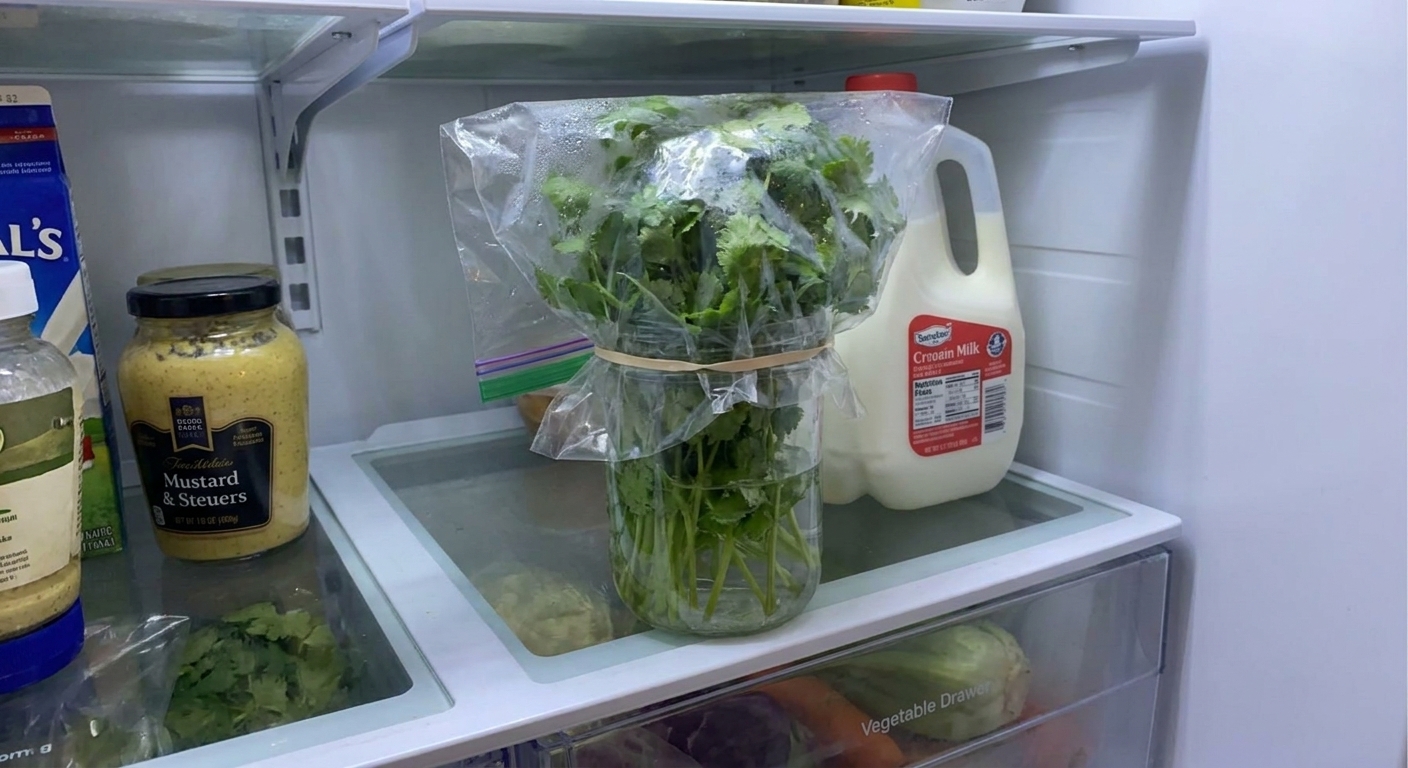
This is my go-to when I want herbs to stay perky and ready to snip. In good shape to start, they often last 10 to 21 days, sometimes longer for parsley, but it depends on how fresh they were when you got them and how steady your fridge runs.
How to do it
- Trim the stem ends just a little, like you would with flowers.
- Fill a mason jar or drinking glass with 1 to 2 inches of water.
- Stand the herbs upright in the jar.
- Loosely cover the tops with a produce bag or a large zip-top bag. Do not seal it tight. You want a little airflow.
- Store on a stable, colder shelf where it will not get crushed (a front shelf is great for visibility).
Two tiny details that matter
- Change the water every 2 to 3 days if you can. Cloudy water is the fast lane to slime.
- Remove any twist ties or tight bands that squeeze the stems together. Compression bruises herbs and speeds decay.
2) Damp towel roll
If you have ever tried to store basil like parsley, you may have watched it turn brown and spotty overnight. Basil is fussy about cold. Room-temperature storage is usually best, but if your kitchen is hot, your basil is very delicate, or you just need to make the fridge work, this method helps buffer basil from harsh, dry fridge air while avoiding puddles.
This technique is also wonderful for cilantro, parsley, and dill when you do not have jar space.
How to do it
- Shake off any grit. If the herbs are dirty, rinse quickly and dry very well.
- Lay the herbs in a single layer on a paper towel.
- Lightly mist or dampen the towel so it is humid, not wet. No drips.
- Roll the towel up gently like a loose sleeping bag.
- Slide the roll into a zip-top bag or lidded container. Close it most of the way, leaving about 1 to 2 inches unsealed for airflow.
- Store in the crisper drawer.
Why it works
You are creating a stable little microclimate. The towel holds humidity near the leaves, while the bag keeps the towel from drying out too fast. The key is slightly damp. Too wet equals slime.

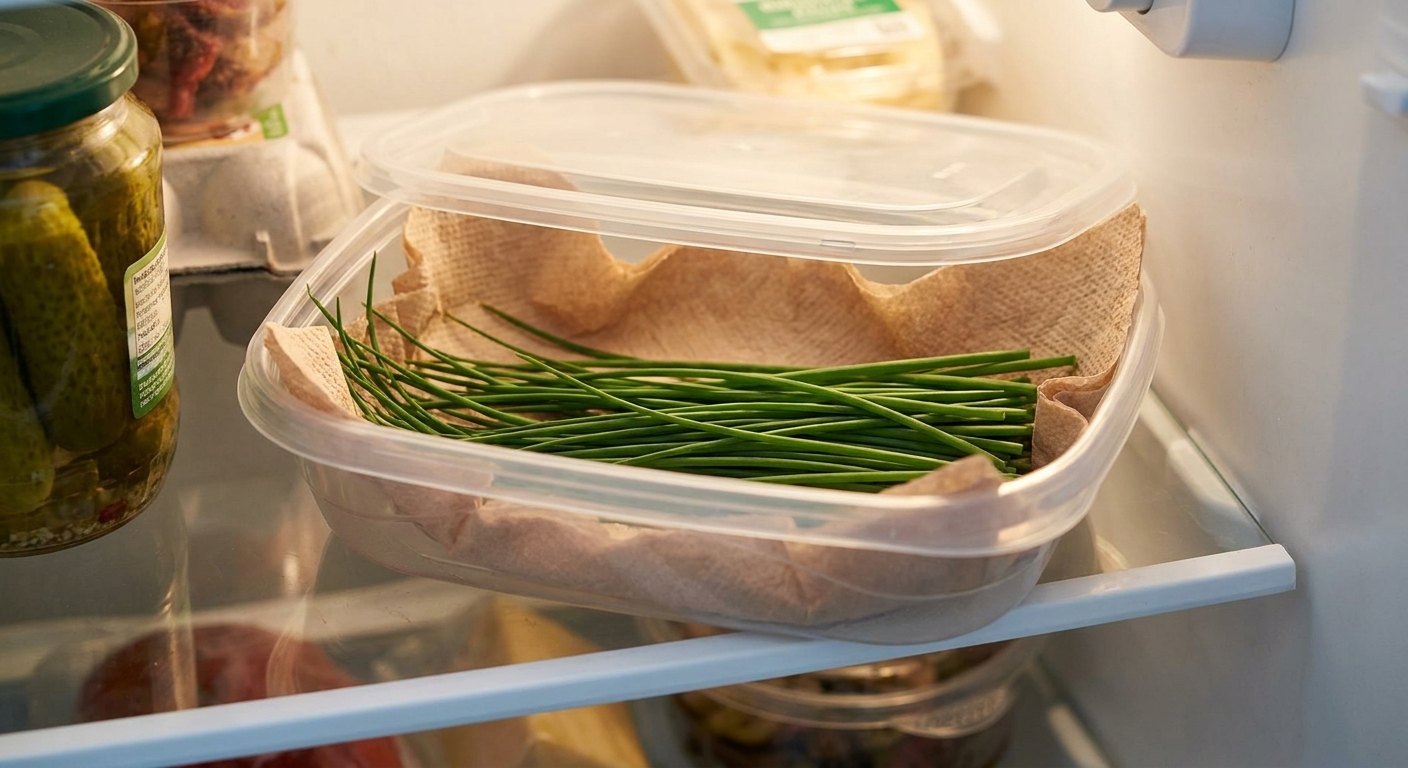
3) Breathable box
Some herbs get bruised easily, especially when they are short, thin, or already trimmed. A rigid container protects them from getting crushed by a carton of eggs or a leftover casserole.
How to do it
- Line a lidded container with a dry paper towel.
- Add herbs in a loose layer. If you have a lot, separate layers with another towel.
- Add a second towel on top, then close the lid.
- If you see condensation, crack the lid slightly or open it briefly to release excess humidity. Checking every 1 to 2 days is plenty for most people.
My favorite containers for this: a reusable produce box, a shallow glass storage dish, or a clean clamshell from salad greens.
4) Dry wrap for woody herbs
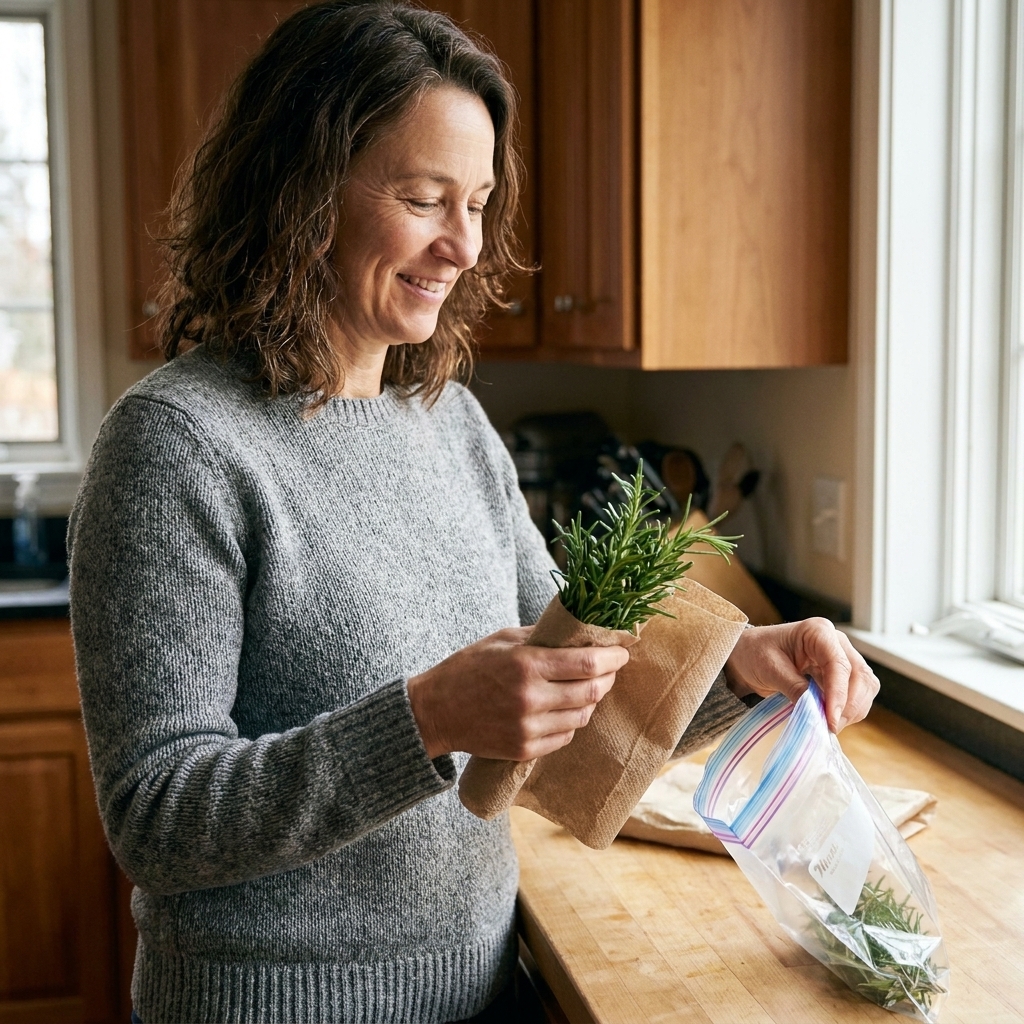
Woody herbs are sturdy, slow to wilt, and happiest when they are kept from drying out but not allowed to sit in trapped moisture. With a simple wrap, many woody herbs stay usable for 2 to 4 weeks in good conditions.
How to do it
- Make sure the herbs are dry. If you rinsed them, dry thoroughly with a towel and let them air-dry for a few minutes.
- Wrap the sprigs loosely in a dry paper towel.
- Place the bundle in a partially closed zip-top bag or a container with a little airflow.
- Store in the crisper drawer.
A quick note on thyme
Thyme is so small that it can hide condensation against its tiny leaves. Keeping the wrap dry and changing the towel if it feels damp makes a huge difference.
5) Prep and freeze
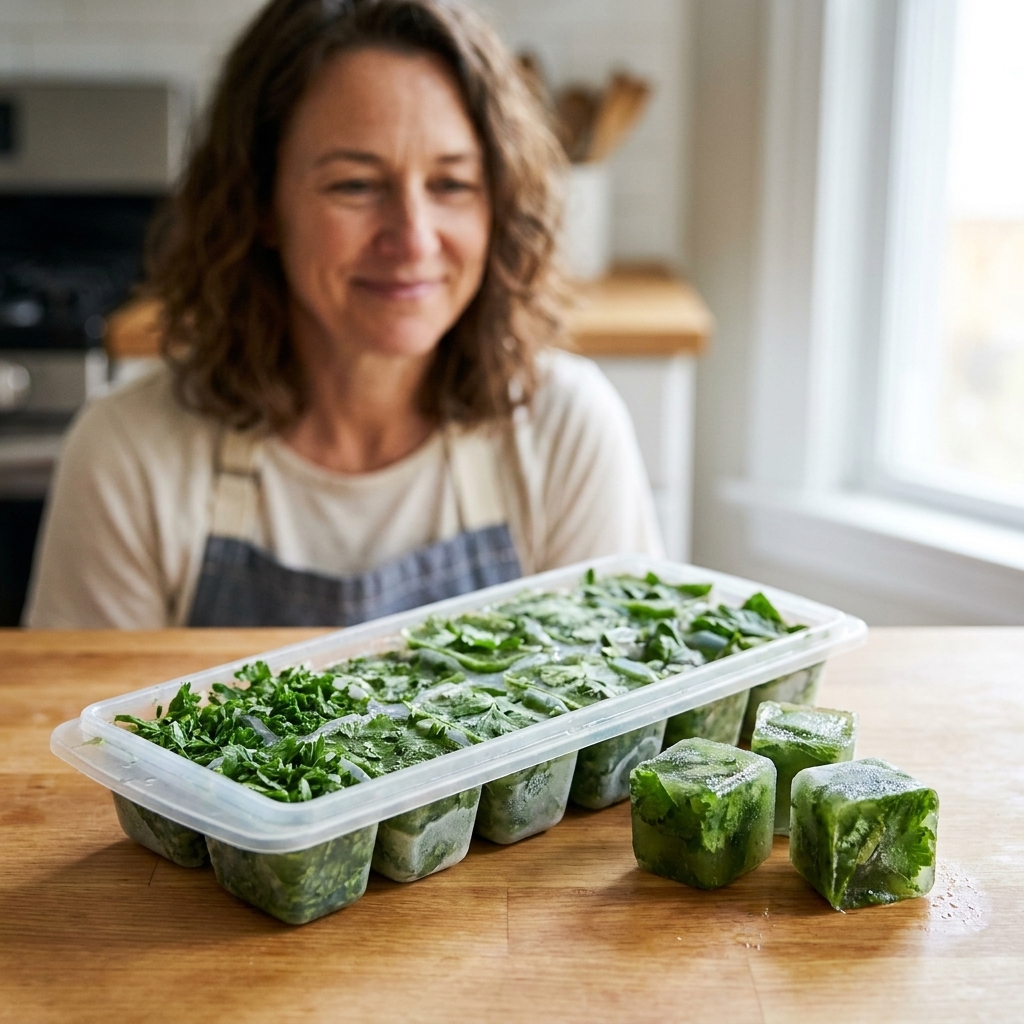
This one is not “crisp in the fridge” in the strictest sense, but it is the method I use when I know I will not cook with an herb fast enough. If your goal is weeks to months of ready-to-use flavor, freezing beats battling wilt every time.
Two easy freezing options
- Herb ice cubes: Chop herbs, pack into an ice cube tray, cover with olive oil or a little water or broth, then freeze. Pop cubes into a freezer bag once solid.
- Flash-freeze leaves: Pull leaves from stems, spread in a single layer on a baking sheet, freeze until firm, then store in a freezer bag. Great for dill, parsley, and chopped chives.
Best uses: soups, sauces, eggs, roasted vegetables, marinades. Frozen herbs lose crisp texture, but the aroma and taste can be surprisingly close to fresh.
No-slime rules
- Dry matters more than you think. If you rinse herbs, dry them very well before storing. Water left on leaves becomes mushy spots.
- Do not overcrowd. Crushed herbs bruise, and bruised herbs break down fast.
- Refresh the paper towel. If the towel feels damp or smells stale, swap it.
- Keep ripening fruit separate when possible. Ripe bananas and apples (and other ripening fruit) release ethylene, which can contribute to faster yellowing in some greens and herbs.
- Use the crisper drawer wisely. Too humid can cause slime; too dry can cause wilting. If your drawer has a humidity slider, keep it mid-range for most herbs.
Quick rescue
If your herbs are droopy but not slimy, you can often bring them back long enough to cook with.
Ice water soak
Best for: parsley, cilantro, mint
- Trim the stem ends.
- Soak herbs in a bowl of ice water for 5 to 10 minutes.
- Shake off water and dry gently, then store using the jar bouquet or damp towel method.
Skip this for basil. Basil tends to blacken with cold shock. For basil, trim the ends and try room-temperature water on the counter for a few hours instead.
Storage cheat sheet
| Herb | Best fridge method | Typical freshness |
|---|---|---|
| Cilantro | Jar bouquet | About 7 to 20 days |
| Parsley | Jar bouquet | About 10 to 21 days |
| Dill | Jar or damp towel roll | About 5 to 14 days |
| Mint | Jar bouquet | About 7 to 14 days |
| Basil | Damp towel roll (or counter bouquet) | About 3 to 10 days |
| Chives | Breathable box | About 7 to 14 days |
| Rosemary | Dry wrap | About 14 to 28 days |
| Thyme | Dry wrap | About 14 to 28 days |
| Oregano | Dry wrap | About 14 to 28 days |
| Sage | Dry wrap | About 10 to 21 days |
These ranges assume herbs start fairly fresh and your fridge is reasonably steady. If a bunch was already wilting at the store, you will get less time. If your herbs are straight from the garden and handled gently, you will usually get more.
Frequently asked questions
Should I wash herbs before storing them?
If your herbs are clean (especially if they are homegrown and you did not spray them with anything), I often wait to wash until I am ready to use them. If they are gritty or muddy, wash them right away and dry thoroughly. The biggest cause of fridge slime is storing wet leaves.
Why do my herbs turn black in the fridge?
Blackening usually comes from bruising, excess moisture, or cold sensitivity. Basil is the classic cold-sensitive herb. For other herbs, check that they are not being crushed and that your storage method is not trapping condensation.
Can I store herbs in an airtight container?
You can, but be careful. Airtight containers can trap humidity, which is great until it becomes condensation. For most herbs, a little breathing room helps. If you do use airtight storage, open the container occasionally and replace any damp towels.
What is the longest-lasting herb in the fridge?
Rosemary and thyme tend to last the longest with a dry wrap, often a few weeks. Parsley can also be impressively long-lived in a jar of water with a loose bag over the top.
When should I toss herbs?
Discard herbs that are slimy, smell off, or show mold. A little wilting is fixable. Slime and fuzz are not.
A final nudge
If you try one change this week, make it this: stop storing herbs in the grocery store plastic clamshell or bag exactly as-is. A two-minute reset, either the jar bouquet or a simple towel wrap, is usually the difference between “I forgot I bought this” and “I am still snipping it for dinner two weeks later.”