
Every summer, there is a moment when the basil is suddenly a shrub, the parsley is spilling over the edge of the bed, and I cannot possibly chop one more handful for tonight’s dinner. That is when my freezer becomes my little time capsule. Herb cubes are my favorite way to save fresh flavor for winter soups, quick weeknight sautés, and anything that starts with a warm pan and a little hope.
Freezing herbs in olive oil gives you instant sauté starters that melt right into the pan. Freezing herbs in water keeps the flavor bright and clean for brothy soups and sauces. I use both, depending on how I plan to cook the herb.

Why freeze herbs in cubes?
- Portion-sized: In many trays, one cube is roughly 1 tablespoon of chopped herbs once packed and topped with liquid.
- Less waste: You can freeze a handful at a time as you harvest.
- Faster cooking: Oil cubes go straight into a warm pan, no thawing required.
- Better flavor than dried for some herbs: Basil, cilantro, dill, and parsley often keep a fresher personality when frozen.
Best herbs for freezing
Most leafy herbs freeze beautifully in cubes. Woody herbs freeze too, but I use them a little differently.
Great for ice cube trays
- Basil
- Parsley (flat-leaf or curly)
- Cilantro
- Dill
- Chives
- Tarragon
- Mint (especially for drinks and desserts)
- Oregano and marjoram
Also works, with a tweak
- Rosemary, thyme, sage: Chop very finely, or strip leaves from stems first. These are strong, so smaller cubes or half-filled sections are handy.
If your herb is bruised, slimy, or already past its prime, compost it. Freezing preserves what you have, but it cannot rescue a tired leaf.
What you’ll need
- Fresh herbs
- An ice cube tray (silicone trays pop out the easiest)
- Knife and cutting board or kitchen scissors
- Measuring spoon or small scoop
- Olive oil and or water (or broth)
- Freezer bag or airtight container for storing cubes
- Marker for labeling
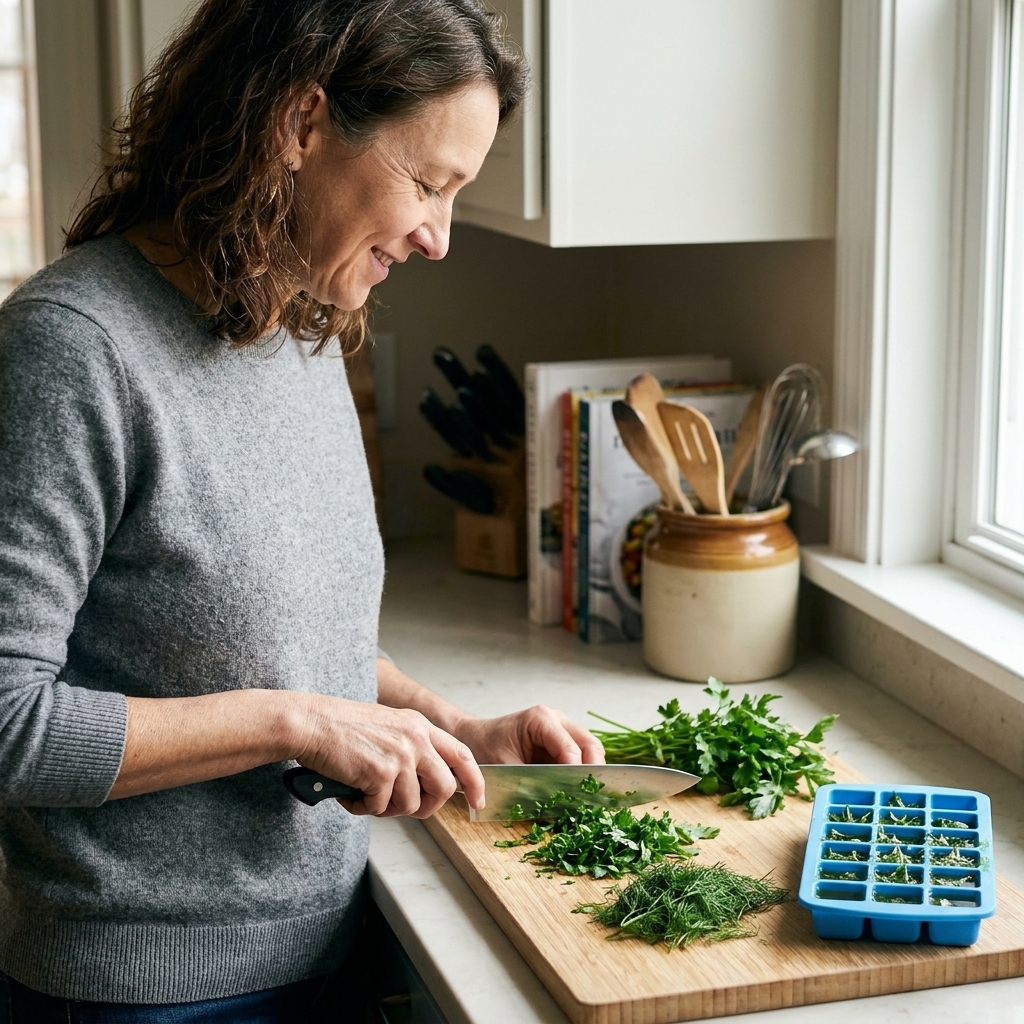
Herb cubes in olive oil
This is my weeknight workhorse method. Oil protects delicate leaves from freezer burn and helps herbs melt smoothly into hot food.
1) Harvest and rinse quickly
Pick herbs in the cooler part of the day if you can, then rinse briefly under cool water to remove dust or grit. Shake them dry and pat with a towel.
2) Dry really well
Water clinging to leaves can form ice crystals that dull the texture and flavor. I lay herbs on a towel for 10 to 20 minutes, then blot again.
3) Chop (or keep small leaves whole)
Chop herbs to the size you like to cook with. For tiny leaves like thyme, strip from stems. For basil, I stack the leaves and slice into ribbons, then chop again.
4) Fill the tray
Spoon chopped herbs into each well. I aim for about halfway to two-thirds full with herbs. This gives you a cube that tastes like something, not just green-speckled oil.
5) Top with olive oil
Pour olive oil over the herbs until just covered. Use the back of a spoon to nudge herbs down and release air pockets.
6) Freeze until solid
Freeze until fully solid, usually 4 to 6 hours or overnight. If your freezer tends to pick up odors, you can loosely cover the tray after the top has started to firm up.
7) Pop out and store
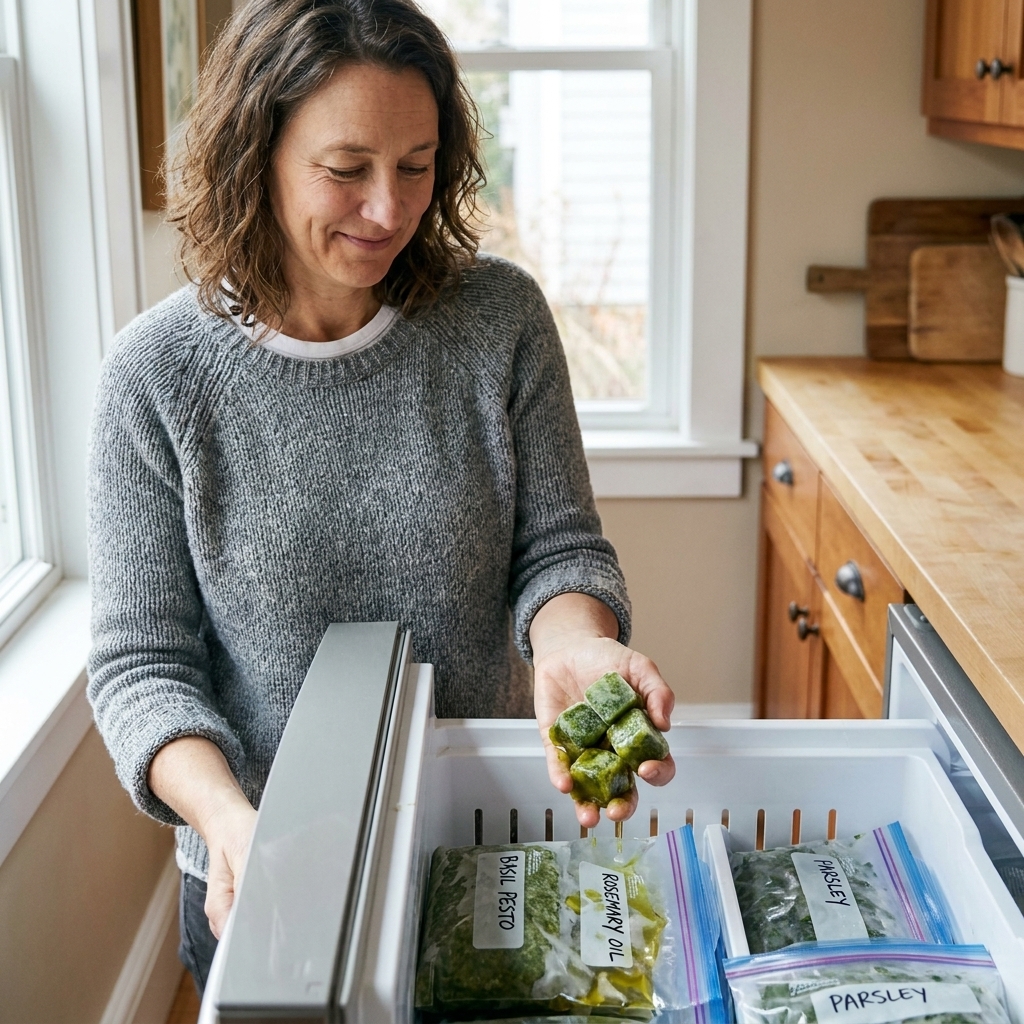
Once frozen, pop the cubes out and move them to a labeled freezer bag or container. This keeps your tray free for the next batch and helps prevent off flavors.
How to use olive oil herb cubes
- Sauté base: Drop 1 cube into a warm pan, then add onions, garlic, or vegetables.
- Quick sauces: Melt a cube into tomato sauce or pan juices.
- Roasted vegetables: Melt and toss with carrots, potatoes, or cauliflower.
- Beans and grains: Stir into lentils, rice, couscous, or farro right at the end.
- Adjust your cooking fat: An oil cube counts as oil. I often cut back a splash of oil elsewhere in the recipe.
- High heat note: Use the olive oil you normally cook with. If you regularly sear at higher heat, a neutral oil can be a better fit for cubes you plan to use that way.
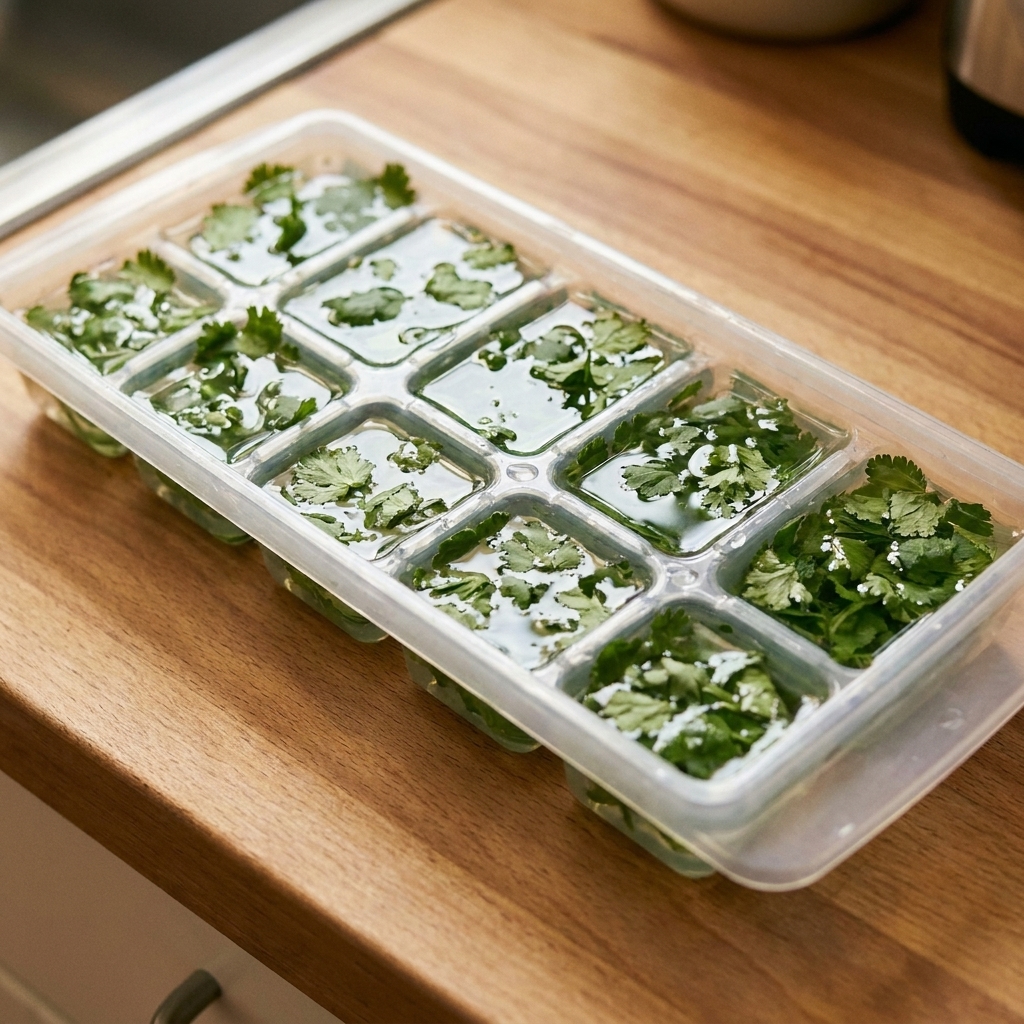
Herb cubes in water or broth
Water cubes are perfect when you want the herb flavor without extra oil, like in soups, stews, and lighter sauces. Broth cubes are especially cozy in winter.
1) Rinse and dry
Same rule as above. Clean herbs freeze best, and drying helps prevent icy clumps.
2) Chop and pack the tray
Fill each well about halfway with chopped herbs.
3) Add water or broth
Pour in water or cooled broth to cover the herbs. Tap the tray lightly on the counter to help the liquid settle.
4) Freeze, then store
Freeze until fully solid, pop out, and store in labeled freezer bags or containers.
How to use water or broth herb cubes
- Soups and stews: Add cubes in the last 10 to 15 minutes for the brightest flavor.
- Beans: Stir into simmering beans near the end.
- Pan sauces: Melt a cube with a splash of wine or stock, then reduce.
- Rice and grains: Drop in while cooking for gentle herbal flavor.
Favorite combinations
Single-herb cubes are wonderfully flexible, but blends feel like instant seasoning. Here are a few I make on repeat:
- Soup starter: parsley + dill (water or broth)
- Italian night: basil + parsley + oregano (olive oil)
- Taco and tortilla soup: cilantro + a little minced jalapeño (water)
- Roast chicken helper: thyme + rosemary (olive oil, smaller cubes)
- Tea and drinks: mint (water, or half water and half lemon juice)
If you add garlic, keep the cubes frozen, cook with them straight from frozen, and use them for cooked dishes only. Do not thaw garlic-in-oil cubes and hold them in the fridge or at room temperature.
Portion guide
Ice cube trays vary a lot. If you want predictable portions, do one quick test with a tablespoon and water. In the meantime, these are good kitchen rules:
- Standard tray well: often about 1 to 2 tablespoons total volume
- A practical goal: pack in about 1 tablespoon chopped herbs per cube, then top with oil or water
- Strong herbs (rosemary, sage): use half as much per cube
I like to label bags with the herb and the cube “strength,” like “Basil Oil, 1 cube = 1 Tbsp basil.” It sounds fussy, but it saves you from over-herbing a pot of soup in January.
How long they last
For best flavor, I try to use herb cubes within 3 to 6 months. If they are well sealed and stay consistently frozen, they can keep longer, but the taste slowly fades and freezer flavors can sneak in.
Tips for fresher flavor
- Store cubes in airtight bags with as much air pressed out as possible.
- Label with the herb and the month.
- Keep cubes toward the back of the freezer where temperature stays steadier.
Troubleshooting
My cubes are cloudy or icy
This is most common with water or broth cubes and usually means the herbs were still wet or the tray sat uncovered for too long. Dry herbs thoroughly, and once cubes are solid, move them into a sealed container.
The herbs turned dark
Some darkening is normal, especially with basil. Oil cubes help. You can also blanch basil leaves briefly, about 5 to 10 seconds, then ice-bath and dry before chopping, but I only do that when I am freezing a big batch.
I can’t get the cubes out
Silicone trays are easiest. For rigid trays, let the tray sit at room temperature for 1 to 2 minutes, then twist gently. Do not run hot water over oil cubes unless you plan to use them immediately.
The herbs floated to the top
Pack the herbs a bit more firmly, then pour liquid slowly. Press down with a spoon to settle everything before freezing.
Food safety notes
- Freeze promptly: Herbs are best frozen soon after harvesting.
- Garlic and oil: Keep garlic-in-oil mixtures frozen, cook them straight from frozen, and avoid thawing and holding them in the fridge or at room temperature.
- Use clean tools: Clean trays, knives, and boards help cubes keep longer and taste fresher.
Quick FAQ
Do I need to blanch herbs before freezing?
Not usually. Blanching can help basil keep a brighter green, but for everyday freezing, washing, drying, and freezing works well.
Can I freeze herbs in butter instead of olive oil?
Yes. Softened butter mixed with chopped herbs freezes beautifully in cubes. It is wonderful for finishing vegetables, pasta, or toast.
Can I freeze whole leaves?
You can, but they tend to bruise and clump. Ice cube trays work best when the herb is chopped and surrounded by oil or water.
When should I add herb cubes to soup?
Add them near the end for the brightest flavor. For long-simmered stews, I still prefer adding a cube in the last 10 to 15 minutes.
A winter you will thank yourself for
There is something quietly satisfying about dropping a cube of summer into a pot of February soup. It is the same basil, the same dill, the same chives you fussed over on your balcony or in your backyard bed, only now it shows up exactly when you need it.
If you try this, start small: one tray, one herb, one afternoon. By the time your plants hit their late-summer stride, you will have a freezer full of little green shortcuts.