I learned this the hard way with basil on my very first apartment windowsill. I fed it like a tomato, got lush, watery leaves, and wondered why my pesto tasted like… green air. Most culinary herbs are happiest with steady, modest nutrition. The goal is not maximum leaf size. The goal is healthy plants that stay wonderfully aromatic.
This guide walks you through organic fertilizer strategies that support growth without pushing herbs into bland, overfed territory. You will learn what to use, how much, and when to back off so those flavor oils stay concentrated.
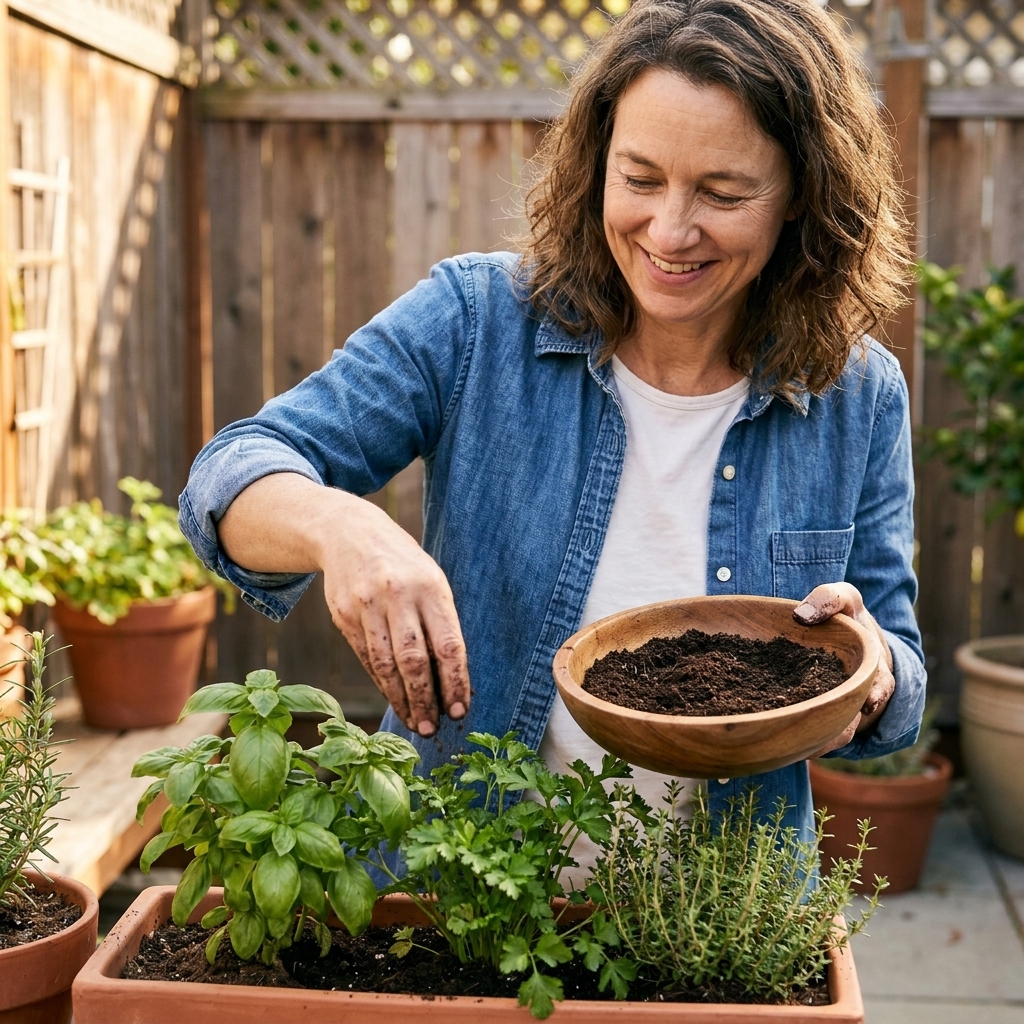
Why too much fertilizer can dull flavor
Herb flavor lives in essential oils and other compounds the plant produces and stores in its leaves. When an herb is pushed hard with nitrogen, it can respond with fast, soft growth. Those big leaves can be impressive, but the flavor can taste diluted because:
- Waterier growth can mean less concentration of aromatics per bite.
- Less “good stress” can reduce oil production. Many Mediterranean herbs, like thyme and rosemary, often taste best under leaner conditions.
- Imbalanced nutrition (especially higher nitrogen without enough light) can encourage leggy, mild foliage.
This is not a universal rule for every plant in every yard. Cultivar genetics, sunlight, temperature, watering, and harvest timing can outweigh fertilization effects. But as a home-garden baseline, herbs usually reward restraint.
Feed soil first
My favorite way to fertilize herbs organically is to treat the pot or bed like a pantry that stays stocked, rather than a big meal served all at once.
Quiet builders
- Finished compost: Adds slow nutrition and improves soil texture. Great for beds and big containers.
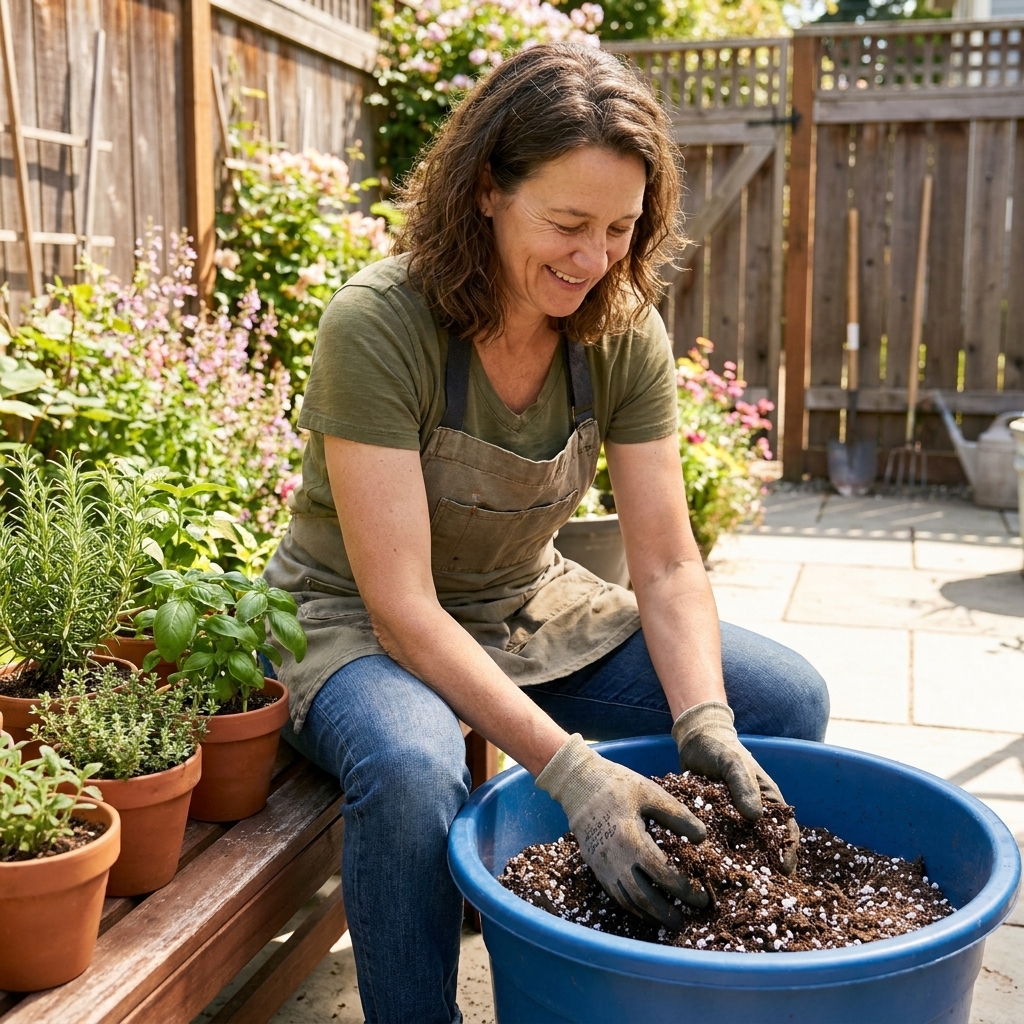
- Worm castings: Gentle, hard to overdo, and fantastic for containers. They support steady growth without that dark-green, soft-stemmed “overfed” look.
- Quality potting mix with compost: For containers, starting with a nutrient-rich mix reduces the need for frequent feeding.
Simple routine: At planting time, mix in compost or castings. During the season, top-dress lightly instead of pouring on strong liquid feeds.
One container reality check: Smaller pots run out of nutrients faster, but they also concentrate salts faster. That is why I prefer tiny, gentle top-ups more than “one big feeding.”
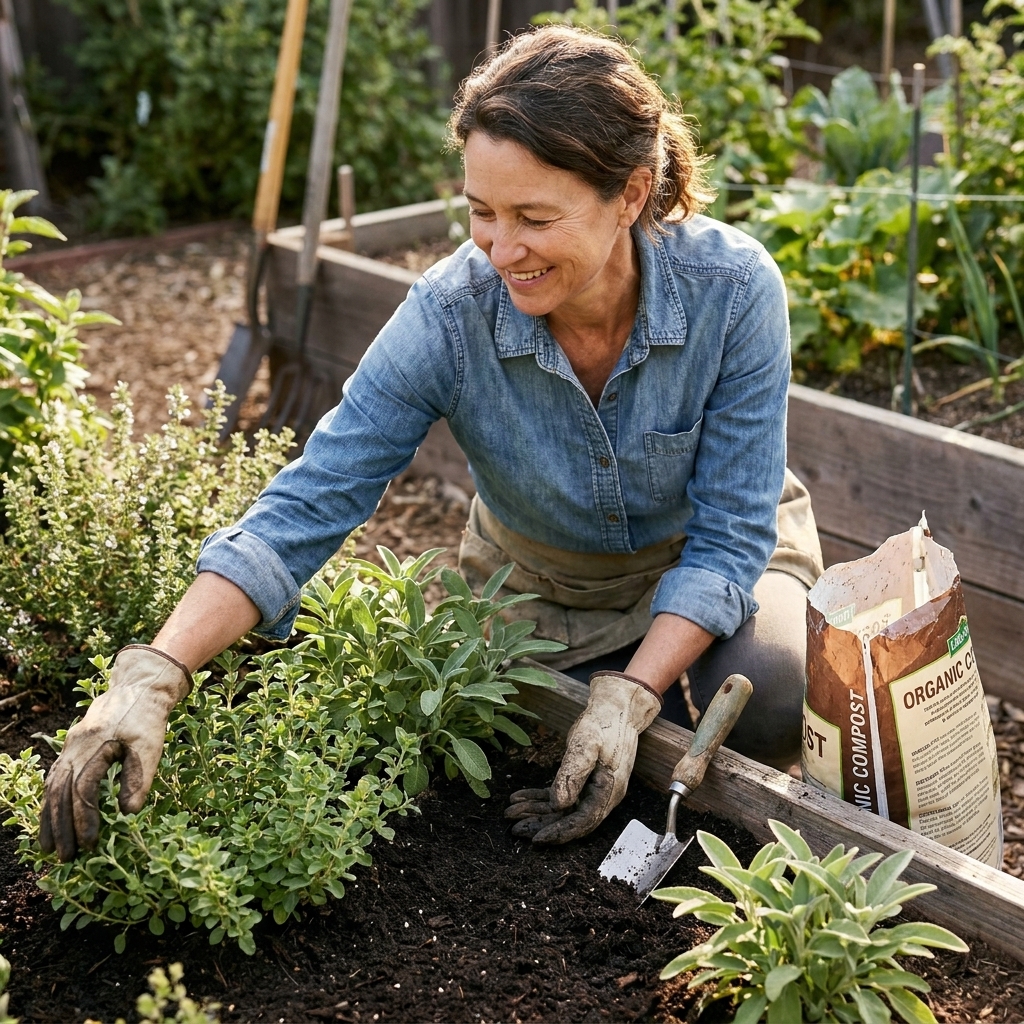
Herb appetites
Not all herbs want the same menu. If you fertilize dill like rosemary, one will sulk and the other will lose its spark. Use these categories as starting points, then adjust for your light, pot size, and how hard you harvest.
Light feeders
These prefer lean soil and minimal fertilizer once established:
- Rosemary
- Thyme
- Oregano
- Sage
- Lavender
Strategy: Compost at planting, then only a light top-dress midseason if growth looks pale or stalled. In containers, a tiny boost now and then is plenty, sometimes nothing at all if the potting mix is fresh.
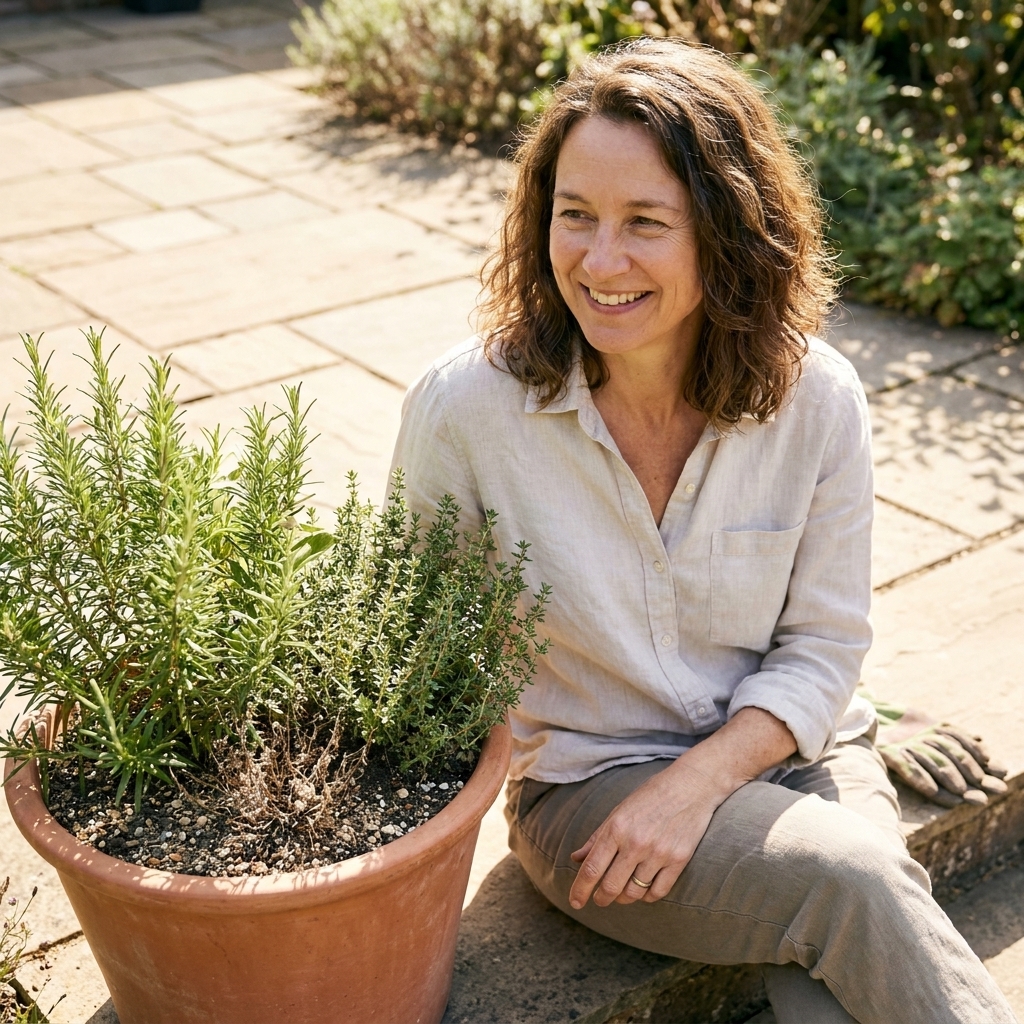
Drainage note: Woody Mediterranean herbs hate sitting wet. In pots, too much compost can hold extra moisture. Keep mixes loose and well-draining, and fertilize lightly instead of “improving” the pot with heavy compost.
Moderate feeders
- Parsley
- Cilantro
- Chives
- Tarragon (often moderate in containers)
- Mint (vigorous, but easy to overfeed)
Strategy: Top-dress with worm castings or compost every 4 to 6 weeks, or use a mild liquid feed occasionally if growth slows.
Hungry annuals
- Basil
- Dill
- Fennel (herb use)
Strategy: Regular light feeding keeps them producing. The trick is to avoid nitrogen spikes. Gentle nutrition plus frequent harvesting keeps flavor strong.
Beginner caution: Fennel can be finicky about transplanting. If you grow it, start it where it will finish when possible, and keep feeding modest.
Organic fertilizers
Below are organic options I reach for most often, with “how I actually use it” guidance. Always follow label directions when a product has them, especially for containers.
Worm castings
Why I love them: They are mild, balanced, and container-friendly. It is the least fussy way to feed herbs without overfeeding.
- Top-dress: Sprinkle a thin layer (about 1/4 inch) on the soil surface, keep it a couple inches away from stems, then water in.
- Timing: Every 4 to 6 weeks for basil, parsley, cilantro. Every 8 to 10 weeks for thyme, oregano, rosemary, sage, lavender, if at all.
Finished compost
Best for: Raised beds and larger pots where you can add volume without crowding roots.
- Top-dress: About 1/2 inch around plants, then lightly scratch into the top inch of soil and water.
- Timing: At planting, then once midseason for most herbs if needed.
Fish emulsion (or fish hydrolysate)
Best for: Fast help when herbs look pale or growth slows, especially basil and parsley.
Flavor-saving rule: Use it weak and not too often. Overuse can create lush but mild foliage.
- How: “Half strength” means half the label dilution rate (for example, if the label says 1 tablespoon per gallon, use 1/2 tablespoon per gallon). Apply to moist soil.
- Timing: Every 2 to 4 weeks for hungry annuals if they are actively growing and getting strong light. For woody herbs, only as a rare rescue.
- Tip: Apply in the morning and avoid splashing leaves if you can.
Seaweed or kelp extract
Why it works: More of a tonic than a heavy fertilizer. It supports root health and stress tolerance without forcing soft growth.
- How: Use as a foliar mist or soil drench at label rate.
- Timing: Every 3 to 4 weeks, especially after transplanting, heat waves, or heavy harvesting.
Slow-release organic blends
Look for: Lower nitrogen formulas, often something like 4-4-4 or 3-5-4, rather than very high first numbers.
- How: Mix into soil at planting, or scratch into the top layer and water.
- Timing: Usually every 6 to 8 weeks, depending on the product.
- Container note: Measure carefully. Containers concentrate nutrients and salts faster than beds.
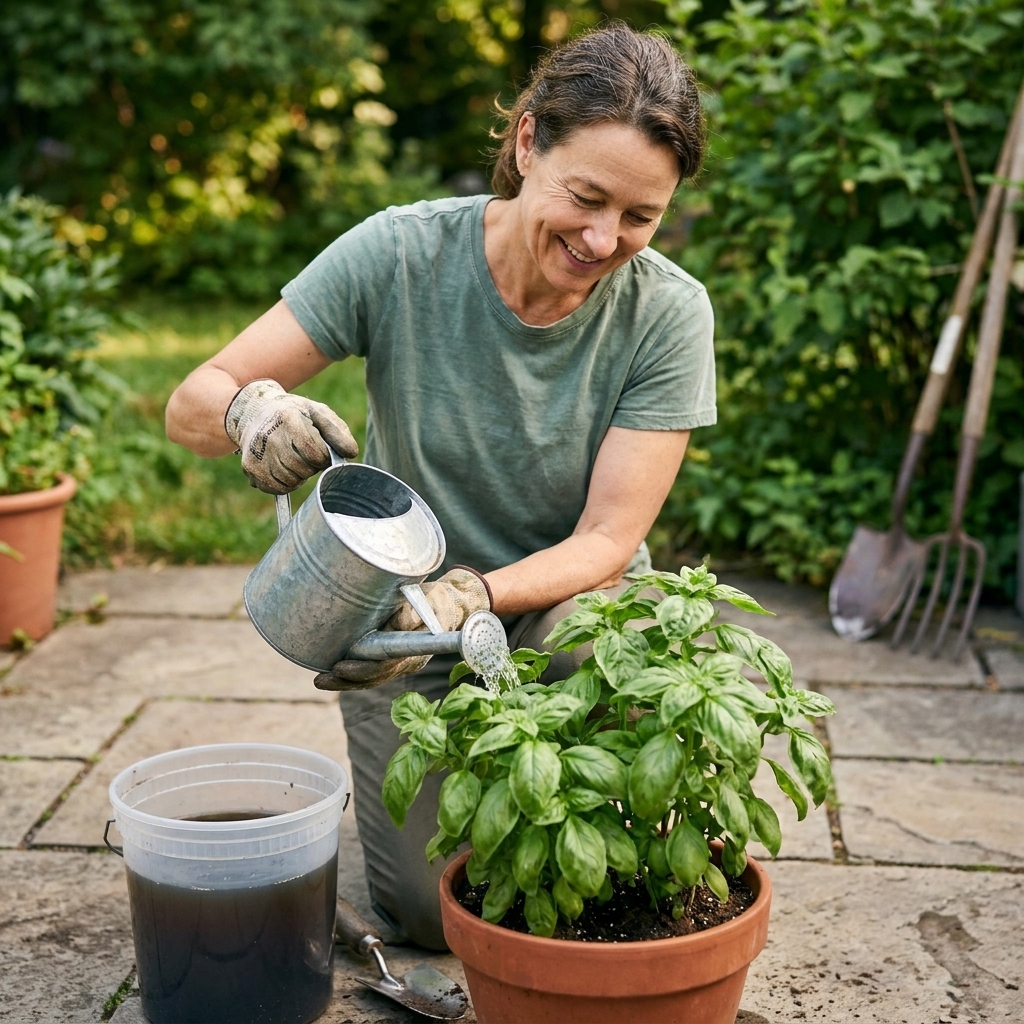
When to fertilize
At planting
This is when I do most of the work. If the soil has gentle nutrition built in, you will fertilize less later.
- In beds: Mix in finished compost before planting.
- In containers: Use a quality potting mix and blend in a small amount of worm castings or a slow-release organic.
After transplanting
If a plant is stressed, newly transplanted, or wilting from heat, I hold fertilizer until it resumes active growth. Even gentle organics can be “too much” when roots are trying to settle in.
Early growth and after the first harvest
Once herbs are established and you start harvesting, a light top-dress or mild liquid feed can help them rebound.
- Basil and parsley respond beautifully here.
- Thyme, oregano, rosemary often do not need anything unless they are in a pot that has been going for a couple of months.
Midsummer
This is where flavor can get washed out if you feed too aggressively. In hot weather, herbs already take up plenty of water. Heavy fertilizing can push soft growth at exactly the wrong time.
- Choose: Compost, worm castings, or kelp.
- Skip: Frequent fish emulsion unless the plant is clearly pale and slow.
Late season
When nights cool, ease off. You are shifting from “grow” to “ripen and concentrate.”
- Perennial woody herbs: Stop feeding 6 to 8 weeks before first frost in colder climates so new growth can harden off.
- Annuals: Light feeding is okay if you are still harvesting heavily, but keep it gentle.
One reminder: These timings are starting points, not commandments. If your herbs have intense sun and you harvest hard, they may want a little more. If they live in partial shade or indoors, they usually want less.
Signs you need to feed (or stop)
Signs your herb may need nutrients
- New leaves are smaller than usual and growth has slowed, even with good light and regular watering.
- Overall color is pale green, especially on hungry herbs like basil and parsley.
- Container herbs have been in the same potting mix for 8 to 12+ weeks and you water often (nutrients can leach out, depending on pot size and mix).
Signs you are overfeeding
- Very fast, floppy growth that needs constant staking or pruning.
- Leaves are huge, thin, and mild-tasting.
- More pest issues like aphids (tender new growth attracts them).
- White crust on the soil surface in containers (this can be fertilizer salts, minerals from hard water, or both).
My reset button: If I suspect overfeeding in a container, I pause fertilizer for a few weeks, flush the pot with plain water once (water until it runs freely out the bottom), and then return to gentle top-dressing only.
Flavor-first routines
Sunny patio containers
- At planting: Potting mix + a handful of worm castings mixed in.
- Every 4 to 6 weeks: Thin top-dress of castings for basil, parsley, cilantro, chives.
- Woody herbs: Only top-dress once midseason if they look tired.
- Optional: Kelp drench monthly during heat.
Raised beds
- Spring prep: 1 to 2 inches of compost worked into the top few inches.
- Midseason: Top-dress basil and parsley with compost, and water well.
- Perennials: Compost once in spring. That is usually enough.
Indoor windowsill herbs
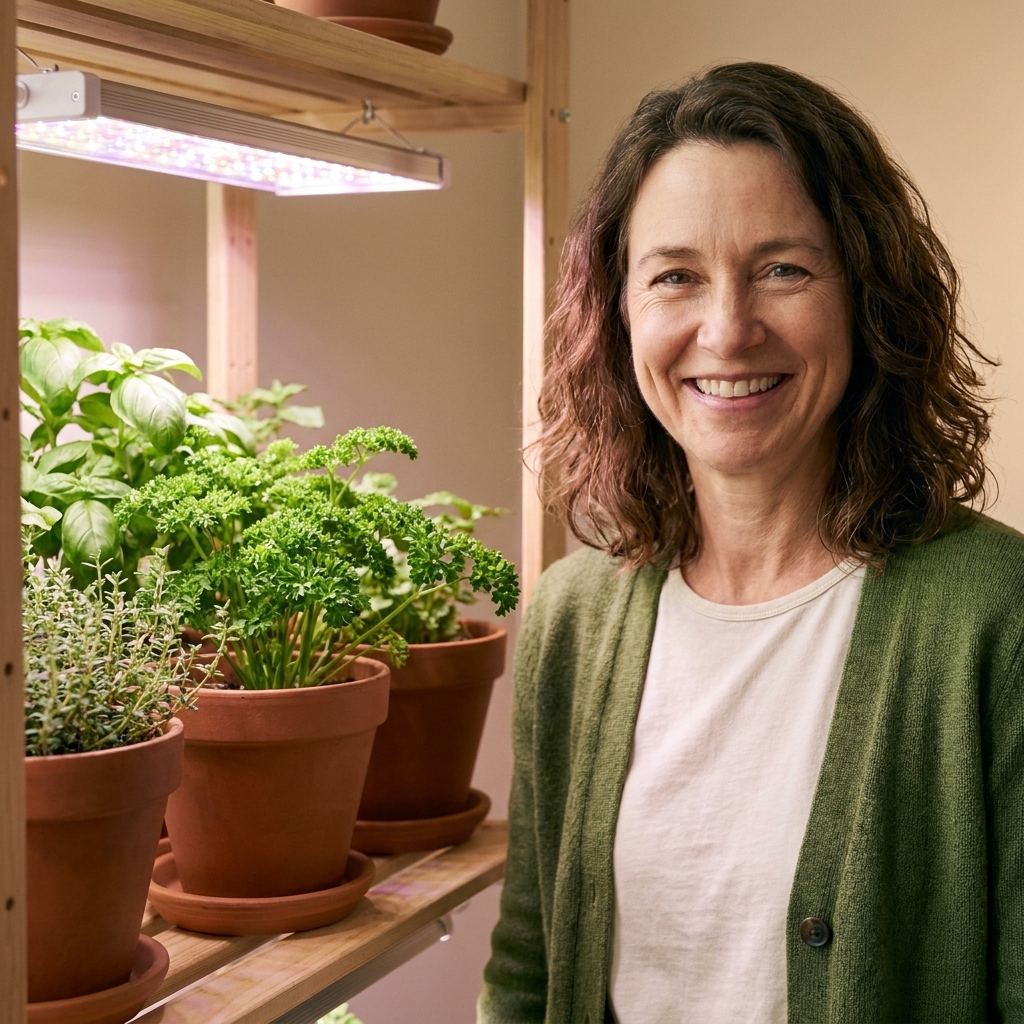
Indoors, light is the limiting factor. Too much fertilizer without strong light equals soft, mild leaves.
- Best choice: Worm castings or a very dilute fish emulsion (quarter to half the label dilution rate).
- Timing: Every 4 to 6 weeks at most, and only if the plant is actively growing.
- Tip: Consider a small grow light if you want faster growth without sacrificing flavor.
Harvesting is fertilizer
Herbs stay flavorful when they are harvested regularly. Pruning encourages branching, keeps leaves young, and helps plants put energy into steady production instead of lanky stems.
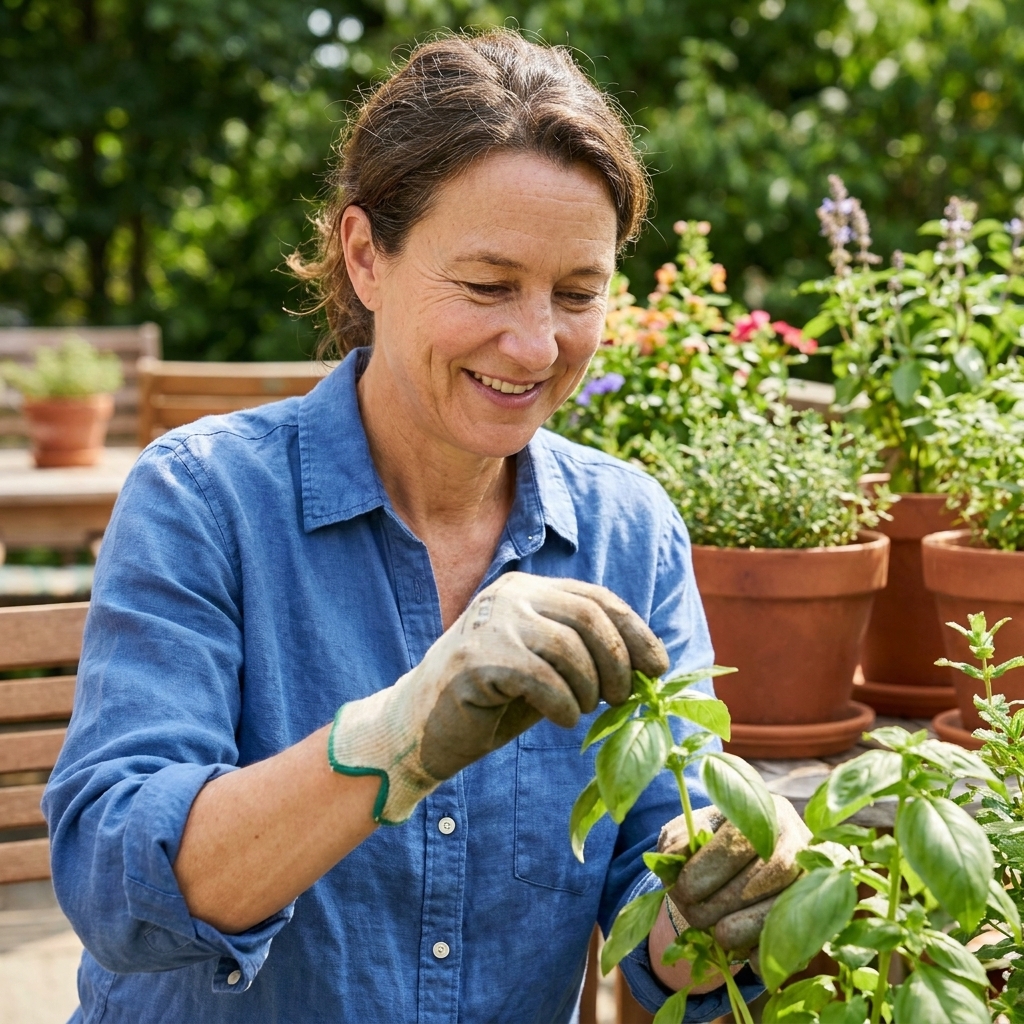
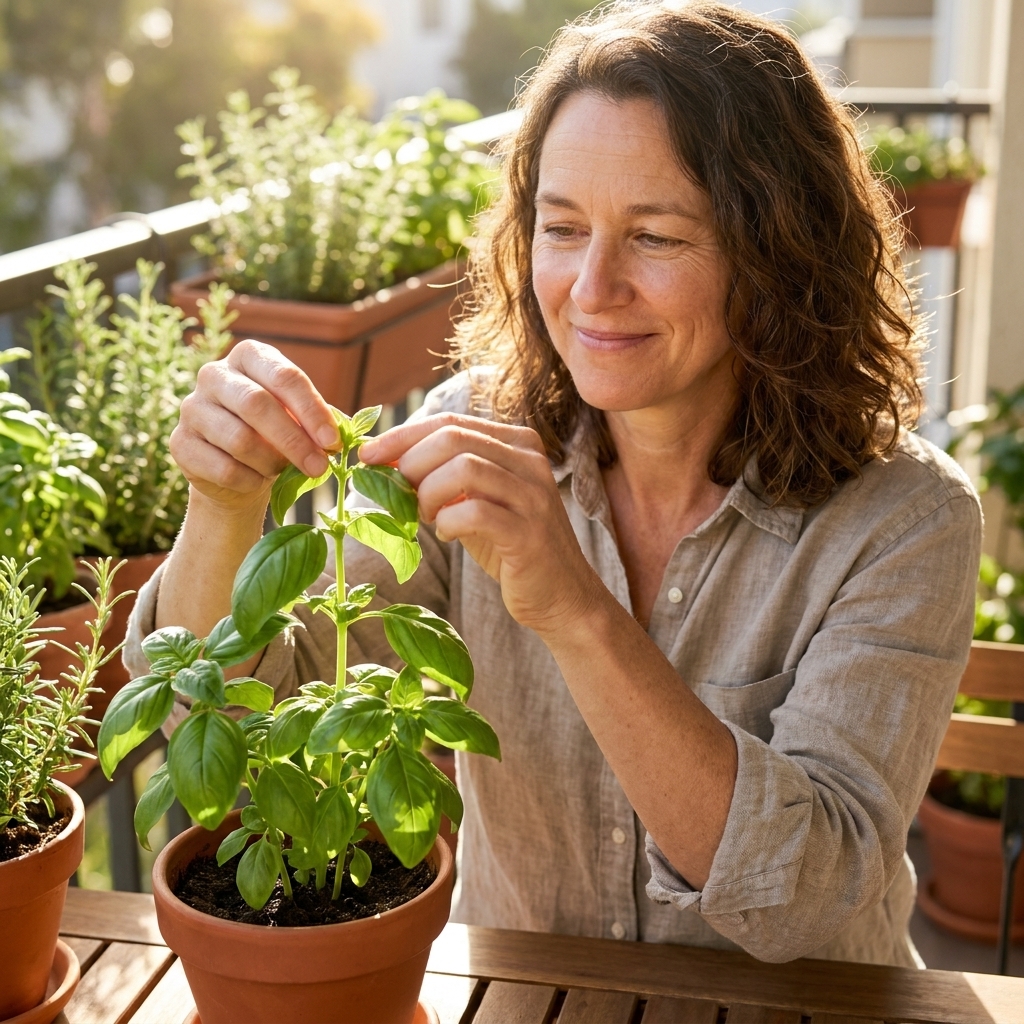
- Basil: Pinch above a set of leaves to force two new branches. Frequent pinching often improves flavor more than extra feeding.
- Mint: Cut back by a third when it gets tall. It rebounds fast and tastes brighter. (And yes, it can get plenty lush on its own, so do not assume it needs frequent fertilizer.)
- Woody herbs: Light, frequent snips are better than one hard cut into old wood.
Common mistakes
- Feeding on a schedule instead of watching the plant. Herbs do not need weekly fertilizer like some heavy feeders.
- Using high-nitrogen lawn or leafy-green fertilizers. Great for grass, not always great for herb flavor.
- Overfertilizing low-light indoor herbs. If light is low, keep nutrition low.
- Ignoring drainage. Poor drainage causes weak roots and bland growth, even if your fertilizer is perfect.
- Fertilizing dry, thirsty soil. Water first or fertilize on already moist soil to prevent root stress.
Quick FAQ
Will organic fertilizer change herb taste?
It can, depending on dose and timing. Gentle, slow nutrition tends to support good flavor, while heavy nitrogen can push mild, watery growth. But sunlight, cultivar, temperature, and harvest timing can matter just as much.
Best organic fertilizer for basil flavor?
For me, worm castings plus occasional kelp works beautifully. If basil pales, a half-strength fish emulsion (half the label dilution rate) every few weeks can bring it back without making it bland, as long as it gets strong light.
Do rosemary and thyme need fertilizer?
In the ground, often not much beyond spring compost. In containers, they may appreciate a very light top-dress once midseason, especially if you water frequently and nutrients wash out.
Can I use compost tea on herbs?
I keep compost tea conservative for edible herbs. If you use it, use only finished compost and apply it as a soil drench, not a leaf spray. Avoid manure-based teas on edible leaves, and skip any foliar application close to harvest unless you can wash well.
Simple plan
If you want one easy approach that works for most home herb gardens, here it is:
- Start with good soil: Potting mix plus compost or castings, or compost-amended beds.
- Feed lightly: Top-dress with worm castings or compost instead of frequent liquid fertilizer.
- Use liquids as rescue: Fish emulsion only when growth clearly slows or pales, and dilute it.
- Stop early for perennials: Let woody herbs harden off before cold weather.
- Harvest often: Regular pruning keeps herbs productive and flavorful.
When in doubt, err on the side of less fertilizer and more sunlight. Herbs have a wonderful way of telling you what they need, one fragrant snip at a time.