Herbs are generous plants, but they are also honest ones. If a pot stays soggy, roots sulk. If soil turns to dust by lunchtime, leaves can get stressed, tired, and sometimes more bitter. The good news is you do not need a fancy brand or a complicated formula. You need a mix that drains well, holds just enough moisture, and has a gentle, steady source of nutrients.
This guide will walk you through the exact ratios of potting mix, perlite, and compost that I rely on for potted herbs, plus simple tweaks for different personalities like basil (thirsty) and rosemary (hates wet feet).
What potted herbs need from soil
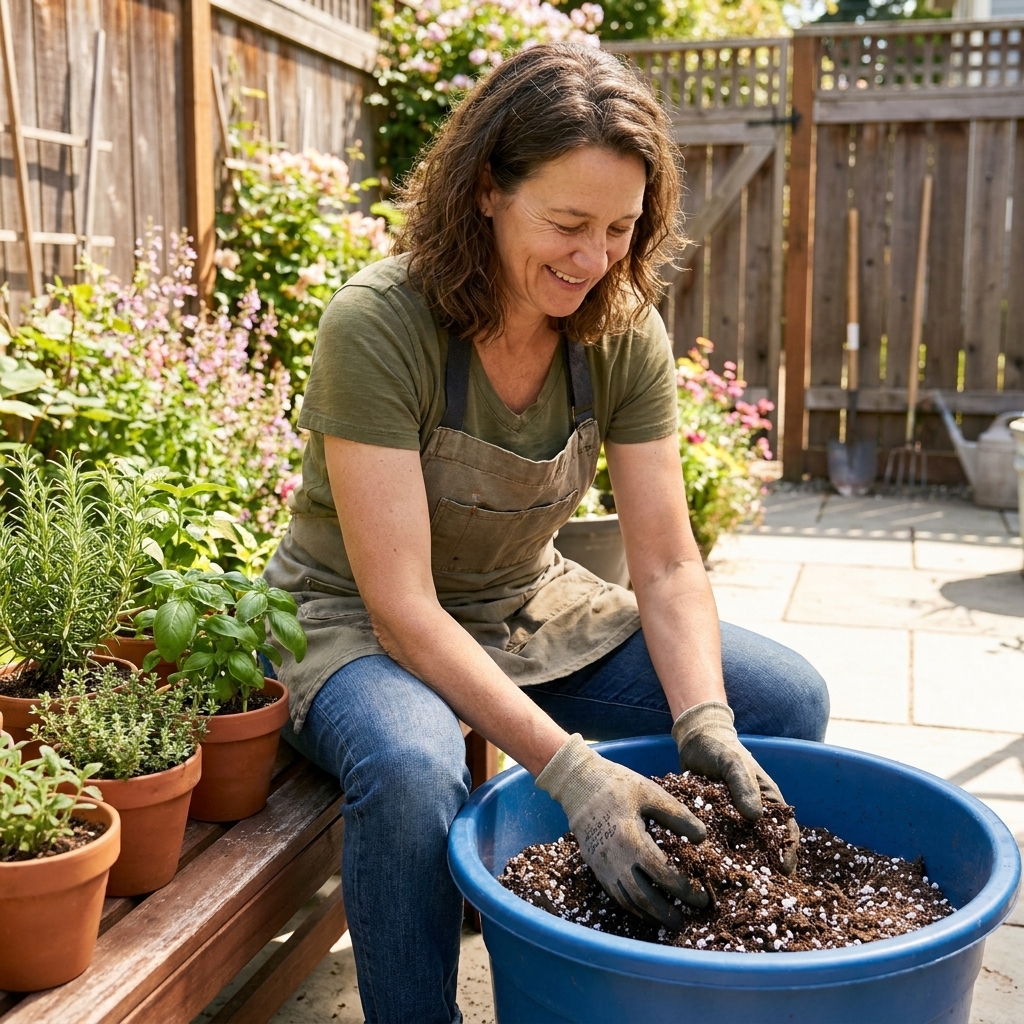
In the ground, nature does a lot of balancing for us. In a container, we are building a tiny ecosystem that has to do three jobs at once:
- Drain fast so roots get oxygen and do not rot.
- Hold moisture long enough for the plant to drink between waterings.
- Feed gently without burning tender new roots.
That is why straight garden soil is a no-go for containers. It compacts like a brick, drains poorly, and makes it hard for roots to breathe. For potted herbs, we want a fluffy, airy potting mix that stays light even after repeated watering.
The core 3-ingredient mix
If you only remember one recipe, make it this one. It works for most culinary herbs and is forgiving for beginners.
All-purpose herb container mix
- 2 parts potting mix
- 1 part compost
- 1 part perlite
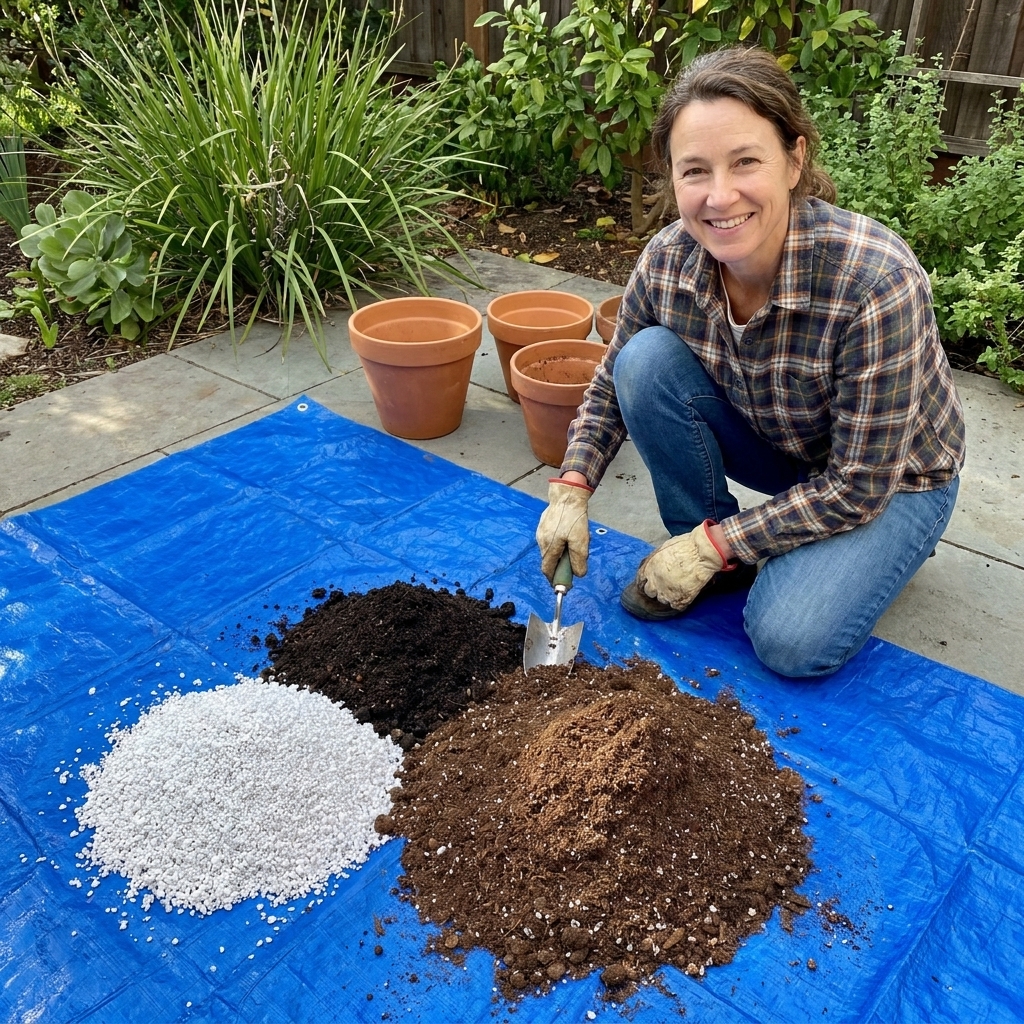
This gives you a balanced blend: potting mix for structure and moisture holding, compost for gentle nutrition and microbial life, and perlite for the airy drainage herbs crave.
Easy measuring (no scale needed)
Use anything as your “part” as long as you repeat it: a scoop, a yogurt container, a small bucket.
- For a typical 10 to 12 inch planter: 2 scoops potting mix + 1 scoop compost + 1 scoop perlite.
- For several pots at once: 2 gallons potting mix + 1 gallon compost + 1 gallon perlite.
Ingredient guide
Potting mix
Start with a quality potting mix, not topsoil and not garden soil. Many bags labeled “potting soil” are actually soilless potting mix, and that is exactly what we want for containers. These mixes are designed to stay lighter in pots and usually include ingredients like peat or coir, bark fines, and wetting agents.
- Look for: “potting mix” or “container mix,” light texture, minimal large wood chunks.
- Avoid: mixes that feel heavy and muddy when wet.
Perlite
Perlite is the little white puffed pieces that keep a mix from collapsing. It creates air pockets, speeds drainage, and helps roots breathe.
- Tip: Perlite dust can be irritating. I moisten it lightly in the bag or in the mixing tub before stirring.
Compost
Compost is your slow, gentle pantry. It adds nutrients and improves moisture balance. For herbs, I like compost that is dark, crumbly, and smells pleasantly earthy, never sour.
- Tip: If your compost is very rich or not fully finished, use a little less at first. Herbs prefer steady feeding, not a nutrient blast.
Mix tweaks by herb type
Not all herbs want the same thing. A pot of basil drinks like it is midsummer even in June. Rosemary would rather be a little too dry than a little too wet. Use the all-purpose mix as your base, then adjust with small, practical changes.
Soft, leafy herbs
Basil, cilantro, parsley, dill, chives like consistent moisture and regular nutrients.
- Best mix: 2 parts potting mix + 1 part compost + 1 part perlite (the standard)
- Optional: If your porch is hot and windy, reduce perlite slightly for more moisture holding: 2 parts potting mix + 1 part compost + 1/2 part perlite.
Mediterranean, woody herbs
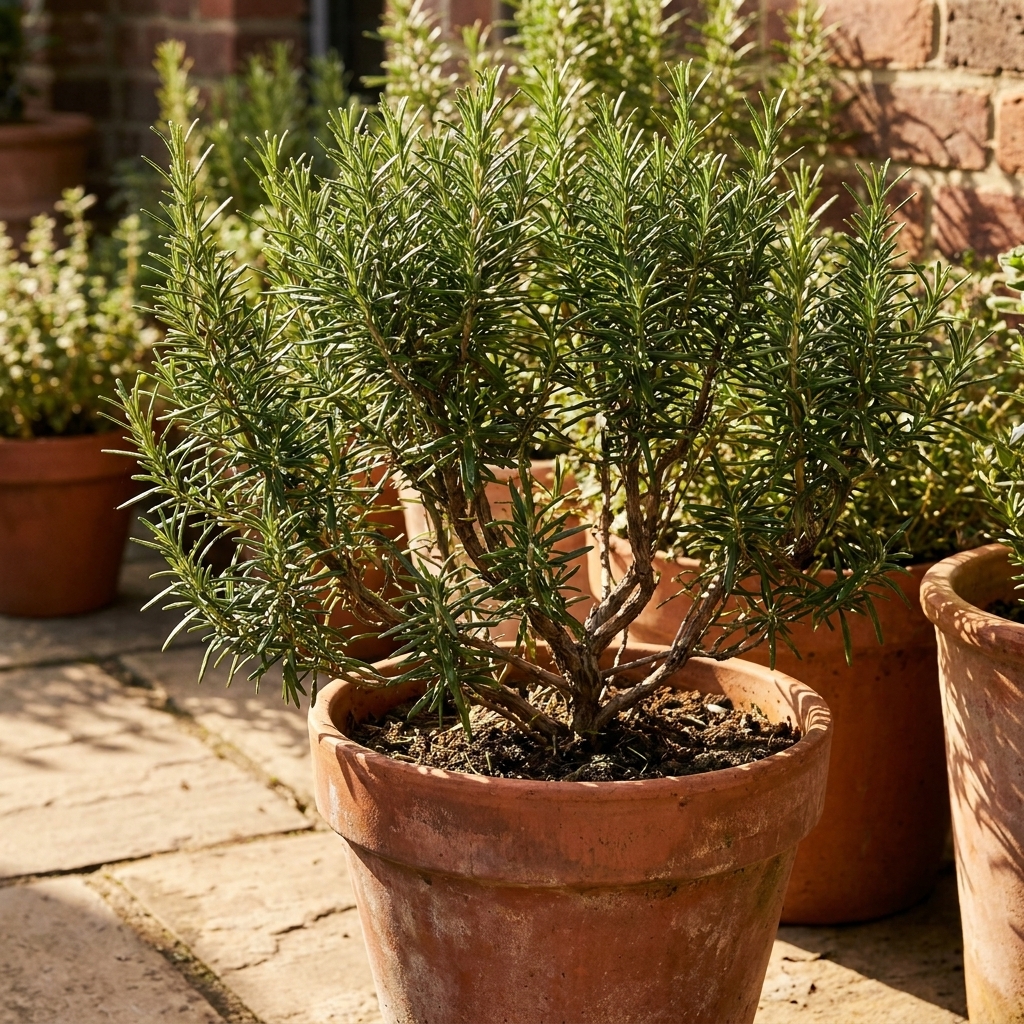
Rosemary, thyme, oregano, sage, lavender hate sitting in wet soil. When they fail in pots, it is usually drainage, not sunlight.
- Best mix: 2 parts potting mix + 1 part perlite + 1/2 part compost
- Extra drainage option: Add another splash of perlite if your pots are deep, your climate is rainy, or you tend to water with a generous hand.
Mint family runners
Mint, lemon balm like moisture and nutrients, but they also spread aggressively. Container growing is perfect because it keeps mint from taking over your whole garden.
- Best mix: 2 parts potting mix + 1 part compost + 1 part perlite
- Tip: Mint dries out quickly in small pots because it grows fast. Size up the container and keep an eye on watering.
Even-moisture herbs
Tarragon, sorrel tend to do best with soil that stays evenly moist but still drains well. Think “consistent,” not “wet.”
- Best mix: 2 parts potting mix + 1 part compost + 1/2 to 3/4 part perlite
How to mix it
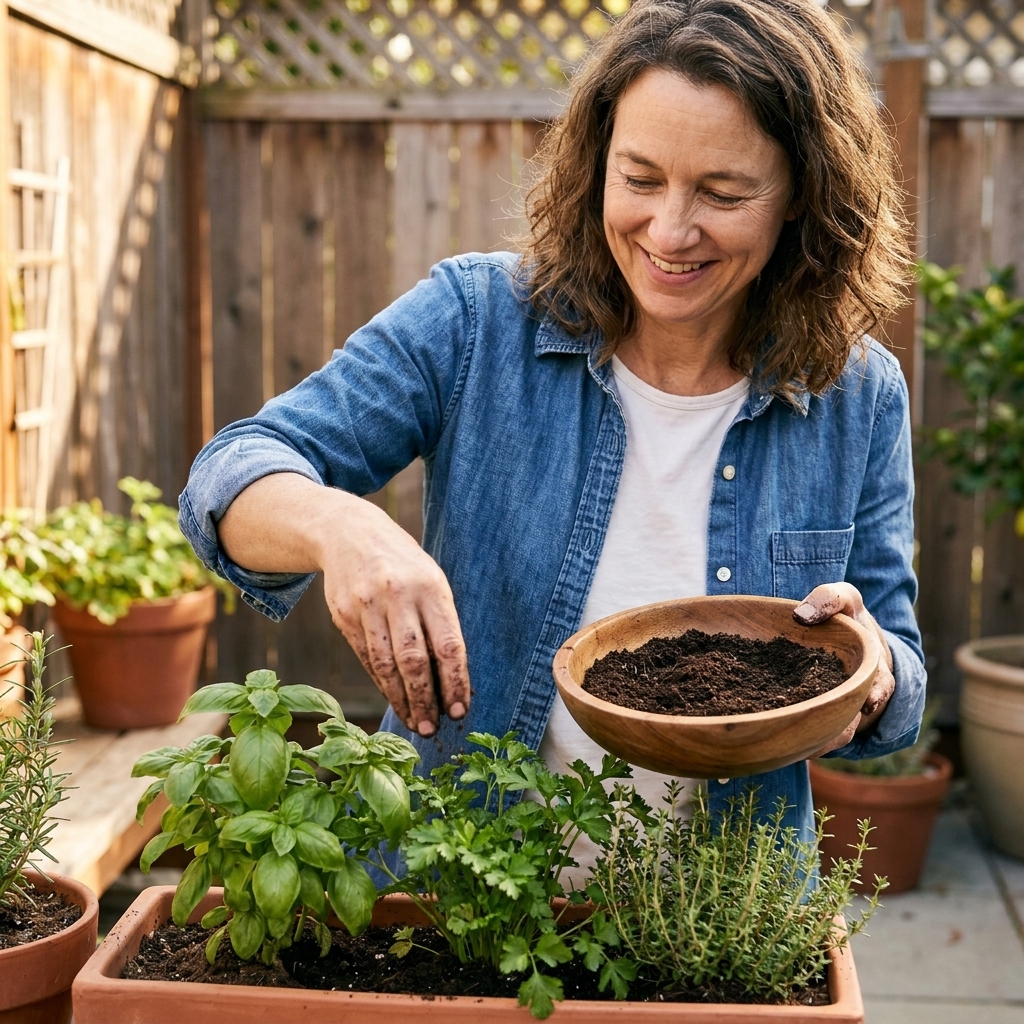
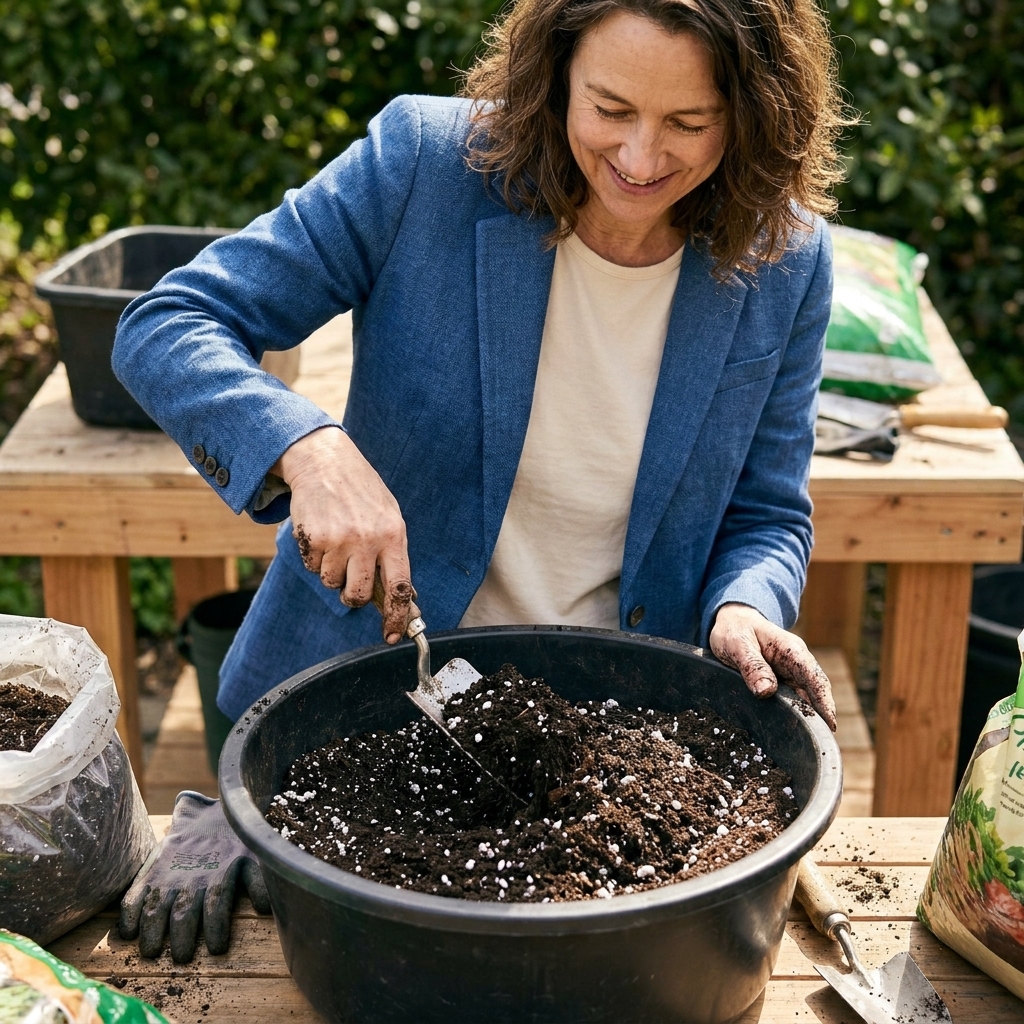
Mixing well matters. If compost clumps in one corner and perlite floats in another, your pot will water unevenly.
- Choose a mixing space: a tub, wheelbarrow, or a thick tarp on the ground.
- Pre-moisten lightly: If everything is bone dry, add a little water and toss. Aim for slightly damp, like a wrung-out sponge.
- Combine by layers: Add potting mix, then compost, then perlite. Repeat in layers until everything is in.
- Toss, do not mash: Use your hands or a trowel to lift and fold until color and texture look consistent.
- Fill pots gently: Scoop soil in and tap the pot to settle. Do not press down hard. Compaction steals oxygen from roots.
Pick the right pot
Even perfect soil cannot save a pot with poor drainage. Before you plant, check these basics:
- Drainage holes: At least one large hole, or several smaller ones. Self-watering planters can work too, but they still need a clear overflow or drainage design so roots are not sitting in stagnant water.
- Pot size: Herbs in tiny pots dry out fast. For most single herbs, I like 8 to 10 inches wide. For basil or mint, bigger is even better.
A quick note about rocks in the bottom: they do not improve drainage in containers the way many of us were taught. It comes down to simple water physics in pots. A rock layer can create a perched water zone above it, meaning the soil stays wetter right where roots live. Better drainage comes from the right mix and proper holes. If you want to keep mix from washing out, a small piece of mesh or a coffee filter over the hole is fine.
Drainage hole care matters, too: check that holes are not clogged, empty saucers after deep watering, and if a pot sits on a flat surface outdoors, consider lifting it slightly on pot feet or a thin slat so water can escape freely.
Common problems and quick fixes
Problem: Soil stays wet for days
- Likely cause: Not enough perlite, a pot that is too large for the plant, or drainage holes that are blocked.
- Fix: Repot using 2 parts potting mix + 1.5 parts perlite + 1/2 part compost for woody herbs. Match the pot to the root ball (do not jump a small herb into a huge container), and make sure the saucer is not holding standing water.
Problem: Soil dries out too fast
- Likely cause: Too much perlite for your conditions, a small pot, or full sun plus wind.
- Fix: Shift to 2 parts potting mix + 1 part compost + 1/2 part perlite. Also consider moving the pot to morning sun and afternoon shade during the hottest weeks.
Problem: Herbs look pale and slow
- Likely cause: Not enough nutrition after several weeks, or compost content was low. (Compost varies a lot.)
- Fix: Top-dress with a thin layer of compost and water in. For heavy harvesters like basil and parsley, a gentle organic liquid feed can help, but go light and follow the label.
Problem: Fungus gnats
- Likely cause: Soil staying consistently wet, especially indoors where evaporation is slower.
- Fix: Let the top inch dry between waterings, increase airflow, and consider adding a bit more perlite at the next repot.
Small-batch recipes
If you want numbers you can scoop without thinking, here are a few ready-to-go batches. These are by volume and approximate, because pot sizes and root balls vary.
For one 10-inch pot (approximate)
- 4 cups potting mix
- 2 cups compost
- 2 cups perlite
For four to six small pots (a mixing-tub batch)
- 12 cups potting mix
- 6 cups compost
- 6 cups perlite
Do not stress if you are off by a half cup. Herbs care far more about the overall feel of the mix: light, crumbly, and quick to drain.
FAQ
Can I use peat-free potting mix?
Yes. Many peat-free mixes based on coco coir work beautifully for herbs. Coir can hold water well, so keep an eye on drainage and do not be shy with perlite, especially for rosemary, thyme, and lavender.
Can I replace perlite with something else?
If you cannot find perlite, pumice is an excellent substitute. Some people use coarse horticultural sand, but it can make a mix heavier, so drainage results vary by brand and particle size.
How often should I refresh the potting mix?
For most potted herbs, I refresh at least part of the soil each season. If a pot is packed with roots or the mix has shrunk and drains oddly, it is time to repot with fresh mix.
Is compost enough fertilizer for herbs?
It may be enough for the first month or two, depending on your compost, pot size, and how fast you harvest. Compost nutrient content varies widely, and long-season pots often benefit from a light mid-season boost. When in doubt, start gentle and watch the leaves.
Is growing herbs indoors different?
A little. Indoors, pots usually dry more slowly, light is weaker, and fungus gnats are more common. Use the same mix, but water more carefully, prioritize drainage, and consider a slightly smaller pot than you would use outdoors in full sun.
A simple starting plan
If you are standing in your driveway with bags of ingredients and a new pot, do this:
- Mix 2 parts potting mix + 1 part compost + 1 part perlite.
- Plant your herb at the same depth it was growing before.
- Water thoroughly until it runs out the bottom, then let it drain fully.
- For the next week, check moisture daily with your finger. Water when the top inch feels dry for most herbs, and a bit drier for rosemary and thyme.
That is it. You can fine-tune later. Herbs are wonderfully responsive, and once your soil drains well, everything else gets easier.