Parsley is one of those herbs I never regret planting. It fills gaps in containers, makes a salad feel like a meal, and stays cheerful in cool weather when basil has long since given up. The only catch is that parsley asks for patience at the very beginning and a little understanding of its two-year rhythm.
Let’s walk through flat-leaf (Italian) and curly parsley side by side: how they taste, how they grow, how to harvest without stunting the plant, and what really happens when a “biennial” decides it is time to flower.
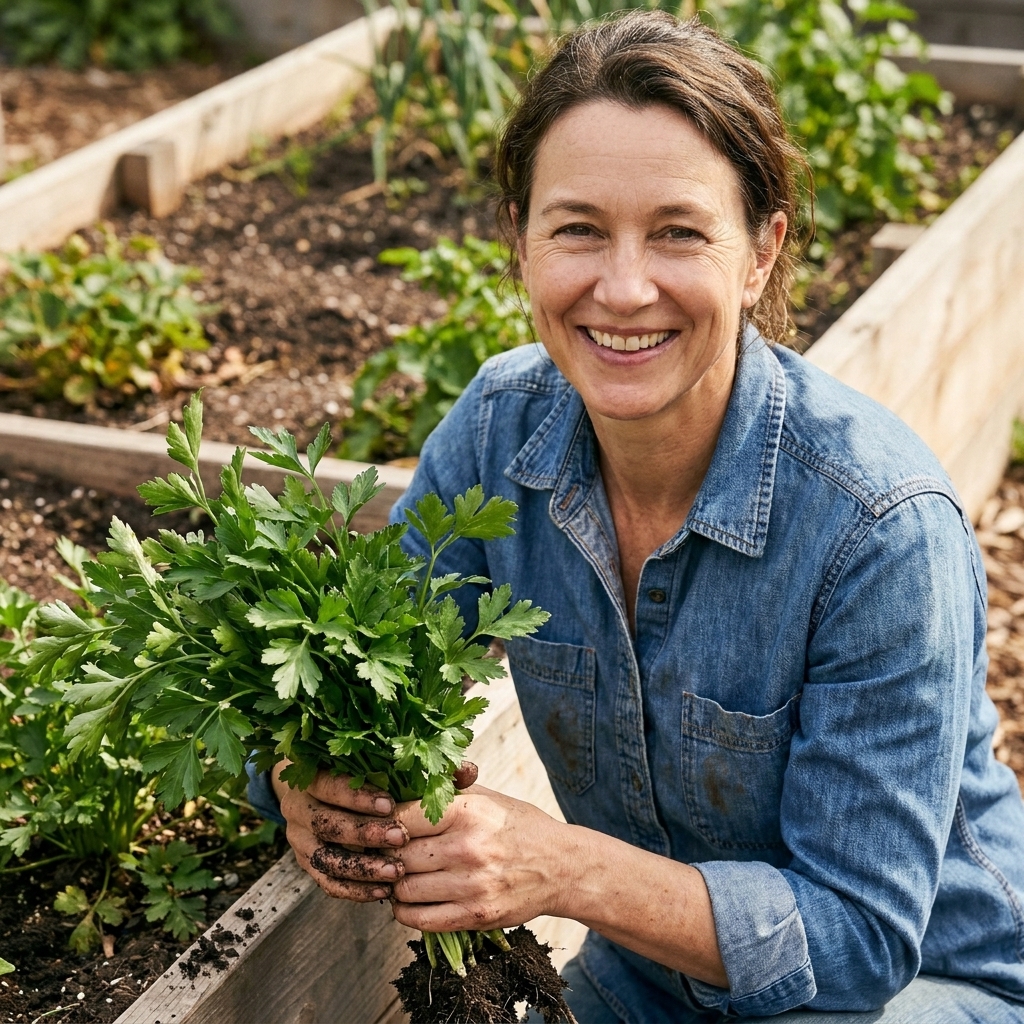
Meet the two types
Flat-leaf (Italian) parsley
What it’s known for: brighter, stronger flavor and tender stems that chop easily.
Flat-leaf parsley is my everyday kitchen workhorse. The leaves are broad and serrated, and the flavor comes through even when you use it raw. If you love tabbouleh, chimichurri, gremolata, soups, roasted vegetables, or anything with garlic butter, flat-leaf is the one I reach for.
If you like growing named varieties, ‘Giant of Italy’ is a classic for big, productive leaves.
Curly parsley
What it’s known for: frilly leaves, slightly milder flavor, and a little more texture.
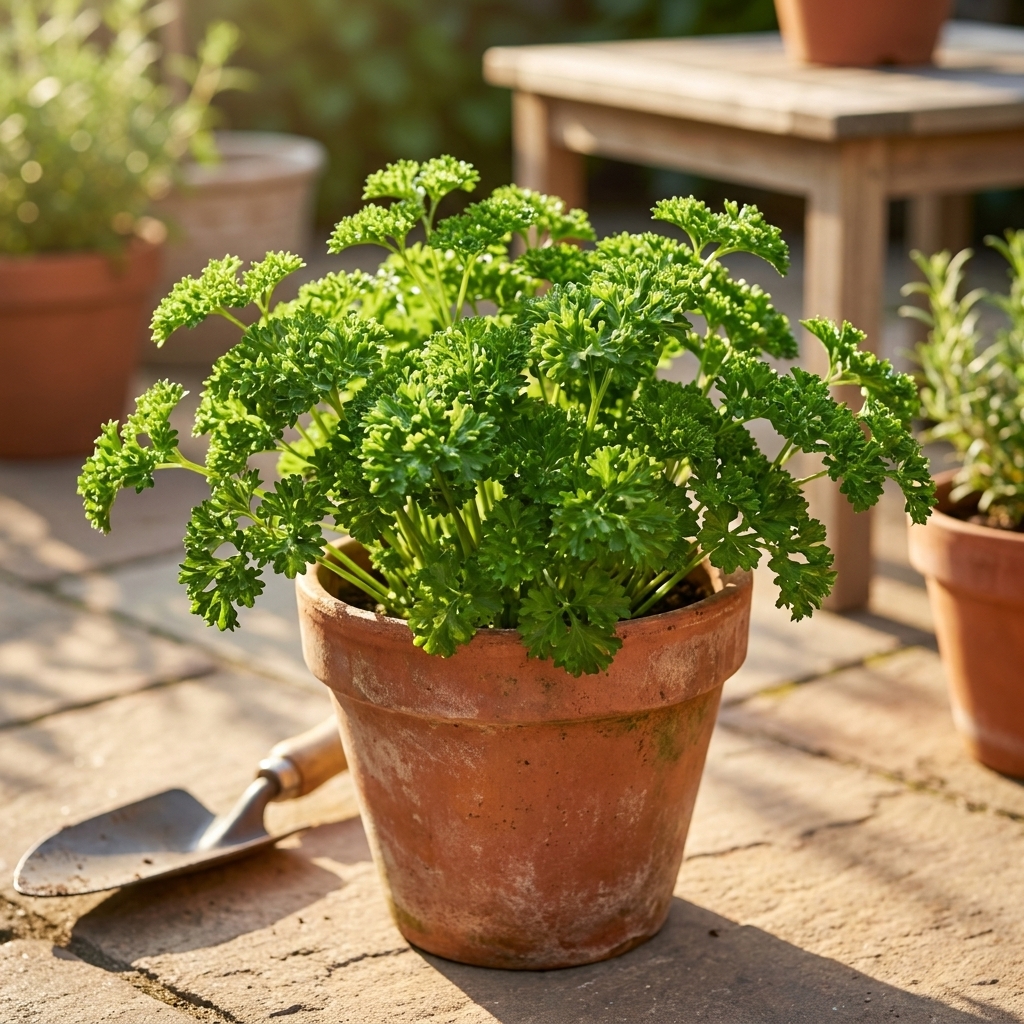
Curly parsley often gets unfairly filed as “just garnish,” but it is a genuinely useful herb. The ruffled leaves hold onto dressing, oils, and lemon beautifully. I especially like curly parsley in potato salad, herby yogurt sauces, and as a fresh finishing sprinkle on rich dishes where you want lift without a strong bite.
Quick comparison
| Feature | Flat-leaf parsley | Curly parsley |
|---|---|---|
| Flavor | Bold, grassy, very parsley-forward | Milder, fresh, slightly peppery |
| Best uses | Chopping, sauces, soups, salads | Finishing, salads, cold dishes, texture |
| Harvest feel | Fast to strip and chop | Takes longer to wash, holds water in curls |
| Cold tolerance | Excellent | Excellent |
| Growth habit | More open, leaflets lay flatter | More compact, mounded |
| Container friendliness | Great | Great |
Seed germination
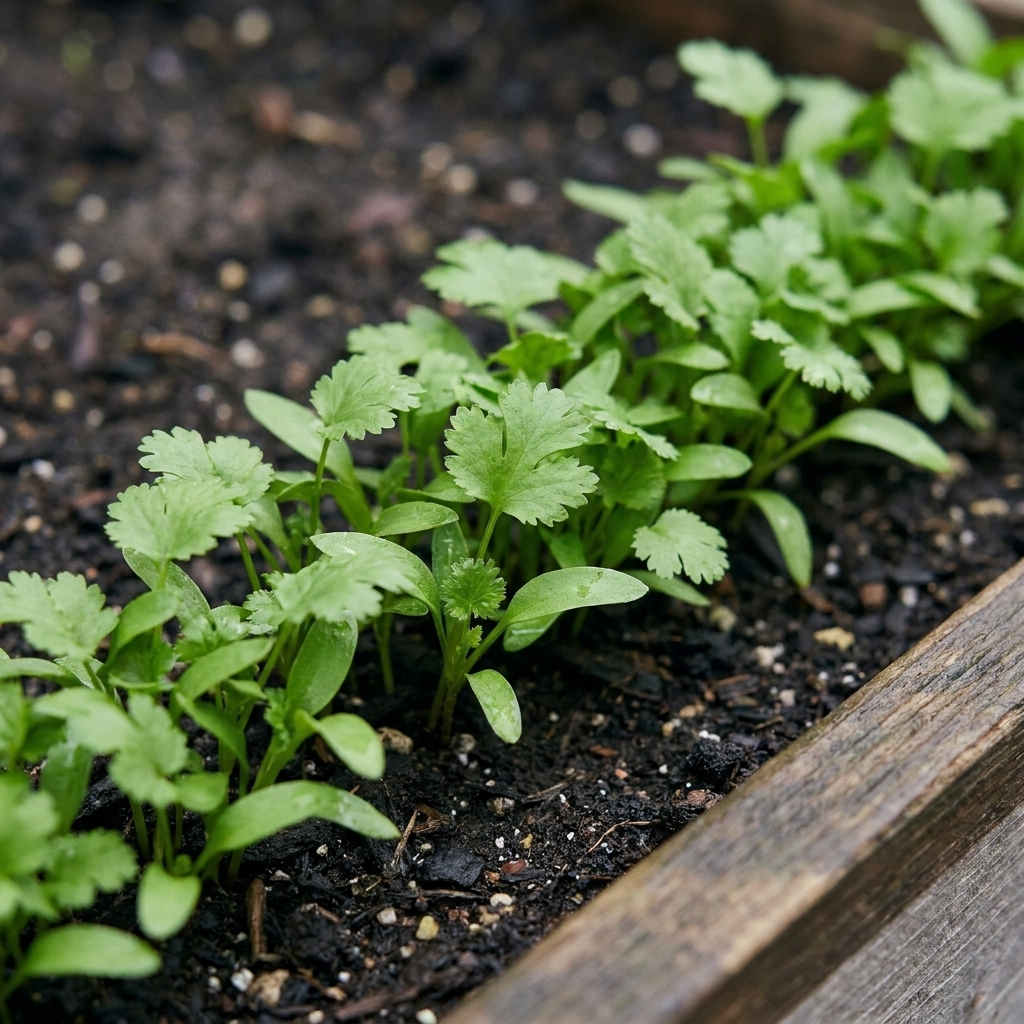
If parsley has ever made you doubt yourself, it was probably at germination. Parsley seed is naturally slow and often erratic. It commonly takes 14 to 28 days to sprout, and it can take longer if conditions swing hot and cold.
Why it is slow
Parsley seeds have a stubborn outer coating and naturally occurring compounds that can delay germination. You can still get great results, but you need steady moisture and patience.
Germination tricks
- Soak seeds first: Soak parsley seeds in room-temperature water for 12 to 24 hours, then drain and sow. This softens the seed coat and often speeds things up.
- Pre-sprout on a damp towel: Place seeds in a damp paper towel inside a loosely closed plastic bag. Keep it warm and check daily. As soon as you see tiny white roots, sow gently. This is a great confidence booster because you can see life before you commit a pot to it.
- Warm soil helps: Parsley can germinate in cool soil (down around 50°F/10°C), but it is faster and more reliable with soil around 65 to 75°F (18 to 24°C). A heat mat indoors can make a big difference.
- Keep the surface evenly moist: Not soggy, not bone dry. I like misting or bottom watering small pots so I do not blast seeds out of place.
- Sow a little thicker than you think: Germination rates can be uneven. You can thin later or transplant extras.
Indoor start or direct sow?
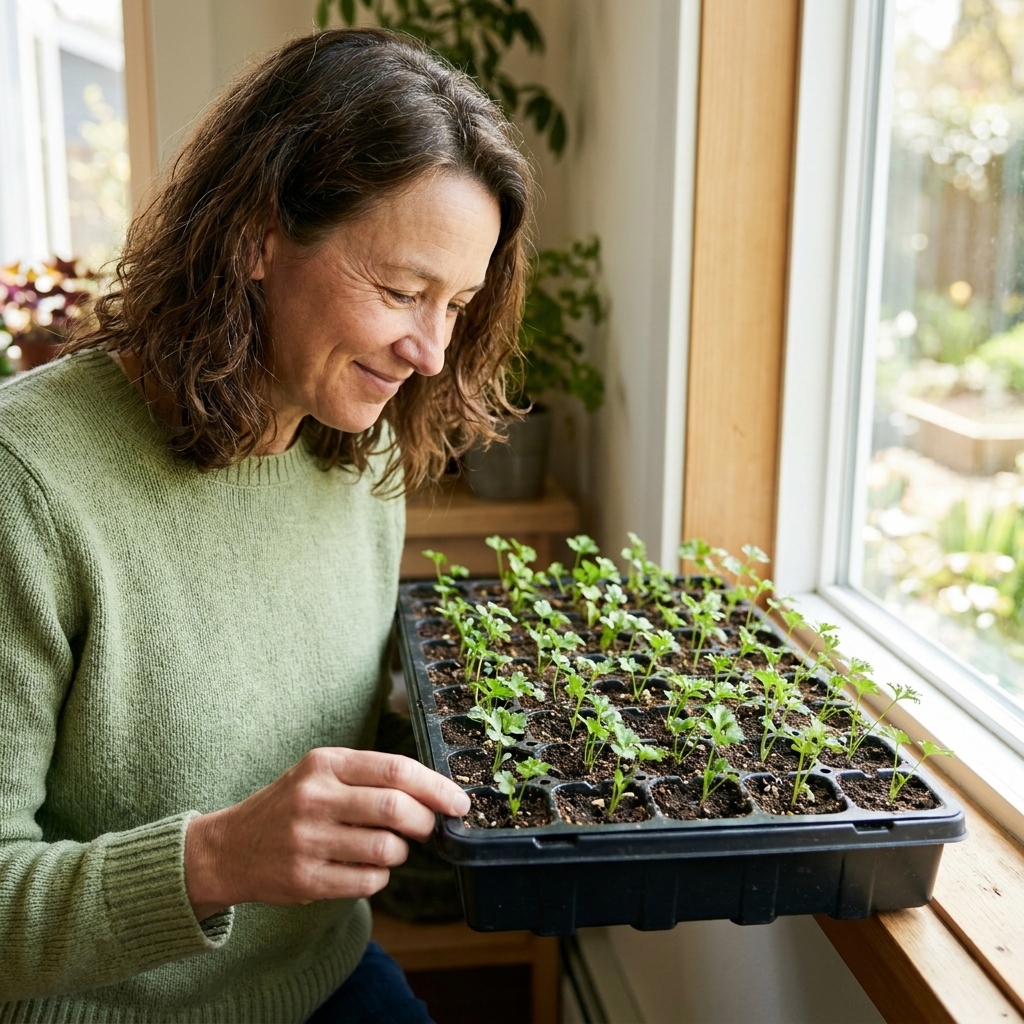
Indoors: Helpful if your spring is cold, or if you want a head start. Use a deep cell or pot because parsley forms a long taproot early. Parsley also prefers not to have its roots messed with, so the deeper the container, the easier the transplant.
Direct sow: Perfectly fine if you can keep the bed consistently moist. Mark the row because it may look empty for weeks.
Planting basics
Light
Full sun to part shade is ideal. In hot summers, parsley appreciates afternoon shade. In cooler climates, full sun keeps it sturdy.
Soil
Parsley likes soil that is loose, fertile, and evenly moist. If your soil crusts over, seedlings struggle. I mix in compost and, in containers, choose a potting mix that drains well but does not dry out instantly.
Spacing
Give plants about 8 to 10 inches (20 to 25 cm) between them. Overcrowded parsley stays damp, and that is when leaf spots and slug damage tend to show up.
Containers
Choose a pot at least 8 to 10 inches deep. That taproot wants depth. A wider pot is even better if you are growing multiple plants for regular harvesting.
How to harvest
Parsley rewards the gardeners who harvest it correctly. The goal is to encourage new growth from the center while removing older outer stems.
The golden rule
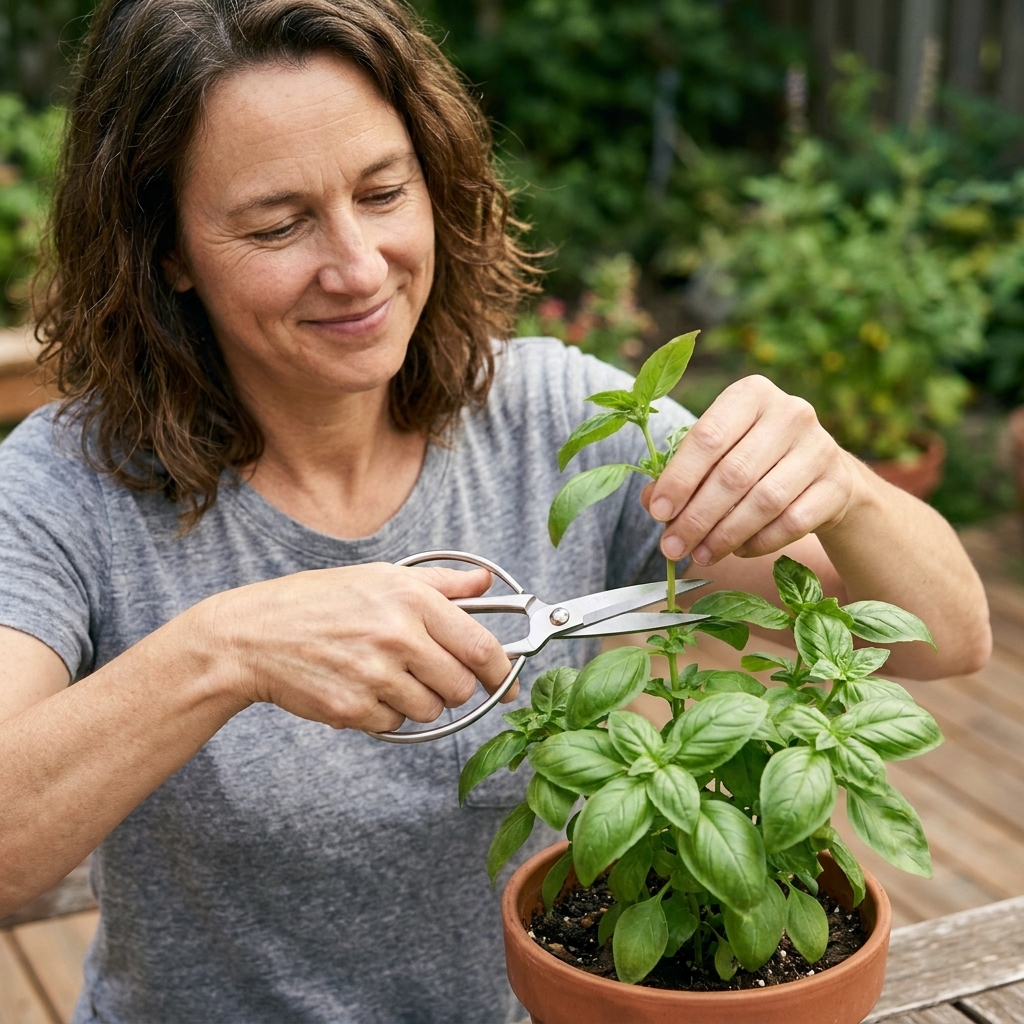
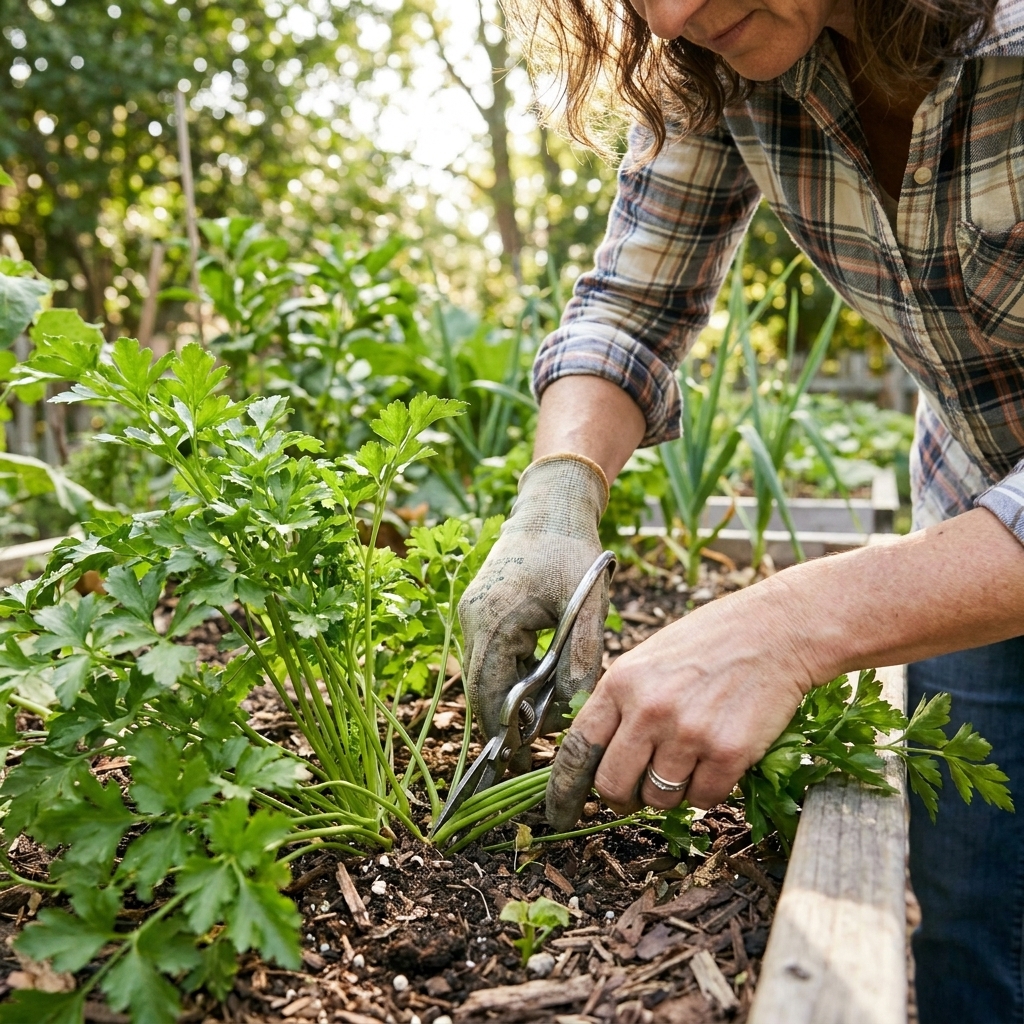
Cut whole stems from the outside of the plant, near the base. Do not just snip the tops like a haircut. When you take entire outer stems, the plant responds by sending up new ones from the crown.
Step-by-step
- Find the oldest stems on the outside edge. They are usually longer and slightly darker.
- Follow the stem down to where it meets the base.
- Use clean scissors or snips and cut close to the soil line without gouging the crown.
- Leave the center growing point intact. That is tomorrow’s harvest.
How much to take
A safe rhythm is harvesting up to one-third of the plant at a time. If you need a lot, it is better to grow a couple plants and rotate harvests than to strip one plant bare.
Flat-leaf vs curly notes
- Flat-leaf: Stems are easy to strip and chop. Great when you cook often and want handfuls.
- Curly: Leaves hold onto water and grit in their ruffles. Swish in a bowl of water, lift out, then spin or towel-dry well before chopping.
Season care
Watering
Parsley prefers even moisture. If it dries out repeatedly, leaves can get tougher and the plant may push toward stress flowering. In containers, check daily during hot weather.
Feeding
If you start with compost-rich soil, parsley does not need much. For containers or heavy harvesters, a light feeding every few weeks helps. I stick to a gentle, balanced fertilizer and avoid going heavy on nitrogen, which can encourage lush, tender growth that may attract aphids.
Mulch
A thin layer of mulch helps keep moisture steady and keeps soil from splashing onto leaves during rain or watering.
Pests and problems
- Swallowtail caterpillars: In many regions, parsley is a host plant for swallowtail caterpillars (often black swallowtail in North America), which means you might find striped caterpillars munching. If you have enough parsley, I often share and let them have a plant. If you do not, relocate them to another host plant if you can.
- Aphids: Spray with a firm stream of water and repeat. Parsley rebounds quickly.
- Leaf spot: Improve airflow, water at soil level, and remove affected leaves.
- Slugs: More common in damp shade. Hand-pick at dusk or use barriers around pots.
Biennial life cycle
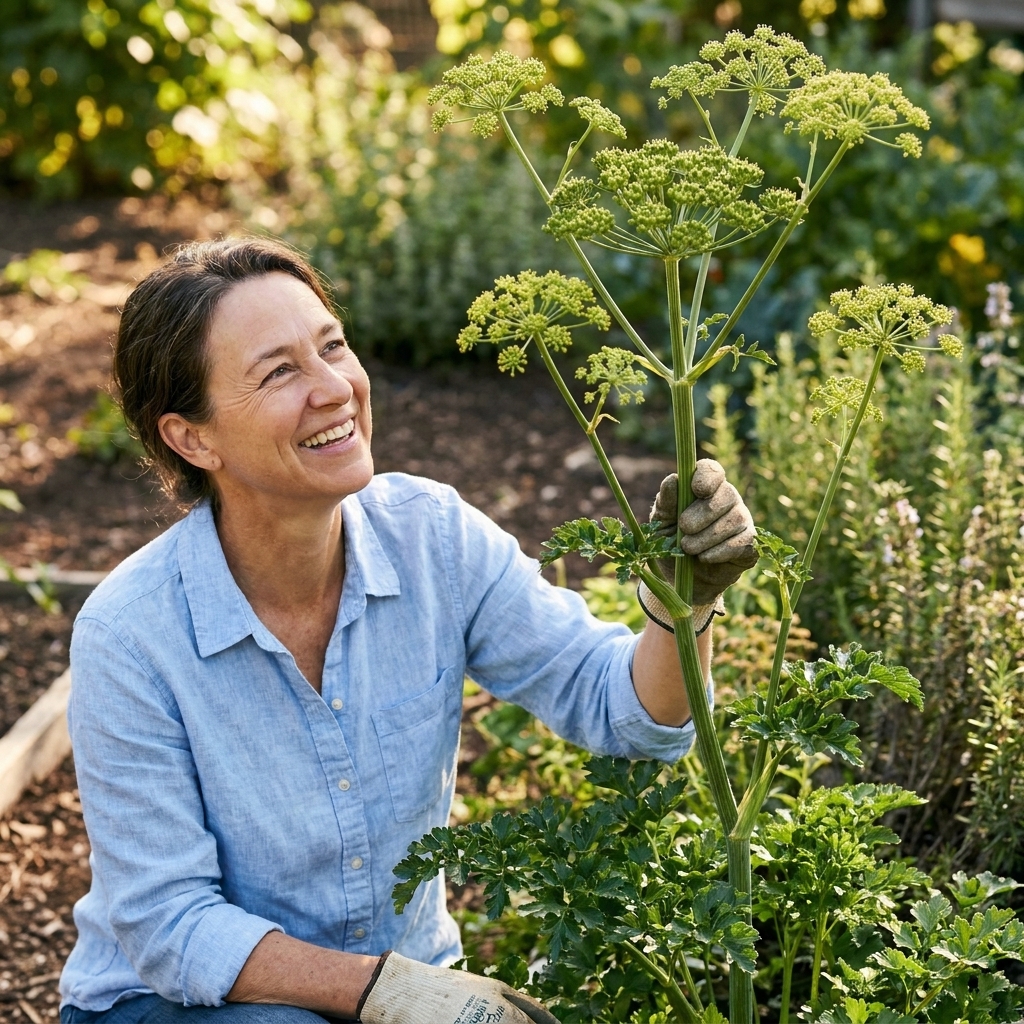
Parsley’s two-year life cycle is the secret to understanding why it sometimes turns from lush leafy herb to a tall, flowering stalk seemingly overnight.
Year 1: leaf growth
In the first year, parsley focuses on building roots and producing a steady rosette of leaves. This is the phase we love for cooking.
Year 2: bolting and seed
After experiencing winter chill, parsley is primed to reproduce. In the second year it sends up a tall central stalk, flowers, and sets seed. Once it commits to flowering, leaf production slows and the flavor can turn stronger and sometimes slightly bitter.
One nuance that surprises people: parsley can bolt in its first year if it is stressed by heat, drought, or big temperature swings. It is still a biennial at heart, but weather can push it to act ahead of schedule.
What you can do:
- Keep harvesting early in year two while leaves still taste good, then let it flower for pollinators.
- Succession sow in late summer or early fall so you have a fresh year-one plant coming along as the old one bolts.
- Grow parsley as an annual by replanting each year. This is the simplest route if you want nonstop tender leaves.
Will it survive winter?
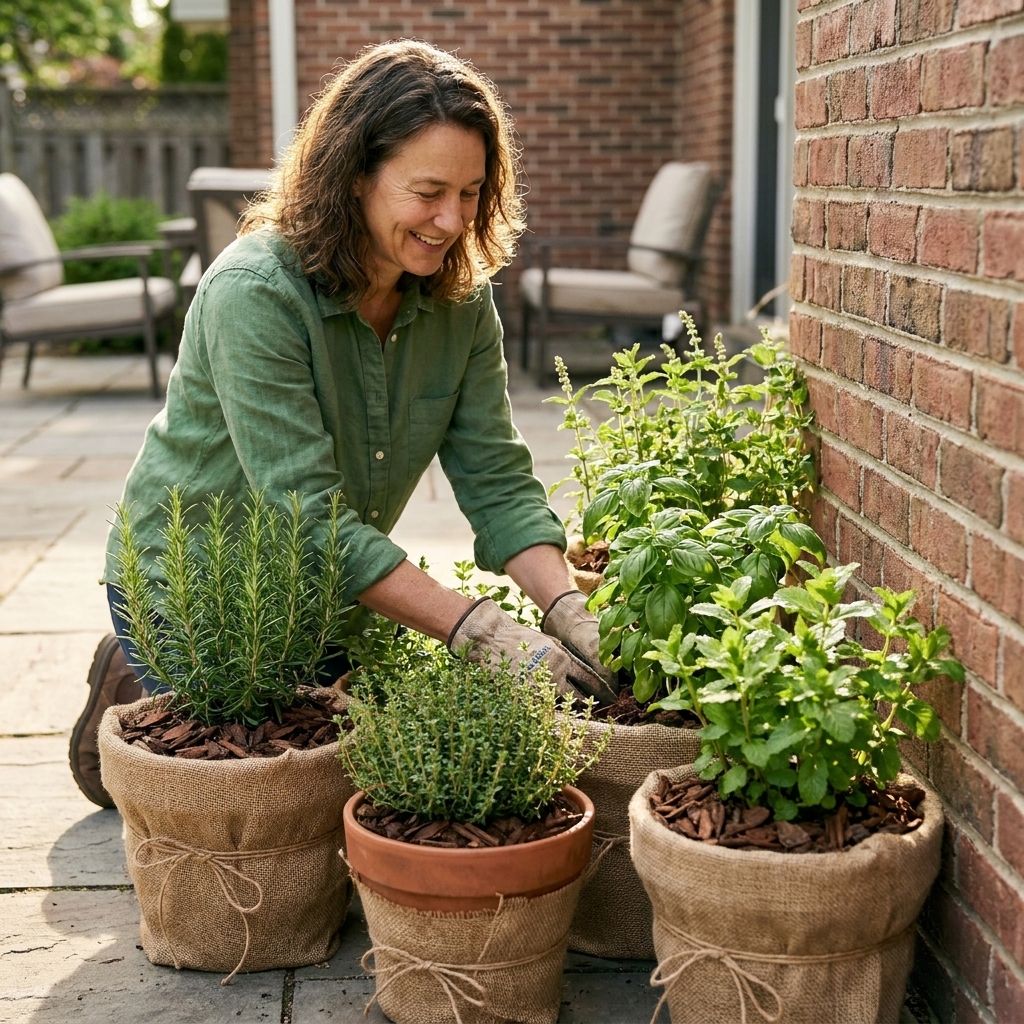
Often, yes. Parsley is surprisingly cold-tolerant. In many regions it overwinters with minimal protection, especially in the ground. In containers, the root zone freezes faster, so tuck pots near the house, add mulch, or move to an unheated garage or sheltered spot during the coldest stretches.
Saving seed
If you let year-two parsley flower, it will produce seeds that ripen in clusters and dry on the plant.
How to collect
- Wait until seed heads turn tan to brown and feel dry.
- Cut the seed heads into a paper bag.
- Let them dry another week in a breathable spot.
- Rub the heads gently to release seeds, then store in a labeled envelope or jar in a cool, dark place.
Parsley can self-seed too. Little volunteer seedlings often pop up nearby in spring. They are easy to transplant while small, as long as you keep as much of the root as possible.
If you are relying on volunteers, do a quick ID check before harvesting. Parsley is in the carrot family, and in some areas it is possible to confuse young seedlings with unpleasant (and sometimes toxic) lookalikes. When in doubt, stick to what you planted and label your patch.
Flavor notes
Flat-leaf: when you want parsley to be heard
- Chimichurri, pesto-style herb sauces
- Soups and stocks
- Roasted vegetables and sheet-pan dinners
- Tabbouleh and grain salads
Curly: lift, crunch, gentle finish
- Potato salad and egg salad
- Herb-forward green salads
- As a fresh topping on rich stews and braises
- Blended into dips where texture matters less
One practical note from my own kitchen: curly parsley tends to trap a bit more grit after rain or overhead watering. If you grow it outdoors, get in the habit of a good soak-and-swish wash routine.
Which one to plant?
If you only have room for one parsley plant, I usually recommend flat-leaf for everyday cooking because the flavor is more pronounced and prep is quicker. But if you love pretty mounded pots, want a slightly gentler taste, or enjoy the texture it brings to cold dishes, curly parsley is absolutely worth the space.
My honest favorite solution is planting both. They grow happily together, they look different enough that you will not confuse them at harvest, and you get the best of both worlds from the same little patch of green.
FAQ
Why is my parsley not germinating?
Slow germination is normal for parsley. Expect about 14 to 28 days, sometimes longer. Keep the soil consistently moist, aim for warmer soil temperatures for faster results (mid-60s to low-70s F), and consider soaking or pre-sprouting seeds to speed things up.
Can I cut parsley and have it grow back?
Yes, if you harvest correctly. Cut whole outer stems near the base. Leave the center growth point so new stems keep coming.
Does parsley come back every year?
Parsley is a biennial, meaning it typically grows leaves the first year and flowers the second year. It can return if it survives winter, and it may self-seed if you let it set seed.
Why did my parsley suddenly grow tall?
That is bolting, usually in its second year, but it can also happen in year one after stress or temperature swings. Once parsley bolts, leaf production slows and the plant focuses on flowering and seed.
Is curly parsley harder to grow than flat-leaf?
No. Their growing needs are nearly identical. The biggest difference is kitchen handling: curly parsley often needs more thorough washing and drying.