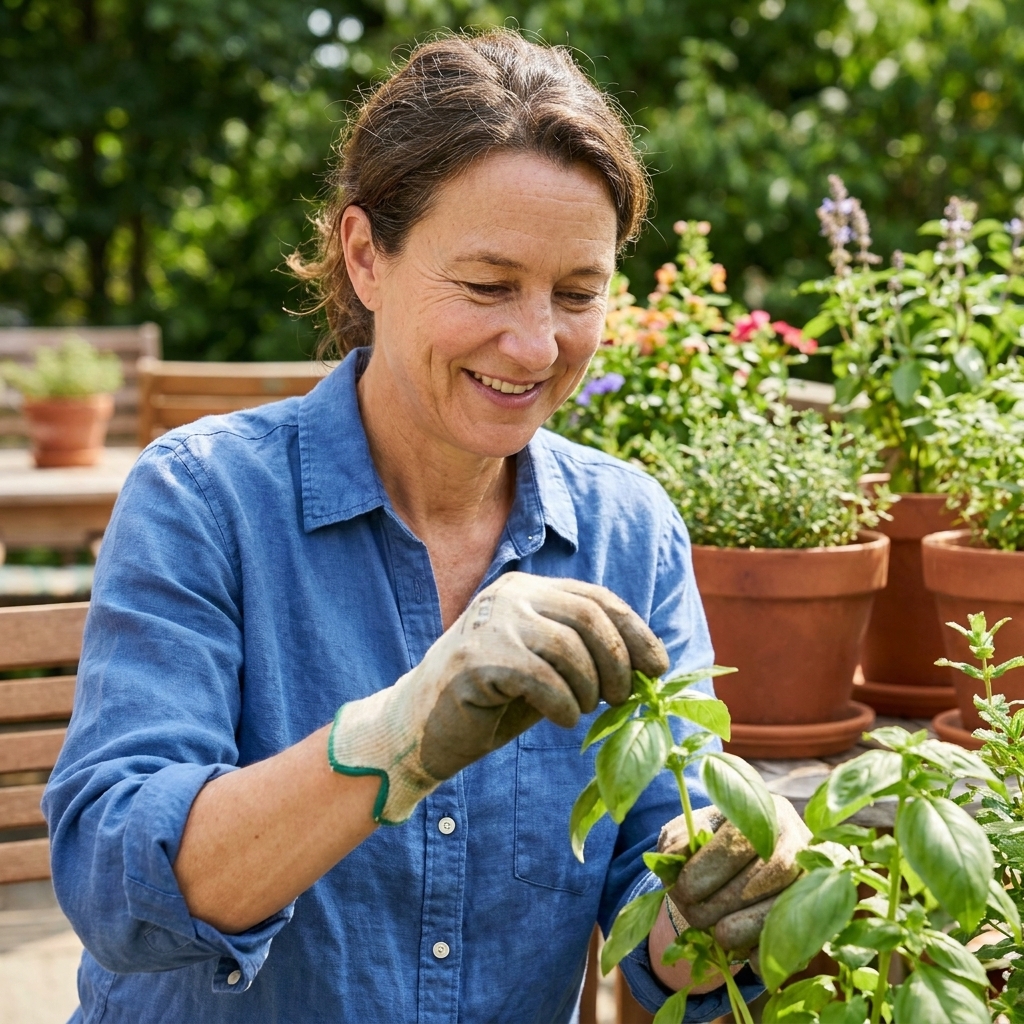
Pinching is the gentlest little “haircut” you can give an herb, and it pays you back fast. When you remove the soft tip of a stem, the plant stops putting all its energy into growing taller and starts branching. More branches means more leaves, more frequent harvests, and far fewer sad, floppy stems reaching for the sun.
I learned this the way a lot of gardeners do, by watching someone else do it without fuss. My grandmother would run her fingers over basil like she was smoothing a ribbon, then pinch. No hesitation. A week later the plant looked like it had doubled. That is the magic of pinching.
What pinching does
Most herbs have a main growing point at the very top of each stem. That tip produces hormones that tell the plant, “Keep going up.” When you pinch that tip off, the plant shifts its attention to the next set of buds down, usually at the leaf joints. Those buds wake up and grow into side shoots.
In plain language:
- Pinch the tip and you usually get new shoots from the node below, often two on opposite-leaved herbs like basil and mint.
- More shoots means more leaf sites and a fuller plant.
- Regular pinching can buy you time before flowering in leafy herbs, especially basil. (Cilantro is still quick to bolt in heat and long days.)
When to start
The best time to start is earlier than you think. You are not being mean to a baby plant. You are teaching it how to grow.
Use these simple cues
- Height: When the plant is about 4 to 6 inches tall.
- Leaf sets: When it has at least 3 to 4 sets of true leaves (not the first smooth seed leaves).
- Health: Only pinch when the plant is actively growing and looks hydrated and perky.
If your herb is newly transplanted and a little droopy from the move, give it a few days to settle before you start pruning.
Where to pinch
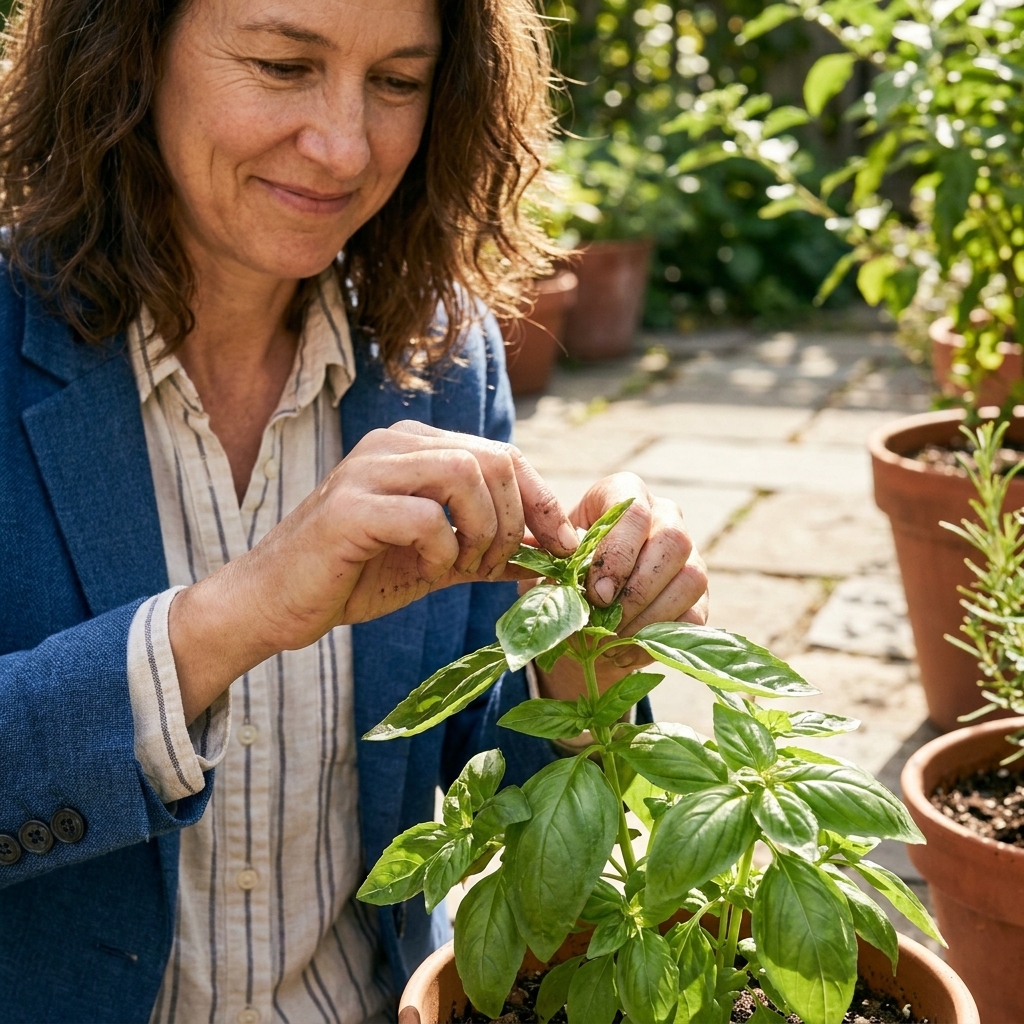
If you remember one thing, make it this: pinch just above a leaf node, not in the middle of a bare stem.
The quick visual
Look for a pair (or cluster) of leaves coming out of the stem. Right above that junction is your pinch point. Removing the tip there encourages the plant to branch from that node.
Pinch or snip?
- Fingers: Perfect for soft herbs like basil and mint. Use your thumbnail and forefinger to cleanly pop off the tender tip.
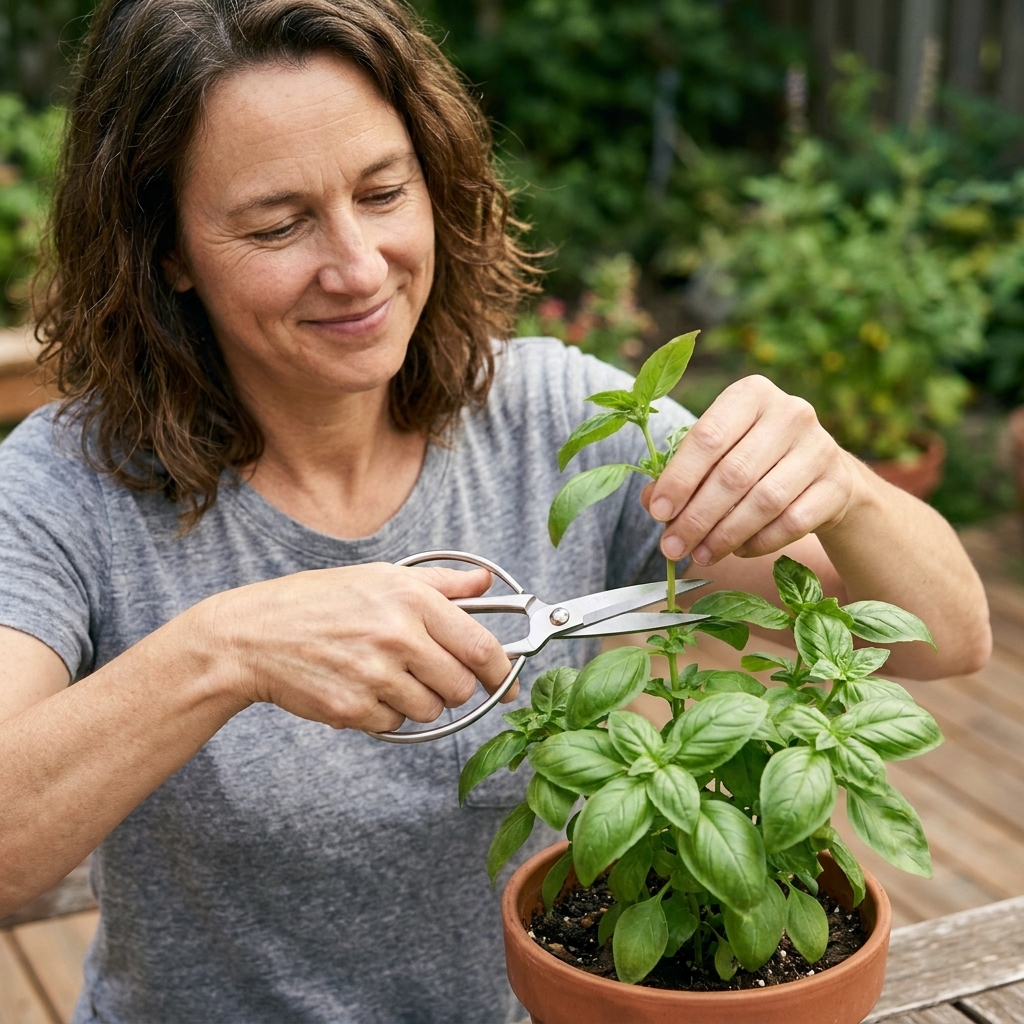
- Snips: Better for slightly tougher stems (oregano, sage) or when you want a very clean cut. Any small scissors work, as long as they are clean and sharp.
If the stem tears instead of snapping cleanly, switch to scissors. Ragged tears can increase the risk of fungal issues, especially in humid weather.
One more small habit that helps: avoid pinching when foliage is wet, and wipe or wash your snips between plants (and definitely between any plant that looks diseased).
How often to pinch
Pinching is not a one-and-done task. Think of it like gently steering the shape of the plant over the season.
As a rule of thumb, tender annual herbs tolerate frequent tip-pinching. Woody Mediterranean herbs prefer lighter, green-tip pruning.
A simple rhythm for most herbs
- Every 7 to 14 days: Pinch or harvest the newest tips once the plant is growing steadily.
- Take 1 to 3 inches: Focus on the soft green growth at the ends.
- Never remove more than 1/3 at a time: Especially for small plants or during heat stress.
In peak summer growth, basil and mint can handle frequent pinches. In slower seasons or indoors, ease back to avoid stalling growth.
Pinching is harvesting
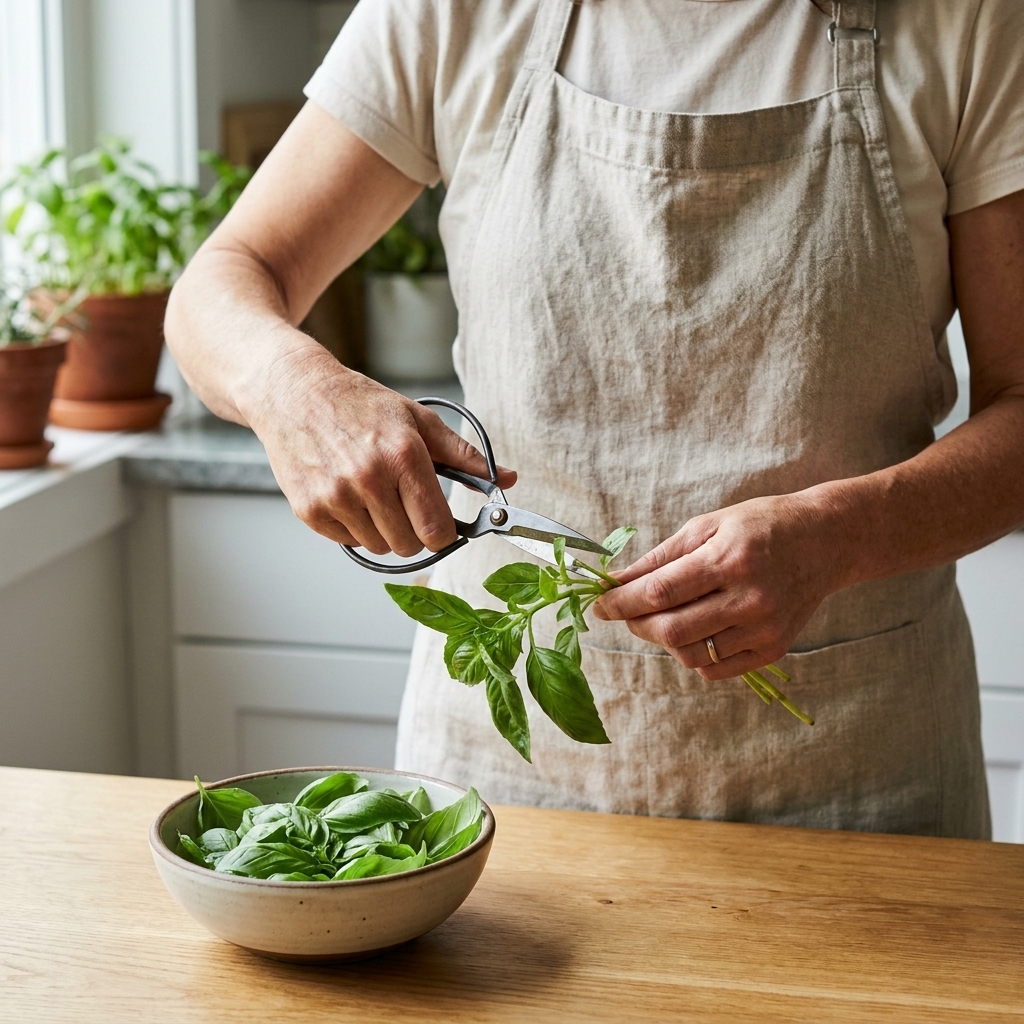
One of my favorite “gardener secrets” is that the best way to harvest is also the best way to prune. Instead of plucking single leaves (which can leave a naked stem), harvest whole tips just above a node.
You get:
- a usable bunch of herbs for the kitchen
- a plant that branches instead of stretching
- fewer tall stems flopping outward
Herb-by-herb tips
Basil
Basil practically begs to be pinched. Start once it has several sets of true leaves, then keep going all season.
- Where: Pinch above a pair of leaves, leaving that leaf pair behind.
- Goal: Encourage a rounded plant with many stems.
- Flower tip: If you see a flower spike forming, pinch it off promptly and take a little extra stem below it to slow the plant down.
Mint
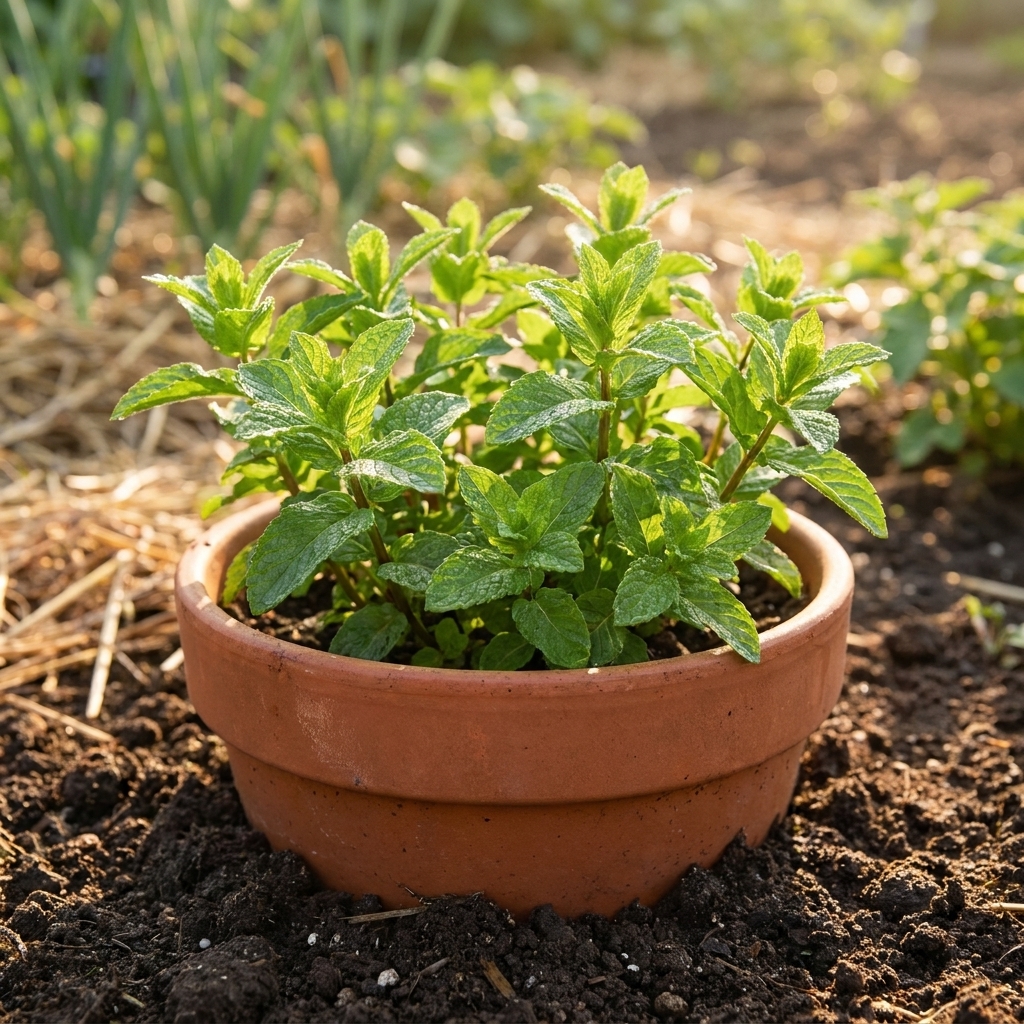
Mint grows fast and can get leggy in containers if you only pick leaves here and there.
- Where: Pinch the top 1 to 2 inches regularly.
- Goal: More side shoots, fewer long, sprawling stems.
- Extra: Mint can handle a harder cutback midseason. If it looks tired, cut it back by about half, water well, and it rebounds quickly.
Cilantro
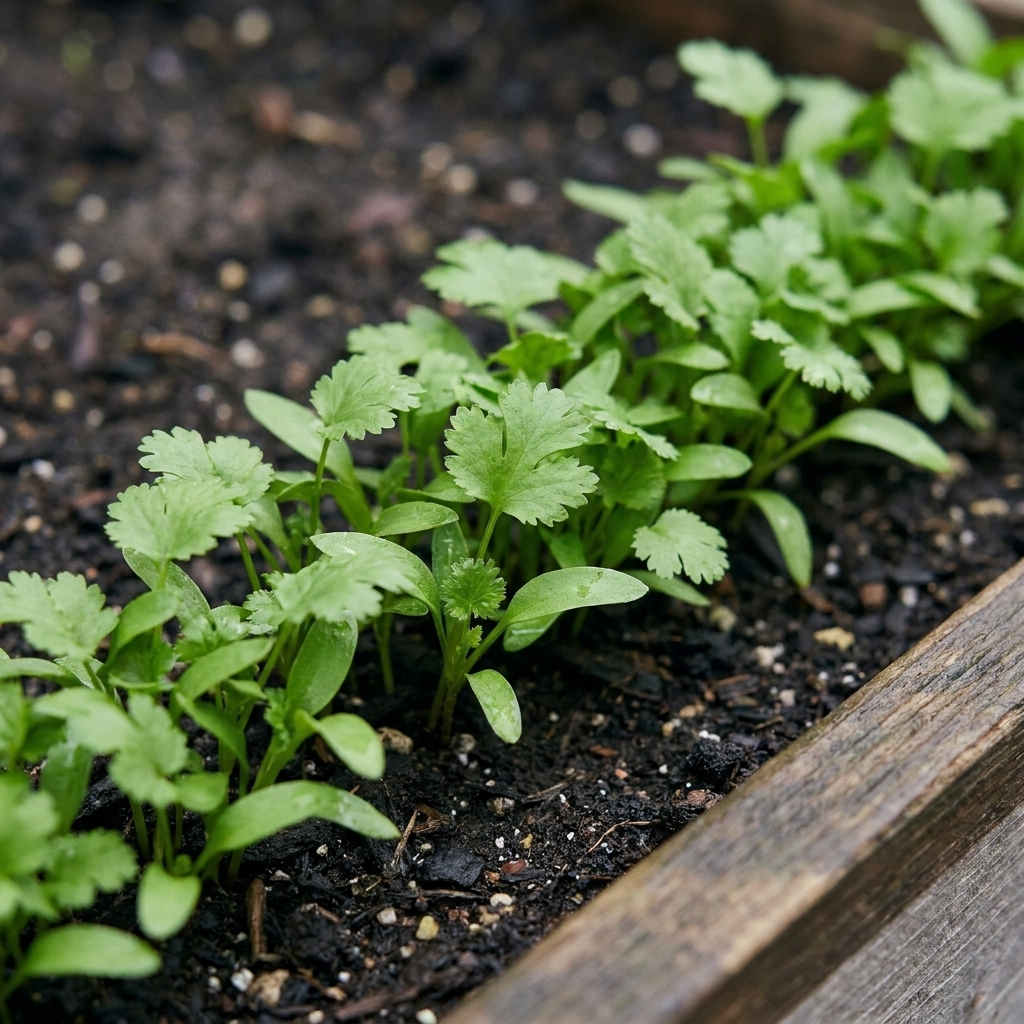
Cilantro is the tricky one because heat and long days push it to bolt quickly. Pinching can help a little if you remove emerging stalks early, but it is not a guarantee in hot weather.
- Where: Pinch the central stem tips once the plant is established.
- Goal: Keep leaf production going a bit longer.
- Reality check: When conditions are right for bolting, cilantro will eventually flower. Succession sowing often matters more than perfect pruning.
Parsley
Parsley does not need pinching in the same way basil does because it grows as a rosette. But you can prune it for fullness by harvesting correctly.
- Where: Cut entire outer stems at the base, near the soil line.
- Goal: Encourage new growth from the center.
- Avoid: Snipping just the leaf tops, which leaves awkward bare stalks.
Oregano and marjoram
These respond beautifully to tip pruning, especially once they start to sprawl.
- Where: Pinch or snip the tender tips above a node.
- Goal: A dense, leafy mound.
- Flavor note: Regular trimming keeps the plant producing fresh, tender leaves that taste brighter than old woody growth.
Thyme
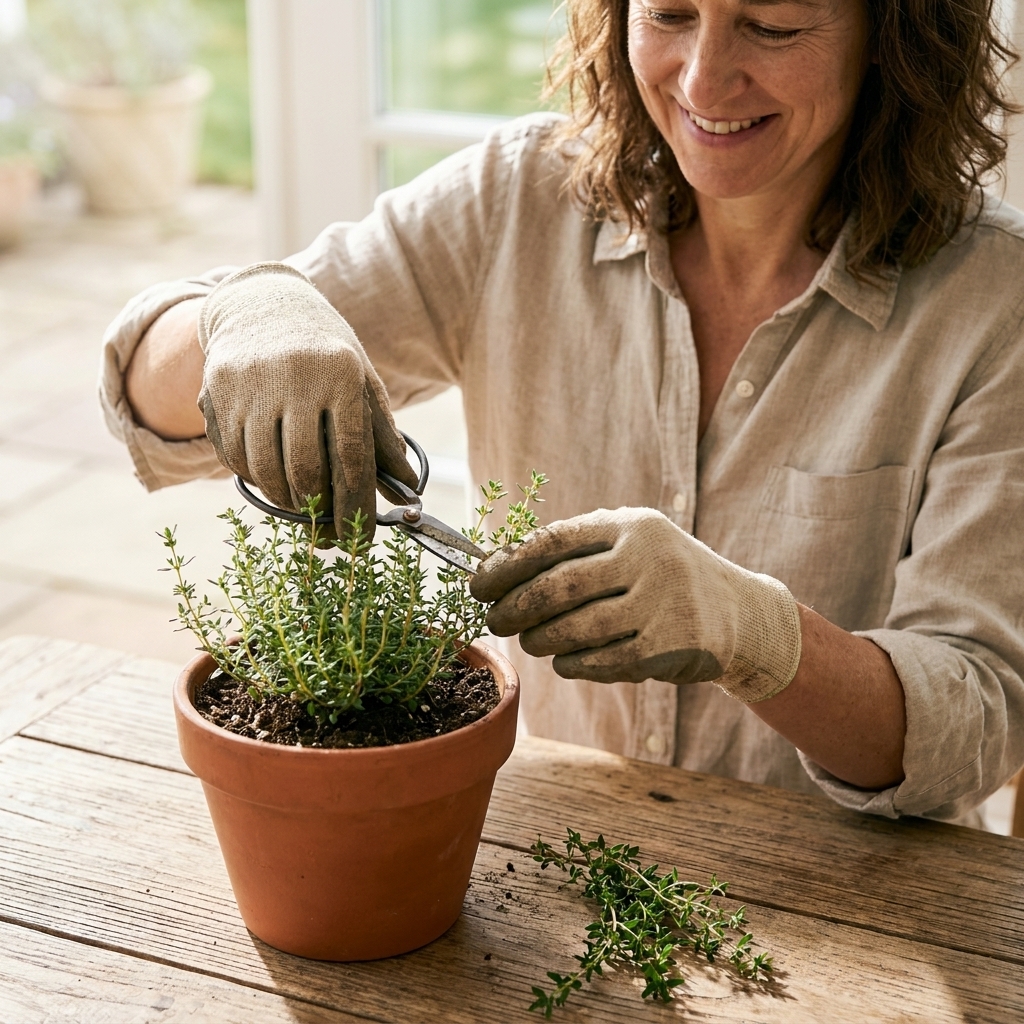
Thyme is naturally low and branching, so think “light grooming” rather than aggressive pinching.
- Where: Snip small sprigs from the ends, staying in green growth.
- Goal: Encourage fresh tips and help prevent woody, bare centers.
- Do not: Cut deep into brown woody stems. Thyme may not resprout from old wood.
Sage
Sage becomes woody as it matures. Tip pruning helps keep it shapely, but it prefers a gentle approach.
- Where: Snip soft tips in spring and early summer.
- Goal: Encourage branching before stems harden.
- Timing: Avoid heavy pruning late in the season in cold climates. Tender new growth is more likely to winter-kill.
Rosemary
Rosemary is more of a shrub. You can pinch soft tips to shape it, but it will not behave like basil.
- Where: Pinch or snip the soft green ends.
- Goal: Bushier shape and more usable sprigs.
- Do not: Cut far back into thick, leafless wood unless you know your variety resprouts well.
Pinching and bolting
Bolting is when an herb shifts from “make leaves” to “make flowers and seeds.” Once that switch flips, leaves often get smaller, tougher, or more bitter.
Pinching helps because:
- it removes early flower buds before they take over
- it redirects energy into side growth
- it keeps you harvesting frequently, which many leafy herbs respond to by pushing more leaves
That said, bolting is also driven by heat, long days, and stress. Alongside pinching, these habits make a big difference:
- Water consistently: Drought stress speeds up flowering.
- Mulch containers and beds: Cooler roots help keep herbs leafy.
- Provide afternoon shade: Especially for cilantro, parsley, and mint in hot climates.
- Feed lightly: A small boost of compost or a gentle fertilizer supports regrowth after pruning.
Common mistakes
1) Plucking individual leaves
What happens: You end up with a long bare stem and a tuft at the top.
Fix: Harvest whole tips above a node so the plant branches.
2) Pinching too low on a small plant
What happens: You remove too much leaf area and the plant stalls.
Fix: Start with just the top tender tip, and wait until the plant has several sets of true leaves.
3) Letting flowers form “just this once”
What happens: The plant commits to flowering and leaf production slows.
Fix: As soon as you see a flower spike on basil, pinch it out promptly and harvest a little extra stem below it. With cilantro, remove any emerging flower stalks early, but expect bolting when weather is hot.
4) Cutting into woody stems
What happens: Some herbs do not regrow well from old wood.
Fix: Stay in green growth for thyme and rosemary, and prune sage mostly in its softer growth periods.
What to do with the tips
This is the part that makes pinching feel like a bonus instead of a chore. Those tender tips are usually the most flavorful bites on the plant.
- Use fresh: Toss basil tips into pasta, chop mint into yogurt, or scatter oregano over roasted vegetables.
- Make a small herb oil: Blend herbs with olive oil and freeze in spoonfuls.
- Freeze quick: Chop and freeze in an ice cube tray with water or oil.
- Dry gently: Air-dry small bundles where there is airflow and no direct sun, or use a dehydrator on a low setting.
Quick checklist
- Pinch when the plant is 4 to 6 inches tall and actively growing.
- Find a leaf node and pinch just above it.
- Take the top 1 to 3 inches of tender growth.
- Repeat every 7 to 14 days during strong growth.
- Remove flower buds early if you want leaves.
- Harvest stems, not single leaves, for the bushiest plants.
FAQ
Will pinching stunt my herb?
If the plant is healthy and you remove only the tender tip, pinching does the opposite. It encourages faster, fuller growth. Problems usually come from pinching a plant that is too small or cutting off too much at once.
Can I pinch herbs growing indoors on a windowsill?
Yes, and indoor herbs often need it even more because light is usually weaker. Pinching keeps them compact and helps prevent lanky stems. Pair it with a sunny window or a grow light for best results.
Should I pinch after I water or before?
I like to pinch when the plant is well-hydrated. If your herb is wilted, water first, let it perk up, then prune.
My basil is tall and bare. Can I fix it?
Usually, yes. Start harvesting the tops down to just above lower leaf nodes to encourage branching. If the lower part of the plant is truly leafless, you may not get much regrowth from that section, but you can still encourage new shoots from any remaining nodes. In extreme cases, it is worth starting a new basil plant while you rehab the old one.