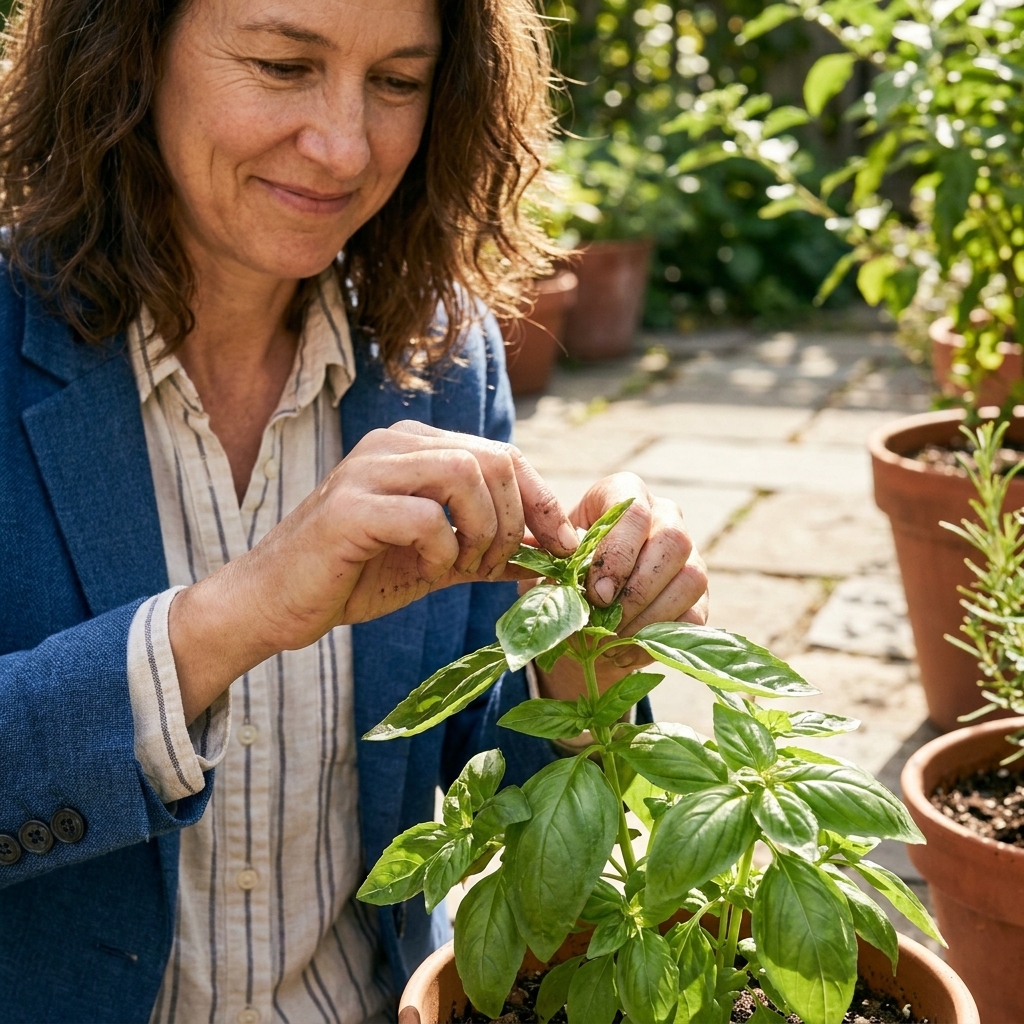
Sweet basil is one of those herbs that makes you feel rich in the simplest way. A single plant can perfume your whole patio or kitchen windowsill, and with the right kind of pinching, it will keep offering up tender leaves again and again. The secret is not fancy fertilizer or a magical variety. It is learning how basil grows, then stepping in at the exact moments that push it toward leaves instead of flowers.
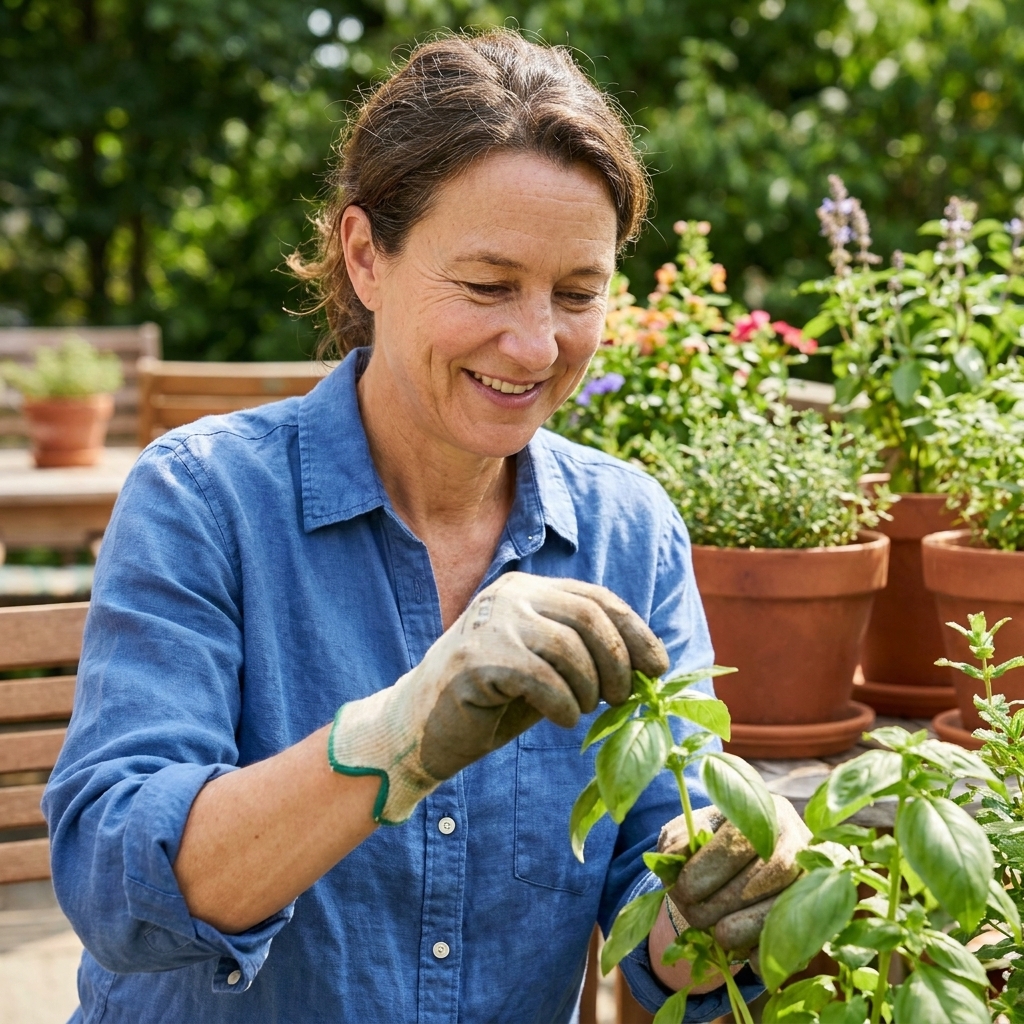
This is the same approach I learned as a kid, standing next to my grandmother while she pinched basil tips between her fingers like she was plucking threads from the air. I thought she was just tidying the plant. Really, she was training it for the next round of leaves.
How basil keeps growing
Sweet basil is an annual that wants to complete one mission: grow, flower, set seed, and finish. Our mission is different: we want leaves. Pinching and harvesting are how we gently interrupt basil’s seed plans.
What bolting means
Bolting is when basil shifts into flowering mode. You will see a central stem stretch taller, then a small cluster forms at the top. Soon it becomes a flower spike with tiny blooms. Once that process gets going, the plant starts putting more energy into flowers and seeds and less into making big, tender leaves.
What can push basil to bolt
- Heat stress: long stretches of hot days and warm nights can push basil to flower faster.
- Dry cycles: letting pots get bone dry, then soaking them, stresses the plant.
- Running out of nutrients: especially in containers, low fertility can slow growth and make the plant less productive (and a slow, stressed basil is quicker to give up and flower).
- Not harvesting: basil that is left alone tends to race upward and flower.
- Low light indoors: weak light causes leggy, thin growth that is easier to stall out. It may not be the main trigger for bolting, but it definitely makes basil harder to keep lush and leafy.
Planting for nonstop harvests
Endless basil starts with a plant that can grow fast enough to replace what you pick. That means enough light, enough root space, and soil that stays lightly moist without staying soggy. If you are growing outdoors, remember one simple rule: basil hates cold. Give it warmth from the beginning and it will repay you.
Pick a variety for your space
Classic Genovese sweet basil is the kitchen workhorse, but you can use the exact same pruning approach on most sweet basils.
- For big leaves: Genovese types.
- For compact indoor pots: smaller-leaf sweet basils can stay bushy with less effort.
- For hot climates: bolt-resistant sweet basil selections can help, but do not rely on the label alone. Technique still matters.
Sunlight (outdoors and indoors)
Outdoors: aim for 6 to 8+ hours of sun. If your summers are intense, basil often appreciates morning sun and a little afternoon shade.
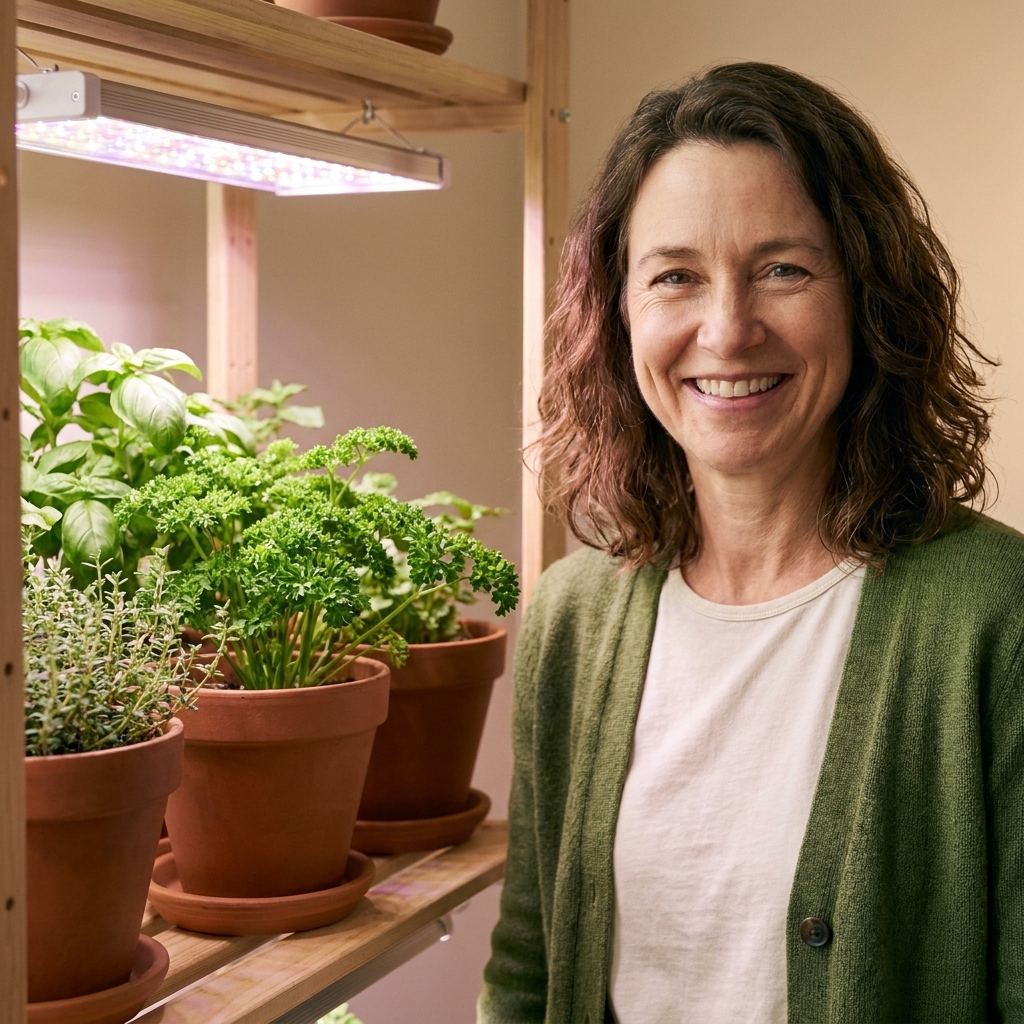
Indoors: a bright south or west window can work, but many kitchens are dimmer than they feel. If your basil leans hard toward the light or grows long spaces between leaves, add a simple grow light. Strong light is what makes basil easy to keep leafy.
Soil and pots
If you are growing in containers, pot choice matters more than most people think.
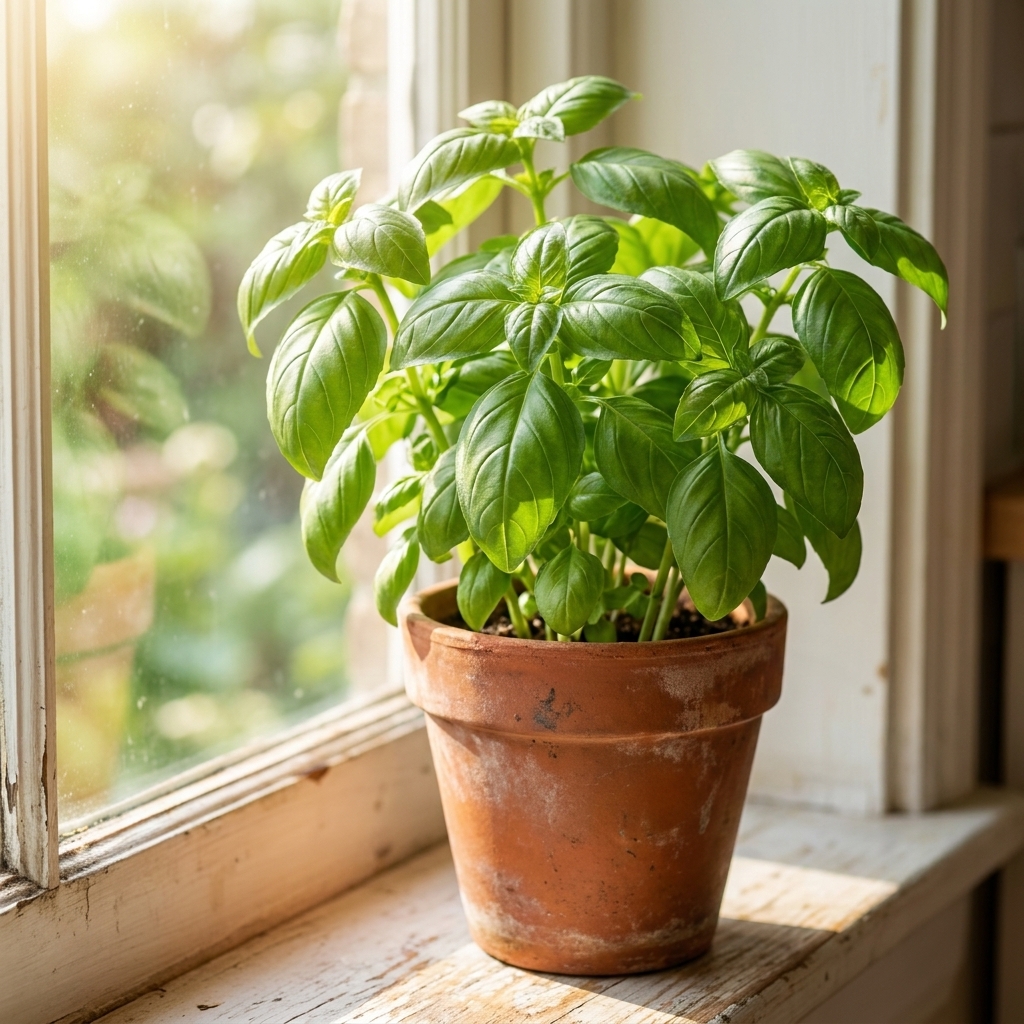
- Pot size: for one basil plant, use a pot at least 8 to 10 inches wide. Bigger is easier because it dries out more slowly.
- Drainage: always a drainage hole. Basil hates sitting in water.
- Soil: use a quality potting mix, not garden soil. I like mixes that hold moisture but still feel fluffy.
Seed vs. store-bought plants
From seed: you can pinch early and train the plant from the beginning. Start seeds indoors 4 to 6 weeks before your last frost, or direct sow once nights are reliably warm.
From a nursery or grocery store pot: this is faster, but you may need to reset the plant.
- Nursery basil: usually fine, but check for roots circling the bottom. Pot up if needed.
- Grocery store basil: often several crowded seedlings jammed into one pot. Gently separate into smaller clumps and pot them up. Expect a little transplant shock. For the first few days, keep them evenly moist and out of harsh afternoon sun while they settle in.
Spacing outdoors
In raised beds or in-ground planting, give basil 10 to 12 inches between plants. Tight spacing reduces airflow and can encourage stress and disease, which often speeds up flowering.
The pinching technique
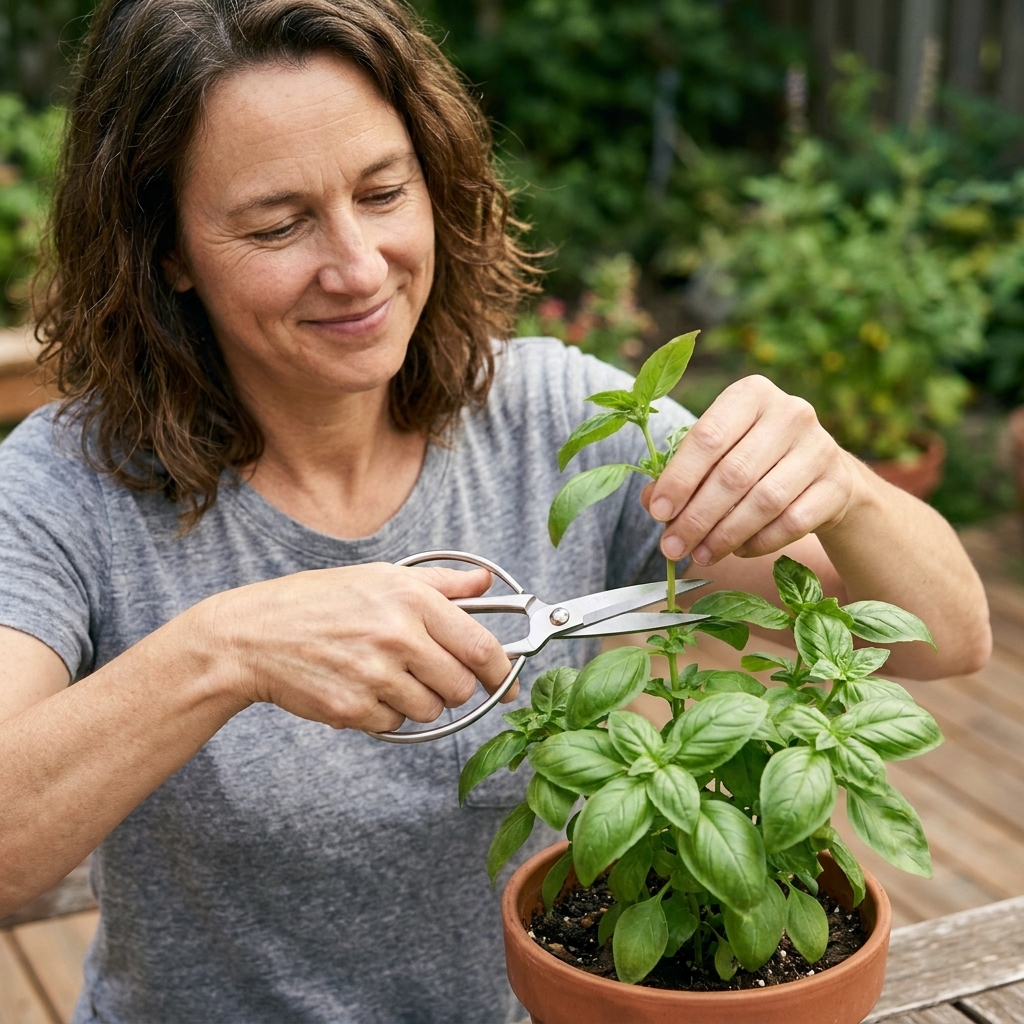
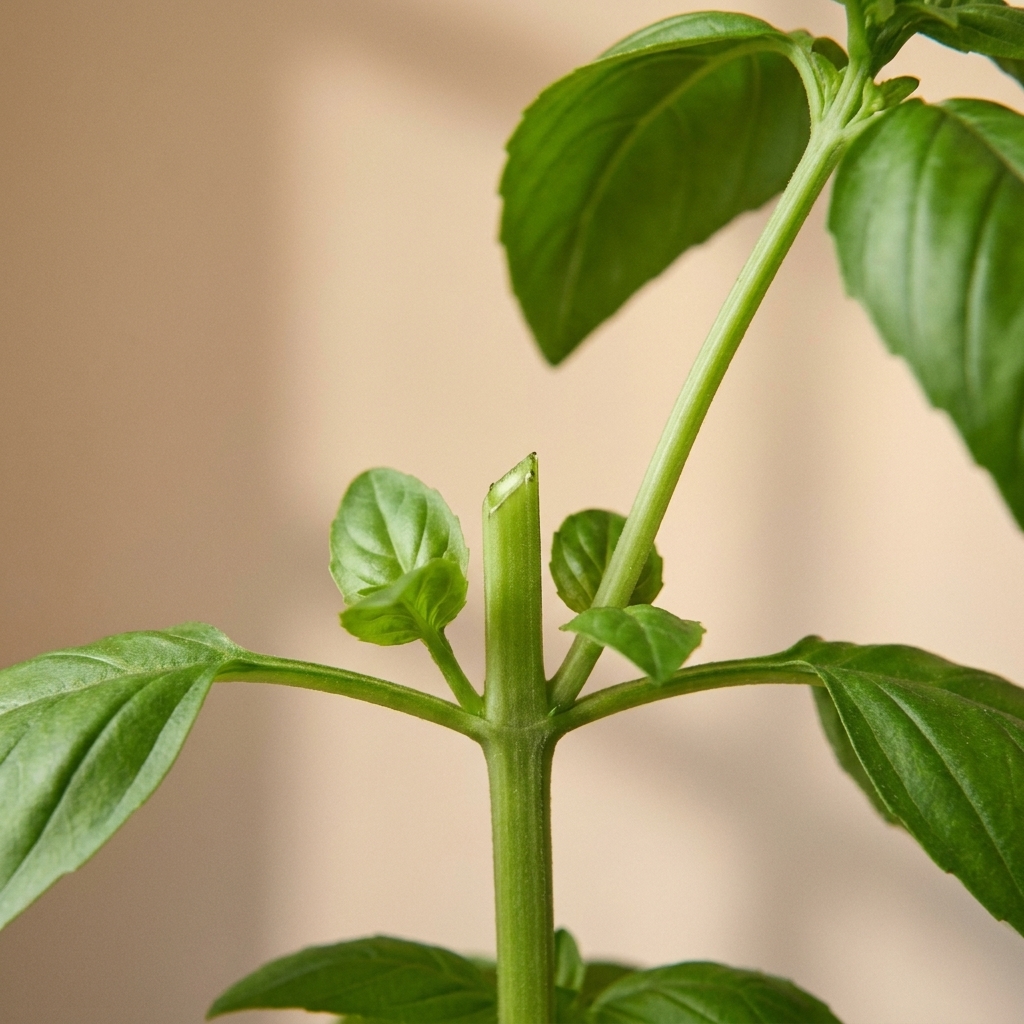
If you remember only one thing, make it this: always cut basil above a node so it can branch. A node is the point where leaves come out of the stem. When you cut above a node, the plant responds by sending out two new growing tips from that spot.
When to start pinching
Start when the plant is 6 to 8 inches tall and has at least 3 to 4 sets of true leaves. If you pinch too early, you slow the plant down. If you wait too long, it becomes tall and stubborn, and it bolts more easily.
The exact cut (step by step)
- Find the top growing tip, the newest leaves clustered at the top.
- Move down the stem until you find a pair of healthy leaves with a tiny set of leaves forming in their armpits (leaf axils). That is your node.
- Use clean fingers or snips and cut just above that node, leaving the pair of leaves in place.
- Within a week or two, those tiny side buds become two new stems. That is your basil becoming bushy.
How often to pinch
In active growth, pinch or harvest every 7 to 14 days. Frequent light harvests beat occasional big haircuts for keeping basil in leaf-making mode.
Where people go wrong
- Cutting too low: if you cut into older, leafless stem, regrowth is slow.
- Plucking single leaves: taking leaves one by one does not encourage branching the way tip-cutting does.
- Letting one stem win: if one central stem keeps climbing, it will flower first. Keep tips even like you are gently leveling a hedge.
- Using dirty snips: a quick wipe with rubbing alcohol helps prevent spreading disease from plant to plant.
Harvesting without flowers
Harvesting is pinching with dinner in mind. The same rule applies: cut above a node.
The two-stem harvest
When you need a handful of basil, choose a stem and cut it back to just above a node that has two good leaf pairs. You get a usable stem for the kitchen, and the plant responds by splitting into two growing points.
How much to take at once
As a general comfort zone, harvest up to one-third of the plant at a time. If you need more than that, it is usually a sign you will be happier with two or three basil plants growing together.
Best time of day
I like to harvest in the morning after the dew has dried but before the day heats up. The leaves feel plumper, and the plant rebounds quickly. Indoors, any time is fine, but avoid harvesting right after the soil has been very dry.
Preventing early bolting
Bolting prevention is mostly about keeping basil comfortable and keeping its growing tips busy making branches. Here are the biggest levers you can pull.
1) Remove flower spikes early
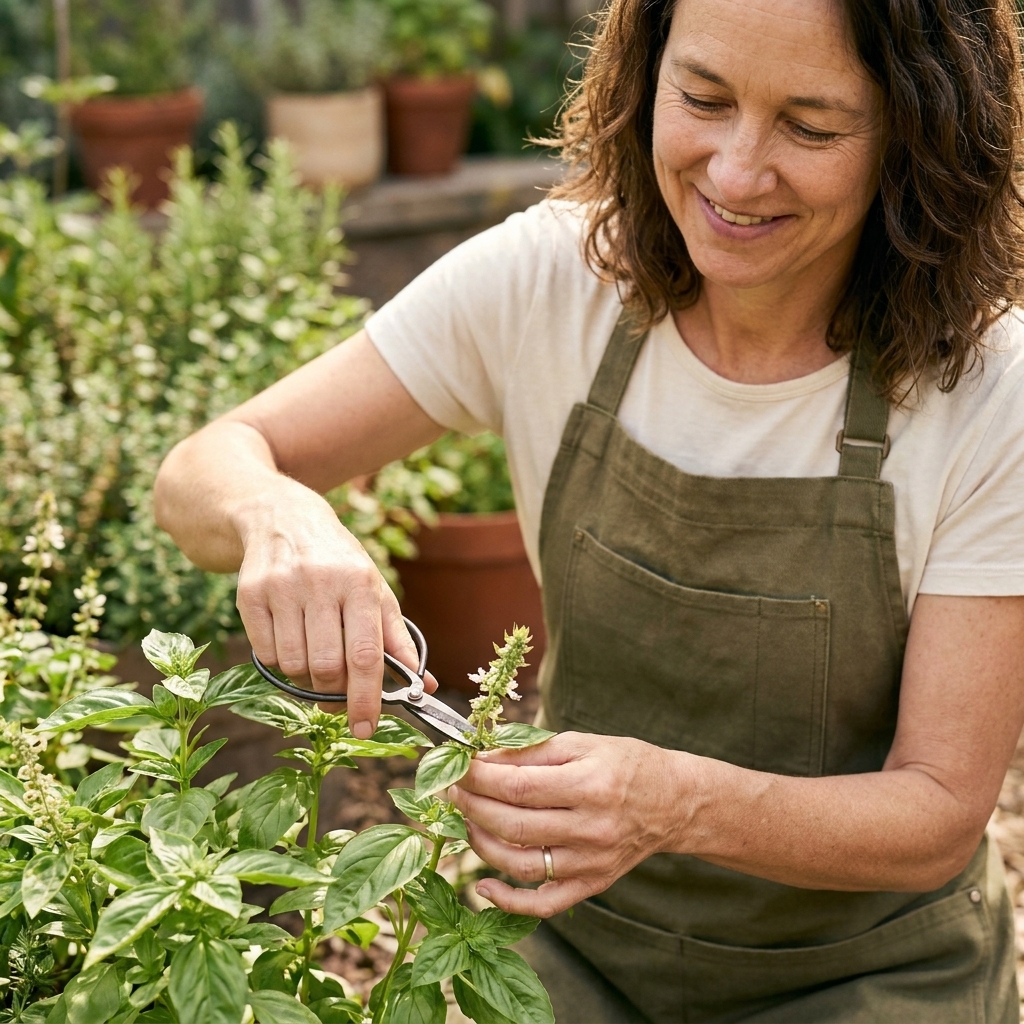
If you see a flower cluster forming, do not just pinch off the very top. Follow the flower stem down until you reach the first strong set of leaves, then cut just above that node. The goal is to remove the flowering tip so the plant redirects energy into side shoots.
2) Keep moisture steady
Basil likes evenly moist soil, not swampy and not dust-dry. In containers during summer, that can mean watering daily.
- Water when the top inch of soil feels dry.
- Water deeply until it drains, then empty any saucer so roots are not sitting in runoff.
- Mulch outdoor basil with a thin layer of straw or shredded leaves to slow evaporation.
3) Feed lightly and consistently
In beds with decent soil, basil can do well with compost mixed in at planting and a side-dress midseason. In pots, nutrients wash out. Feeding is less about forcing growth and more about keeping the plant vigorous enough to replace what you harvest.
- Containers: use a balanced liquid fertilizer at half strength every 2 to 4 weeks, or top-dress with compost and water it in.
- In-ground: compost at planting, then a light boost once the plant is producing heavily.
4) Manage heat in containers
Dark pots in full afternoon sun can bake roots. If you live where summers are fierce:
- Shift pots so they get morning sun and afternoon shade.
- Use a larger, lighter-colored container that stays cooler.
- Water earlier in the day so the plant is not entering peak heat already thirsty.
5) Give it breathing room
Good airflow helps basil stay steady. If your plant is dense, thin a few interior stems by harvesting them for pesto. Think of it as pruning for breathing room.
Indoor basil that lasts
Indoor basil can be wonderfully productive, but it needs a little more intention. Most indoor basil failures are really light failures.
Light that keeps it compact
If a window is not enough, a small grow light placed close to the plant makes a huge difference. Aim for bright light for 12 to 16 hours a day, with a light that is actually strong enough (a proper LED grow light positioned at the recommended distance, not a dim room lamp across the kitchen). Keep the light close enough that the basil stays compact, while making sure leaves are not heating up.
Airflow and temperature
Basil likes warmth, but stale air invites trouble. A gentle fan across the room helps strengthen stems and reduces the chance of fungal issues. Avoid placing basil right against a cold window on winter nights.
Watering indoors without gnats
- Use a pot with a drainage hole and a saucer.
- Let the top inch dry slightly between waterings.
- Bottom-water occasionally so the whole root ball hydrates evenly, then let it drain well.
My weekly routine
Every week, I rotate the pot, pinch the tallest tips, and remove any leaves that look tired. That tiny rhythm keeps basil growing like it has a job to do.
Outdoor basil to frost
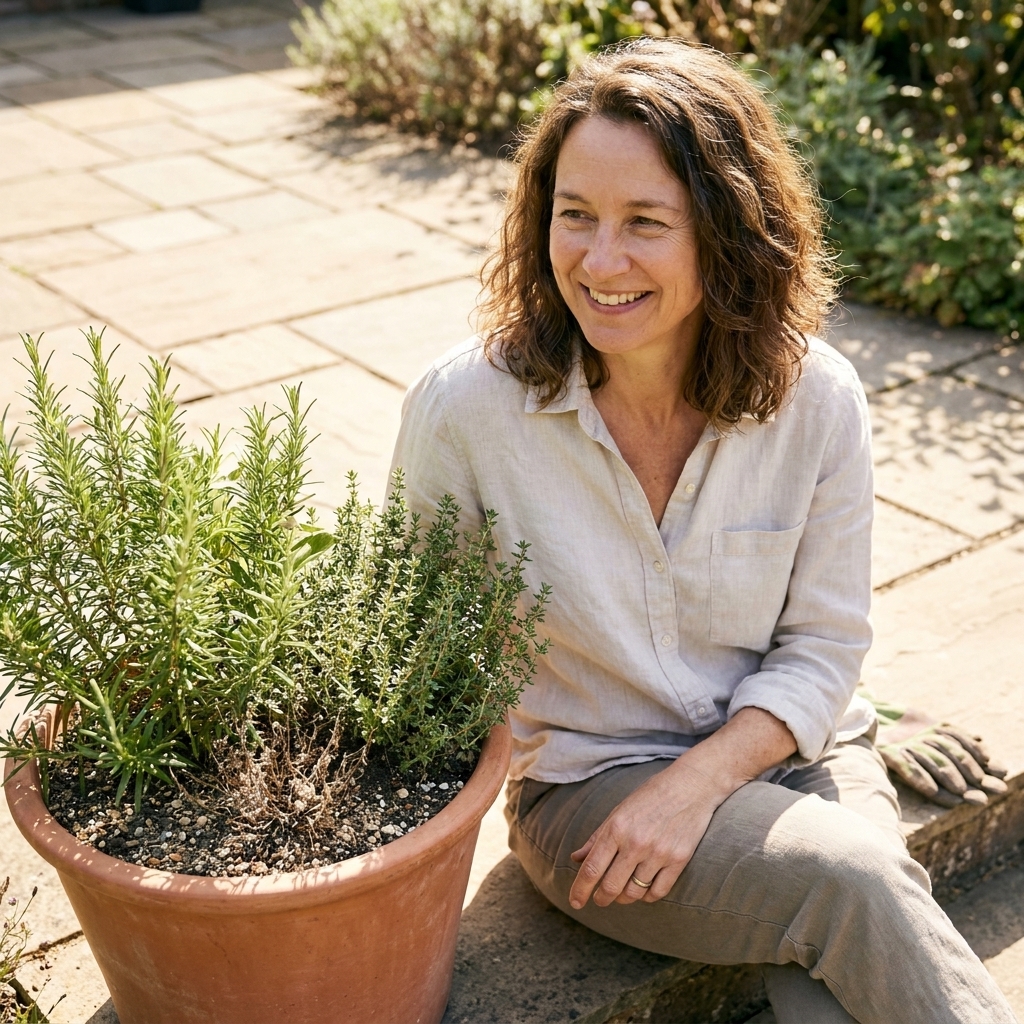
Outdoors, basil can become a small shrub if you keep up with pruning. The goal is a wide, branching plant with lots of growing tips.
When to plant outside
Basil is cold-sensitive. Wait until nights are consistently above 50 to 55°F (10 to 13°C). A chilly night can set basil back for weeks, and stressed basil is quick to bolt later.
Hardening off seedlings
If you started basil indoors, give it 7 to 10 days to adjust. A few hours outside in shade at first, then gradually increase sun and wind exposure. It is like letting the plant build little muscles.
When temps dip
If an early fall chill is coming, cover basil with a light row cover or bring pots inside overnight. Even one cold snap can blacken leaves.
If basil already bolted
If your basil has flowers, it is not ruined. The flavor can turn a bit sharper, and leaves may be smaller, but you can often pull it back into leafy growth.
Rescue steps
- Locate every flower spike and cut it back to a strong node with healthy leaves.
- Water deeply and consistently for the next week.
- Give a light feeding if the plant is in a pot.
- Harvest lightly but regularly as new side shoots grow.
When to start over
If the plant is full of thick, tired stems and keeps throwing flowers no matter what, it may be nearing the end of its natural cycle. That is when I plant a fresh basil start and call it a baton pass, not a failure.
Problems that can speed bolting
Yellow leaves
Often caused by overwatering, poor drainage, or nutrient issues in containers. Fix the growing conditions first, then resume normal pinching once new growth looks healthy.
Small leaves and slow growth
Usually not enough light indoors, or the plant is rootbound and hungry in a pot. Repot to a larger container and feed lightly.
Wilting in hot weather
If basil wilts midday but perks up at night, it is reacting to heat. Give consistent moisture and consider afternoon shade. If it stays wilted, check soil moisture and root health.
Pests
Aphids and Japanese beetles can stress basil enough to slow growth, which makes flowering more likely. A strong spray of water can knock aphids off. Hand-pick beetles early in the morning when they are sluggish.
Quick checklist
- Plant in enough sun, or use a grow light indoors.
- Use a pot with drainage and quality potting mix.
- Start pinching at 6 to 8 inches tall.
- Always cut above a node to force branching.
- Harvest every 7 to 14 days during active growth.
- Remove flower spikes early, cutting back to a node.
- Keep watering steady, especially in containers.
- Feed lightly through the season so the plant can keep up.
FAQ
Should I pinch basil flowers or cut the whole stem?
Cut the whole flowering tip back to just above a leaf node. Pinching only the tiny flower cluster often leaves the flowering tip in place, and the plant will send up another spike quickly.
How do I make basil bushier fast?
Pinch the main stem above the second or third strong node, then keep pinching the new tips once they grow a few inches. Bushiness is simply branching repeated over time.
Can basil survive indoors year-round?
It can, especially with a grow light, but basil is still an annual. Over time it can get fibrous and less productive. I treat indoor basil like a rotating crop: keep one thriving plant going, then start a fresh one from seed or a cutting when the older plant slows down.
Why does my basil bolt even when I pinch it?
Usually heat stress, inconsistent watering, or a crowded, underfed pot. Pinching helps, but basil also needs steady growth conditions so it has the energy to replace what you remove.
Is basil still edible after it flowers?
Yes. The flavor can be stronger and a bit more clove-like or slightly bitter, depending on the plant. I still use it in pesto, sauces, and herb oils, especially if I harvest younger leaves after cutting flower spikes back.
Can I grow more basil from cuttings?
Yes. Snip a healthy, non-flowering stem, strip the lower leaves, and root it in water on a bright windowsill. Once it has a small tuft of roots, pot it up and pinch the tip to encourage branching.