There is a certain late-summer magic to seed saving. The garden gets a little wild and lanky, the herb flowers fade, and suddenly you are staring at a tan, rattly seed head thinking, Is it time yet? With coriander (cilantro), dill, and fennel, the trick is harvesting at the sweet spot: mature enough to be flavorful and viable, but not so dry that the seeds scatter the second you brush past.
I will walk you through exactly what to look for, how I dry seed heads without losing half of them to the wind, and how to store your seeds for two happy futures: the spice rack and next year’s planting.
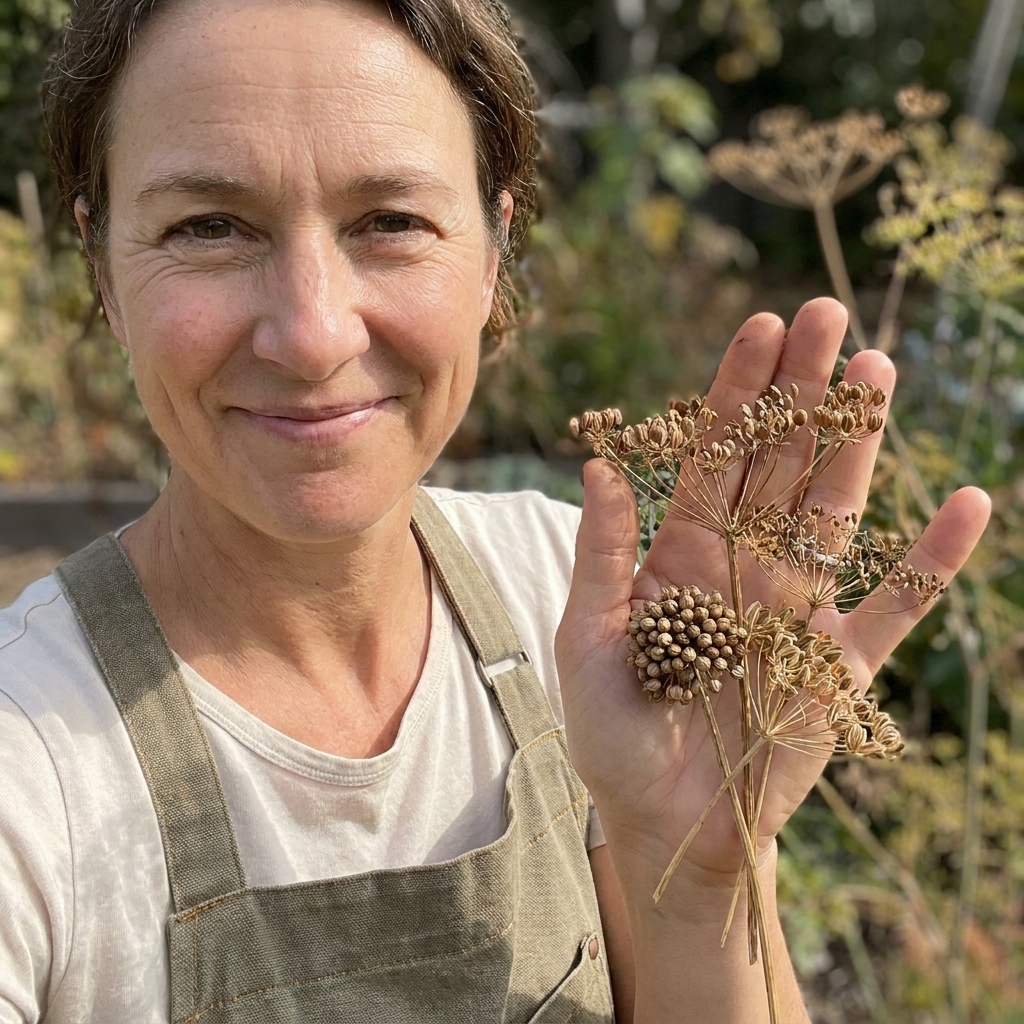
Seed harvesting basics
What “ready” looks like
Herb seeds are ready when the plant has clearly shifted from flowering to finishing. You will see:
- Color change: green to straw, tan, or light brown.
- Dry feel: seed heads feel papery, not juicy.
- Easy release: seeds rub off with a gentle pinch, but they are not raining down on their own.
If you only remember one thing, make it this: harvest slightly earlier than you think, then cure (finish drying) indoors. A lot of seed loss happens in that last week outside when a dry day and a breeze turn your seed head into a confetti cannon.
Best time of day
I like to harvest in the late morning after dew has dried off but before the afternoon heat makes everything extra brittle. If you harvest when the seed heads are damp, you increase the chance of mold during drying.
Low-fuss tools
- Pruners or scissors
- Paper lunch bags or a clean pillowcase
- Rubber bands or twine
- Sheet pan or large tray
- Fine mesh strainer (optional but handy)
- Labels and a pen (trust me, “mystery seeds” happen)
Two easy harvest methods
Method 1: Bag it on the plant. Slip a paper bag over a seed head and gather the opening around the stem. Tie it loosely above where you plan to cut, leaving a little slack so air can still move. Snip the stem below the tie. This is my go-to for dill and fennel, which drop seed readily once they start to dry.
Method 2: Cut and catch. Hold a bag or bowl under the seed head as you cut. Tip the head in gently and let loose seeds fall right in.
Coriander (cilantro) seeds
Cilantro and coriander come from the same plant. We tend to call the leafy stems “cilantro” and the dried seed “coriander.” The seeds form in little round beads, usually in clusters. When they are fresh they smell green and grassy, but once cured they become warm, citrusy, and slightly sweet.
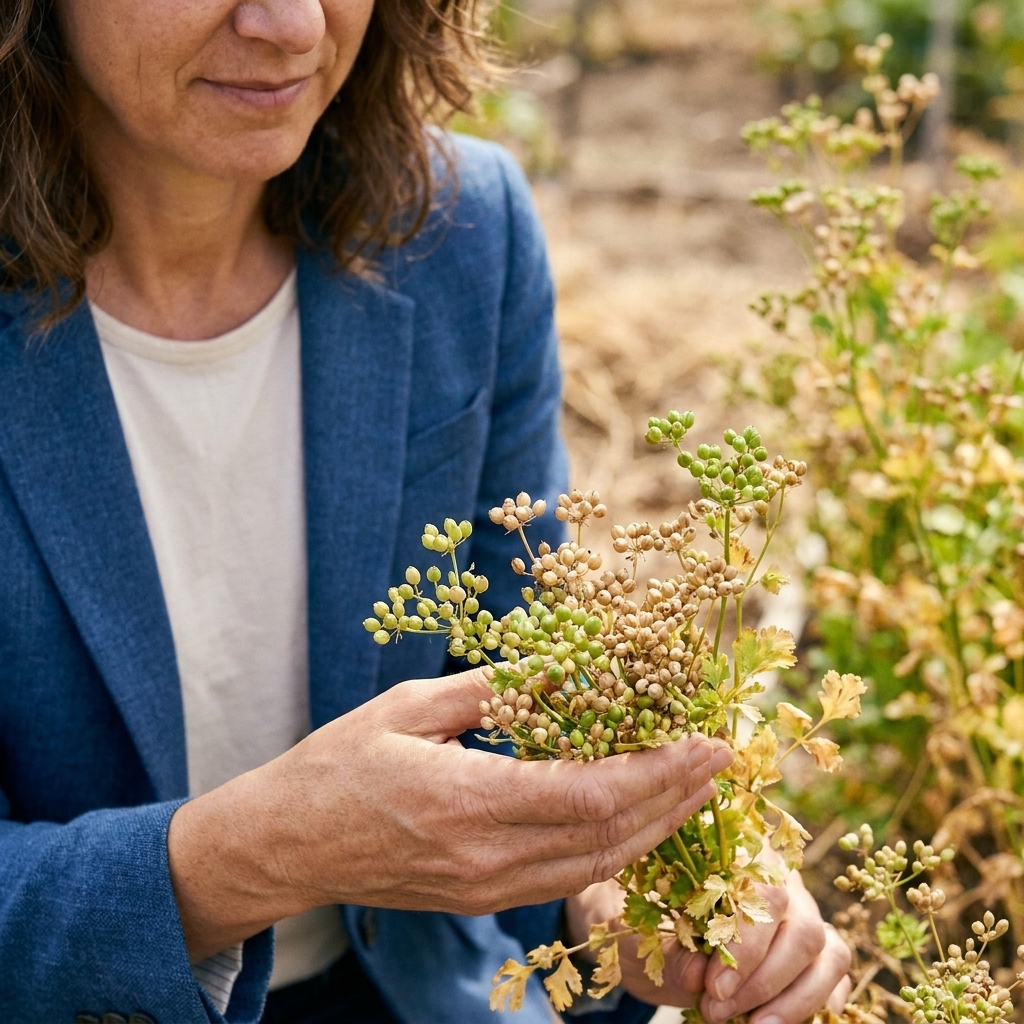
When to harvest
- Color: Most seeds are light tan to beige. A little green is fine.
- Texture: Seeds feel firm and round, not soft.
- Plant cues: Stems are drying and the plant looks like it is winding down for the season.
If you wait until every seed is fully brown, you will usually lose some to shattering. I aim for “mostly tan, a few still pale green.”
How to harvest
- Cut entire seed stems when most clusters have turned tan.
- Place stems upside down in a paper bag or tie them in a small bundle and hang them over a tray.
- Keep the bag or tray somewhere dry, airy, and out of direct sun.
Curing and threshing
After 7 to 14 days, coriander seed heads should crumble easily. To thresh:
- Put dried heads into a paper bag.
- Rub and shake gently until seeds release.
- Pour the contents into a bowl and winnow by slowly pouring from one bowl to another in a very gentle airflow. A fan on the lowest setting works, but use a deep bowl and stand close so you do not launch your seeds across the kitchen. The chaff is lighter and lifts away.
Kitchen note
Whole coriander seeds stay flavorful longer than ground. I keep them whole and crush what I need in a mortar and pestle or spice grinder. Toasting in a dry pan for 30 to 60 seconds brings out a lovely citrusy perfume.
Dill seeds
Dill goes from feathery greens to tall flower stalks that look like delicate fireworks. Those flat umbrella-shaped heads (umbels) are where the seeds form. Once the umbels start turning straw-colored, the seeds can drop easily in wind or with handling.
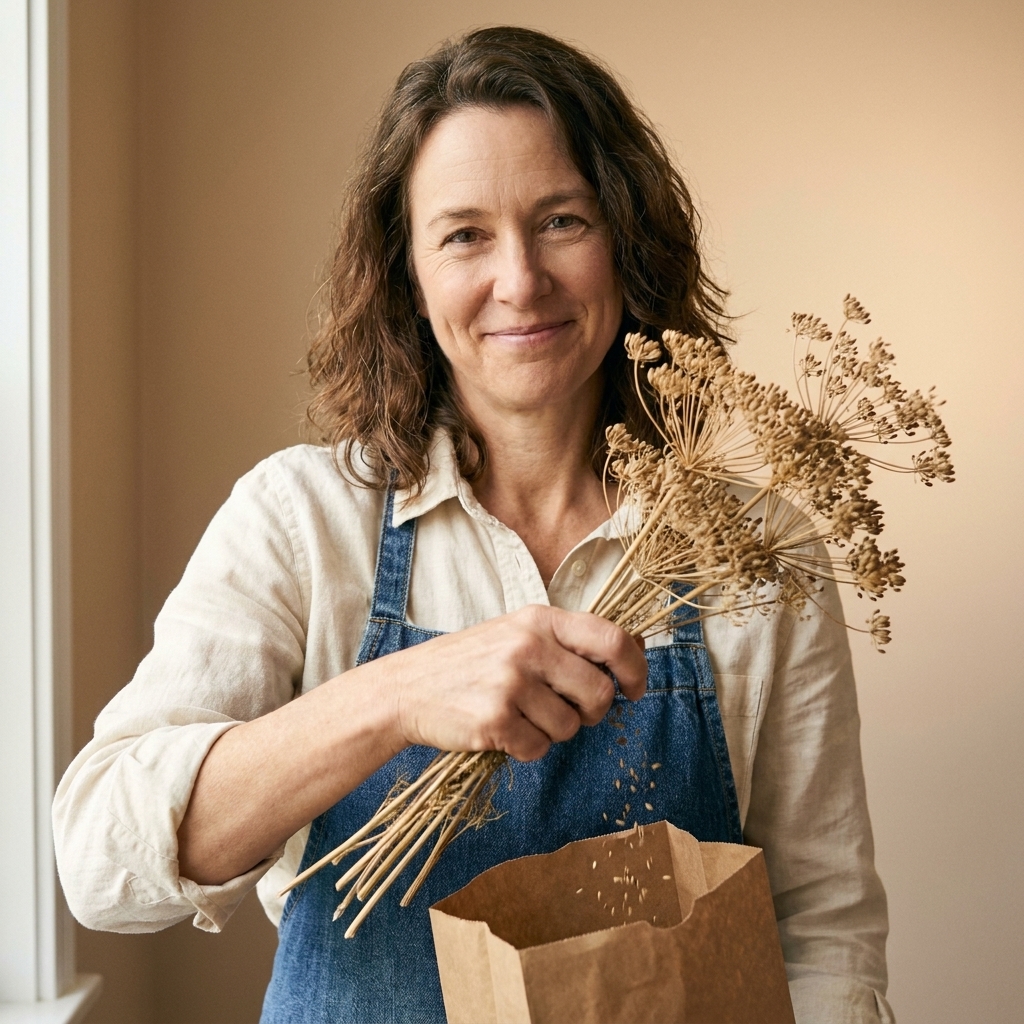
When to harvest
- Color: The umbel shifts from green to straw-colored, and many seeds look tan to light brown.
- Seed shape: Seeds are flat and ridged, not plump and green.
- Drop test: Tap the seed head gently. If a few seeds fall, it is time.
How to harvest without big losses
This is where the bag method shines.
- Slip a paper bag over one seed head.
- Gather the bag opening around the stem and tie it loosely, leaving a bit of airflow.
- Snip the stem below the tie and carry the whole thing inside like a little bouquet in a bag.
Drying and curing
Even if the seed head feels dry outside, I still cure dill indoors for 1 to 2 weeks. Leave the heads in the bag, open at the top, somewhere warm and airy. Shake the bag every couple of days. The seeds will fall naturally to the bottom as they finish drying.
Cleaning
Pour the bag contents into a bowl. Pick out larger stem pieces by hand. If you want them extra tidy, run them through a strainer that is just slightly larger than the seeds, then winnow lightly to remove the papery bits.
Flavor tip
Dill seed is not the same as fresh dill weed. It is warmer, more caraway-like, and wonderful in pickles, cabbage dishes, and breads. If you love making refrigerator pickles, home-harvested dill seed is a tiny upgrade that tastes like you know what you are doing.
Fennel seeds
Fennel is the overachiever in this trio. It grows tall, flowers like dill, and makes seeds that smell like licorice and sunshine. The seed heads are also umbels, but the seeds are plumper and often turn a greenish-tan before deepening in color.
A quick clarity note: this is the same basic seed-saving process whether you are growing bulb fennel (Florence fennel) or herb fennel. You can absolutely save the seed from either. Just know that saved seed does not always come true to type if other fennel types are flowering nearby.
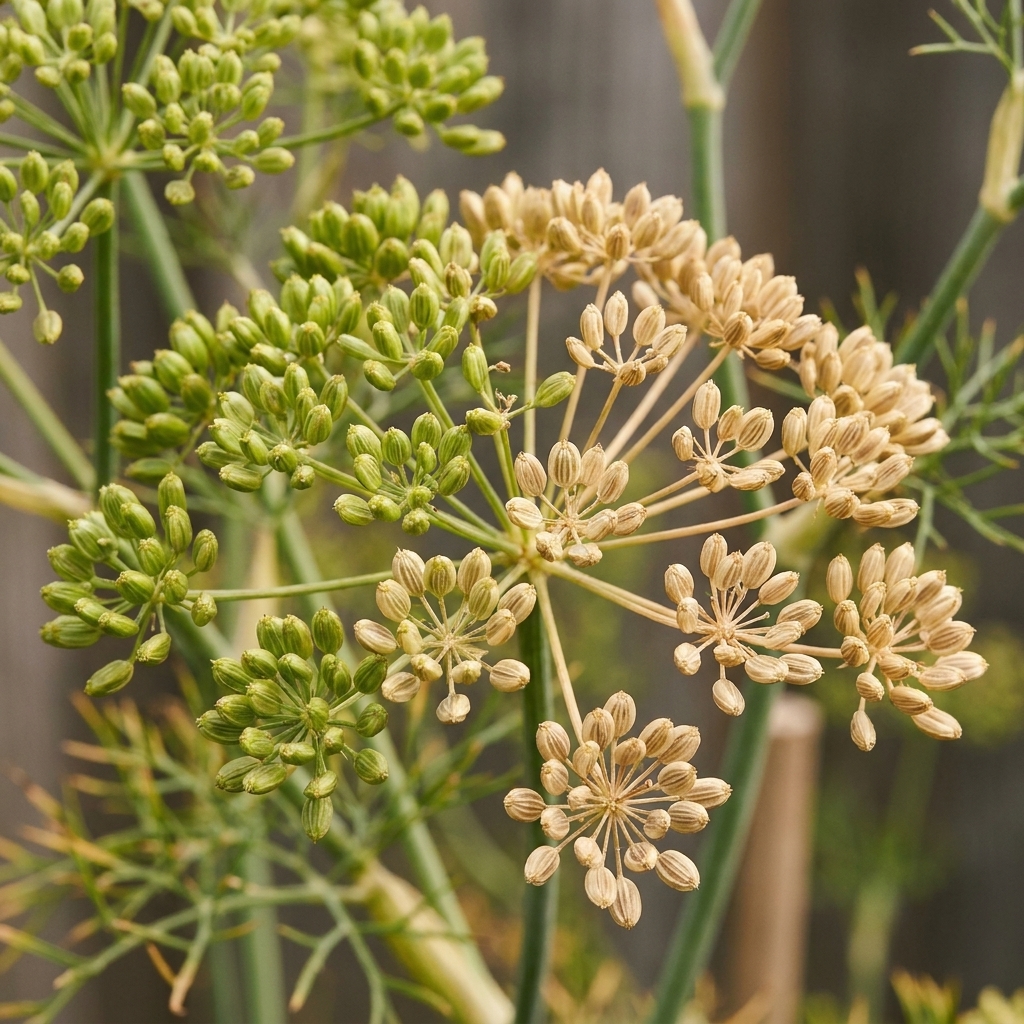
When to harvest
- Color: Seeds shift from bright green to pale green-tan or tan. Some varieties stay greener even when mature.
- Aroma: Rub a few seeds between your fingers. If they smell strongly of anise, they are close.
- Texture: Seeds feel hard, not milky.
Fennel can shatter, too, so do not wait for every last seed to turn brown. Harvest when most seeds are filled out and beginning to dry.
How to harvest
- Bag individual umbels (or whole stalk sections) and snip.
- Hang the bagged heads or set the bag upright in a bowl so it does not tip.
- Let them cure for 1 to 2 weeks.
Threshing
Once dry, fennel seeds release easily with gentle rubbing. I do this over a tray because fennel seeds like to roll. Winnow to remove the lighter chaff.
Fennel vs dill look-alikes
They are cousins and their seed heads can look similar at a glance. Fennel seeds are usually larger and plumper than dill seeds, and the scent is the giveaway. Fennel smells sweet and anise-like. Dill smells, well, like dill.
Will saved fennel come true?
If you are saving seed mostly for cooking, you can relax. If you are saving seed for planting and you care about keeping a variety true, know that fennel can cross-pollinate with other fennel nearby, including flowering plants in the carrot family that people often let go to seed. Distance and timing help, but the simplest approach is to save seed from one flowering fennel type at a time.
Drying methods
Option 1: Paper bag cure
This method is tidy, low-mess, and perfect for shatter-prone herbs.
- Place seed heads in a paper bag.
- Keep the bag open slightly for airflow.
- Store in a dry room out of direct sun for 1 to 2 weeks.
Option 2: Hang bundles
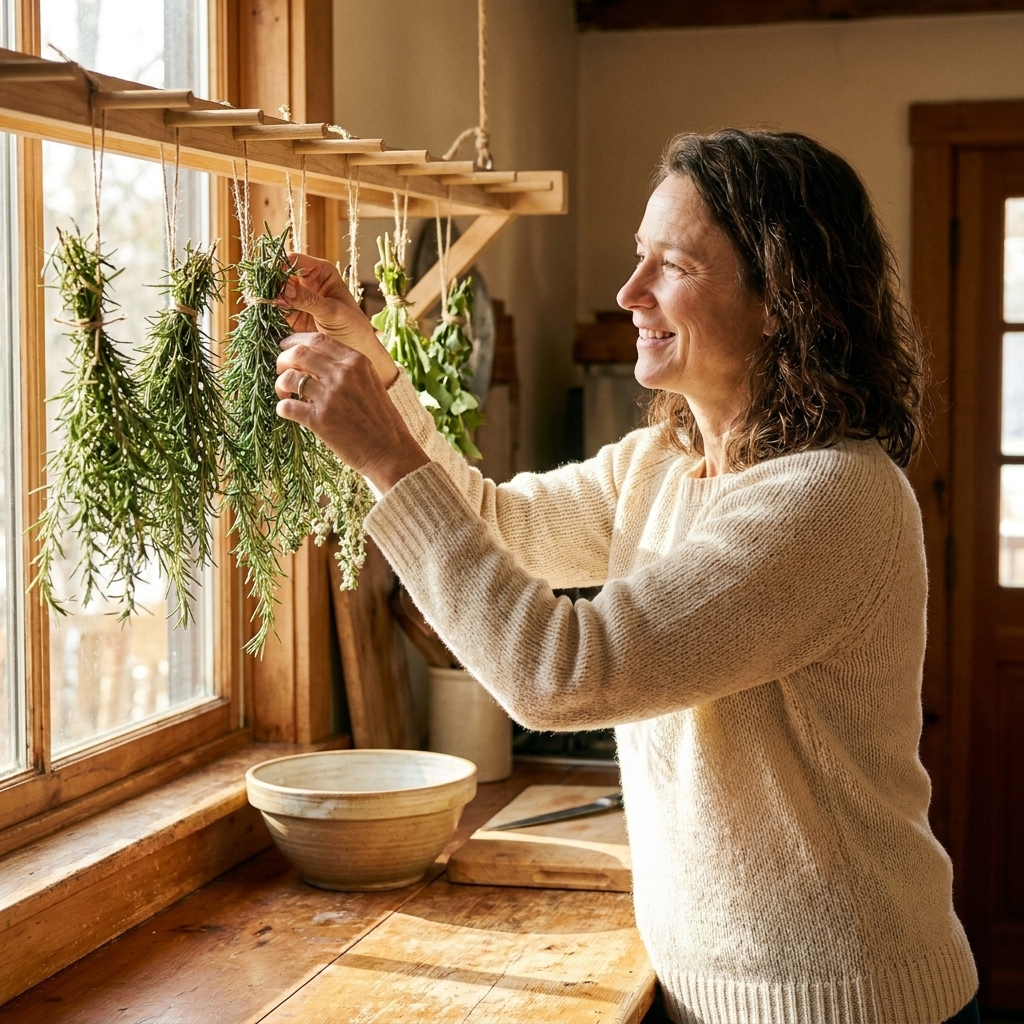
Tie small bundles with twine or a rubber band and hang upside down over a tray or inside a bag. This is beautiful and effective, just be sure the air can circulate.
Option 3: Tray dry
If seeds have already fallen, spread them in a single layer on a sheet pan or plate lined with parchment. Stir once a day until they are fully dry.
Dehydrators and ovens
You can use a dehydrator on the lowest setting, but I usually avoid heat for seed saving. Warm air is fine. Hot air can reduce germination rates and can also drive off some of those lovely aromatic oils. If the seed is intended for planting, many gardeners try to keep drying temperatures roughly under 95 to 105°F (35 to 40°C). If you are drying strictly for cooking and you know your equipment runs truly low and steady, it can work, but air-drying is the safest beginner option.
How to tell seeds are cured
Curing is not just “dry to the touch.” It means dry all the way through so they store well and do not mold.
- Bite test (for cooking seeds): A cured seed is hard and crisp, not chewy.
- Pinch test: Seeds should not dent with a fingernail.
- Jar test: Put a spoonful in a small jar with the lid on for a few hours. If you see condensation, they need more drying time.
Storing seeds
For cooking
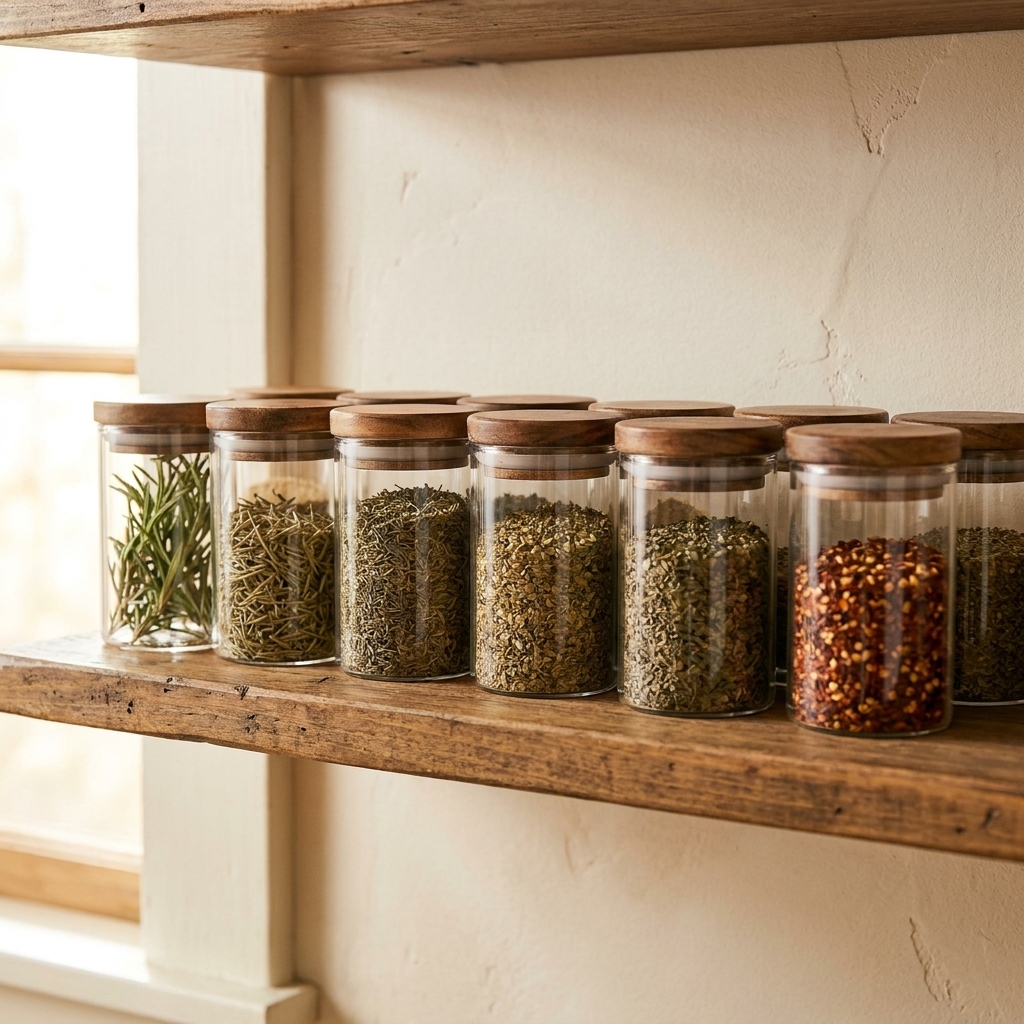
- Best containers: Small glass jars with tight lids.
- Where: A cool, dark cupboard away from the stove.
- How long: For best flavor, use within 1 to 2 years. Whole seeds last longer than ground.
For planting
- Best containers: Paper envelopes inside an airtight jar, or small jars on their own.
- Label: Herb name, variety if you know it, and harvest year.
- Where: Cool, dark, and dry. A closet shelf is fine. For longer storage, a sealed jar in the refrigerator works well if you can keep moisture out.
- Viability: Under good cool, dry storage, these herbs often germinate well for 2 to 3 years, and sometimes longer. Conditions matter, so if it is an older batch, sow a little extra or do a quick germination test before you bet your whole bed on it.
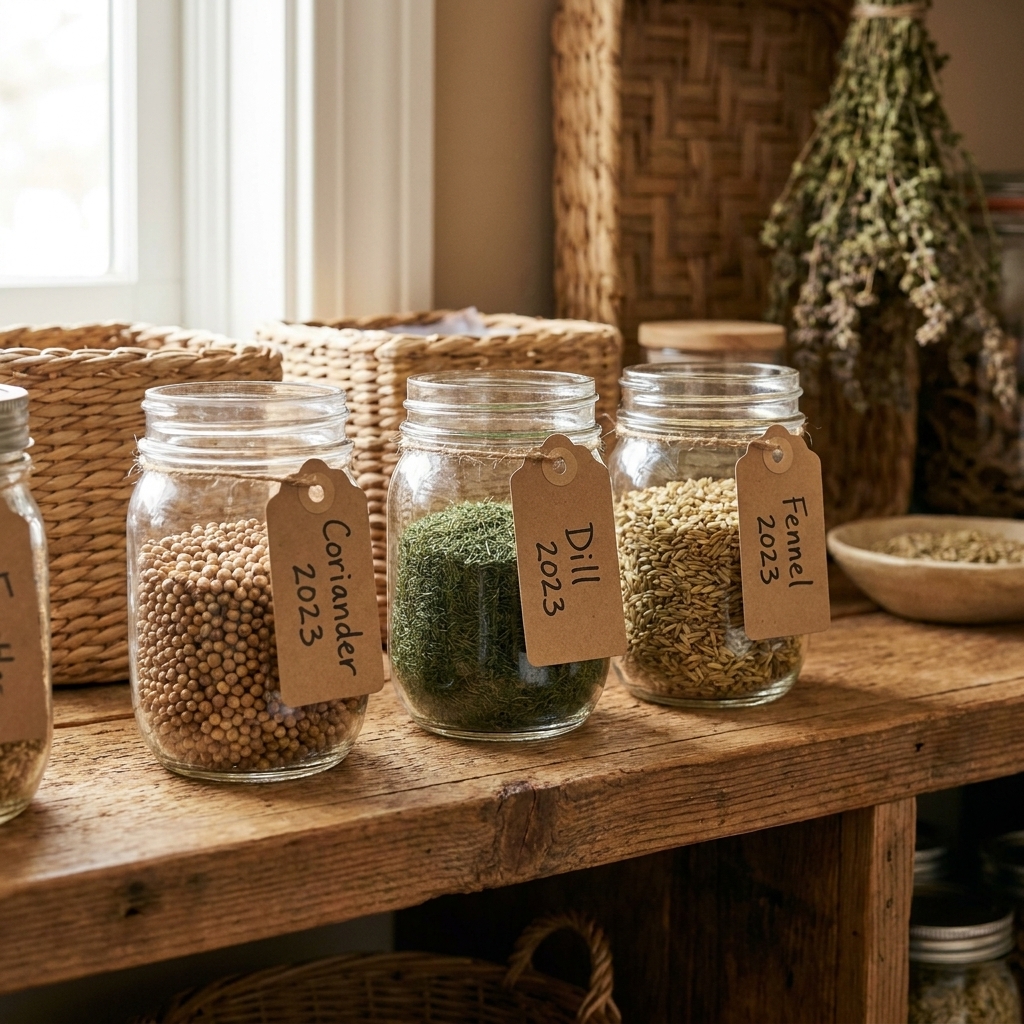
Do not skip dryness
The biggest enemy of stored seeds is hidden moisture. If you are unsure, give them a few more days of drying. Seeds are patient. Mold is not.
Troubleshooting
Seeds turned dark or musty
That usually means they were harvested too damp or dried in a spot with poor airflow. Spread them out on a tray in a drier room and remove anything that smells off. If the musty smell persists, do not store them for cooking or planting, and do not cook with any seed that shows visible mold.
Harvested too late and seeds scattered
Been there. Next time, bag the seed heads a bit earlier. For this season, you can often collect plenty from the bag if you used one, and you may get a bonus next spring. Volunteer dill and cilantro love to pop up where seeds fell.
Seeds do not smell like much
They may have been harvested very early, or stored warm and bright for too long. For maximum aroma, harvest when seeds are filled out, cure gently, and store cool and dark.
Quick checklist
- Coriander: mostly tan seeds, cut stems, bag dry 7 to 14 days, rub and winnow.
- Dill: straw seed heads, bag on the plant, cure 1 to 2 weeks, shake seeds loose.
- Fennel: plump seeds turning pale tan, bag umbels, cure 1 to 2 weeks, rub and winnow.
If you try this once, it becomes one of those seasonal kitchen rhythms you look forward to. A little paper bag bouquet on the counter, a soft rattle as seeds loosen, and suddenly you have next year’s garden in your hand, plus a fresher spice jar for tonight’s dinner.