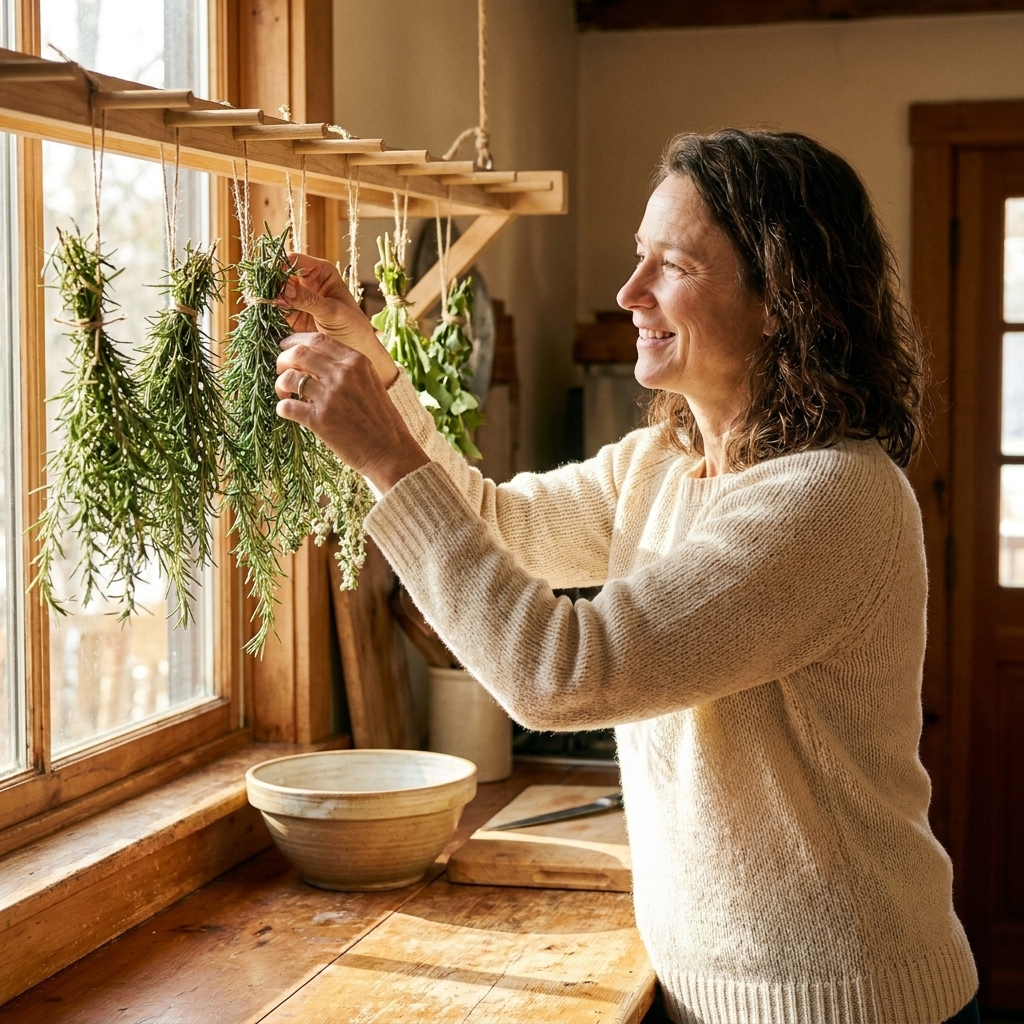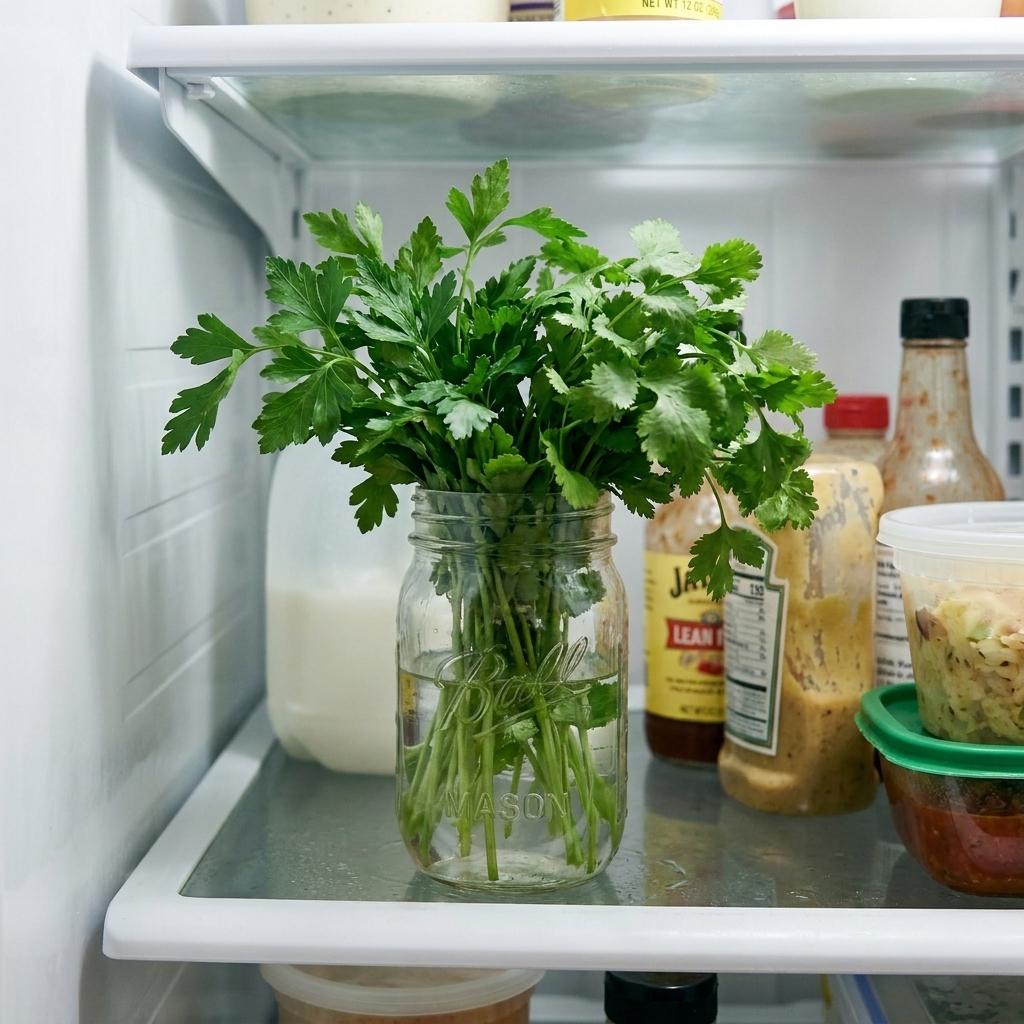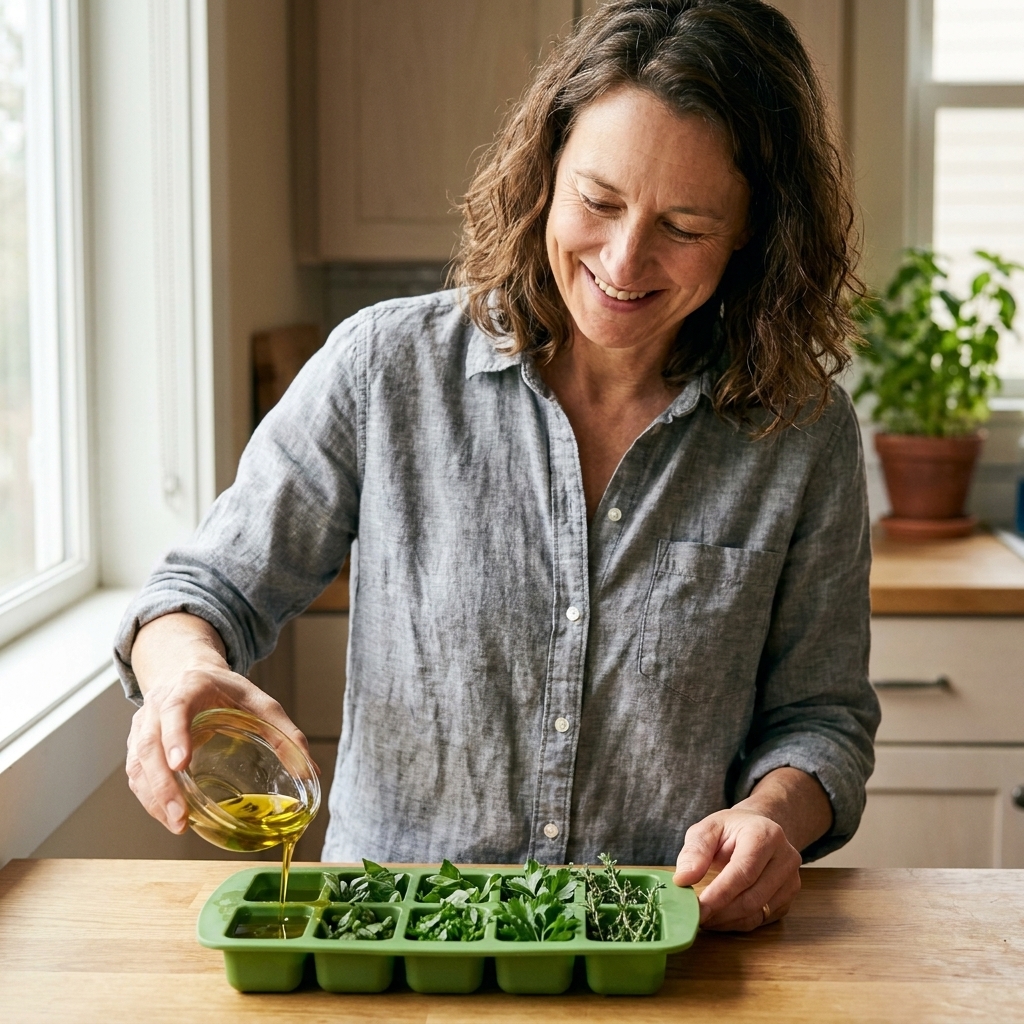
There is a special kind of pride that comes from reaching into your pantry in January and pulling out a jar of oregano you grew yourself. The trick is making sure it still smells like oregano, not dust, and that nothing inside is quietly turning damp and musty.
Dried herbs are simple to store, but they are also sensitive. Light can steal aroma over time. Heat speeds up flavor loss. Moisture invites mold. Below is exactly how I store my home-dried herbs so they stay punchy and clean tasting for as long as possible.
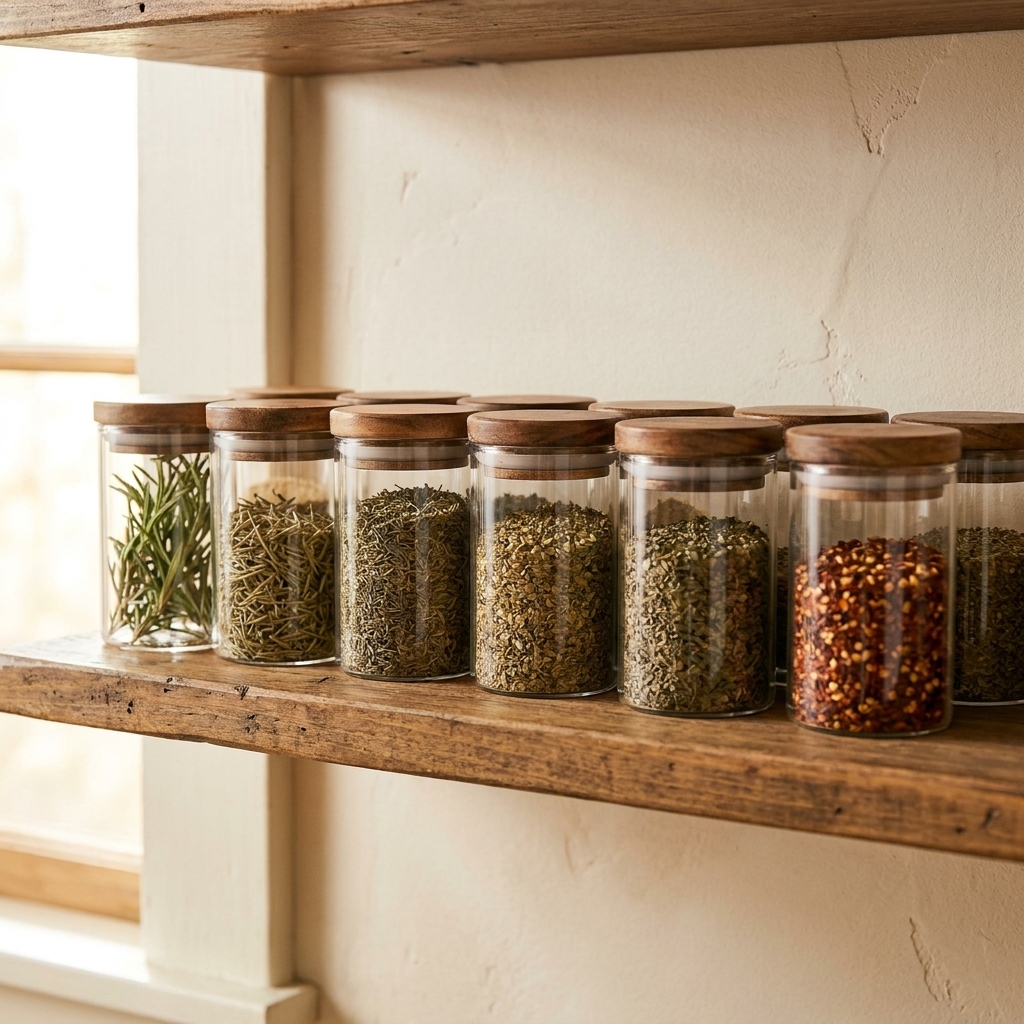
What makes dried herbs fade or mold
Dried herbs are at their best when they stay dry, cool, dark, and sealed. When one of those pieces slips, two things happen: flavor fades and safety can become a concern.
The biggest enemies of dried herbs
- Moisture: The fastest path to mold. Moisture can come from humid kitchens, damp herbs that were not fully dried, or “wet” scoops like a spoon fresh from a simmering pot.
- Heat: Warm cupboards near the stove shorten shelf life quickly.
- Light: Sunlight and even bright kitchen light can slowly degrade aromatic compounds and color.
- Air: Oxygen dulls those fresh, volatile oils that make herbs smell like themselves.
- Cross-contamination: Steam, food bits, or greasy fingers can introduce moisture and microbes.
If you remember only one rule, make it this: store dried herbs like you would store good tea, not like you would store a bag of chips.
Start with truly dry herbs
The cleanest storage setup in the world cannot save herbs that still have hidden moisture in the stems or thicker leaves.
How dry is “dry enough”?
- Leaves should crumble: When you rub a leaf between your fingers it should crackle and break, not bend.
- Stems should snap: Especially for woody herbs like rosemary and thyme.
- No cool spots: Herbs that still feel cool or slightly flexible often still hold moisture.
If you are at all unsure, give them more time. I would rather “over-dry” by a day than risk a whole jar going off later.
My favorite extra insurance step
After drying, I let herbs sit loosely covered on a plate or tray for 12 to 24 hours at room temperature before jarring. It helps equalize any lingering moisture so it does not get trapped inside a sealed container.
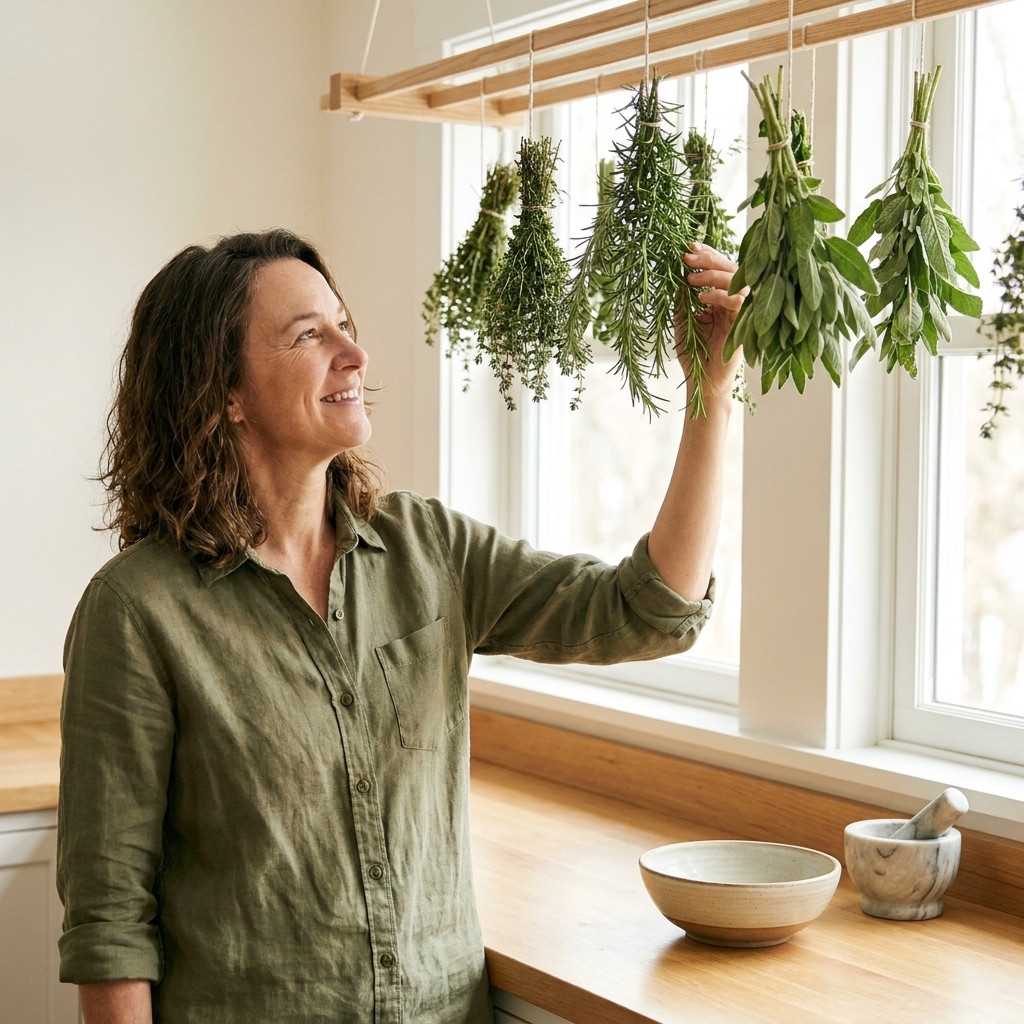
Best containers for dried herbs
For home-dried herbs, the best container is the one that seals tightly and keeps out moisture and air. Here are the options I reach for most often.
1) Glass jars with tight lids (my everyday choice)
Small glass jars are reliable, non-reactive, and easy to keep clean. Look for:
- Spice jars with a tight screw-top lid
- Mason jars for bulk herbs (half-pint or pint sizes work well)
- Gasket-seal jars (great, but not required)
Bonus: Glass does not hang onto smells. If you have ever had plastic smell permanently like curry or garlic powder, you know why this matters.
2) Metal tins (great for light protection)
Food-grade tins can be wonderful because they block light. The key is a snug lid and a dry storage spot. I like tins for delicate, leafy herbs like basil and mint that fade quickly.
3) Plastic containers (usable, with cautions)
Plastic is not my first choice, but it can work if it is:
- Food-grade
- Very clean and fully dry
- Truly airtight
Plastic can absorb odors over time, and thin lids sometimes leak air in a way you cannot see.
What to avoid
- Paper bags long-term: Fine for short “resting” periods, not great for months in a pantry.
- Containers with shaker tops: Convenient, but they can let humid air in.
- Any jar that previously held strong-smelling food: Pickles, garlic, and salsa jars can haunt your chamomile for years.
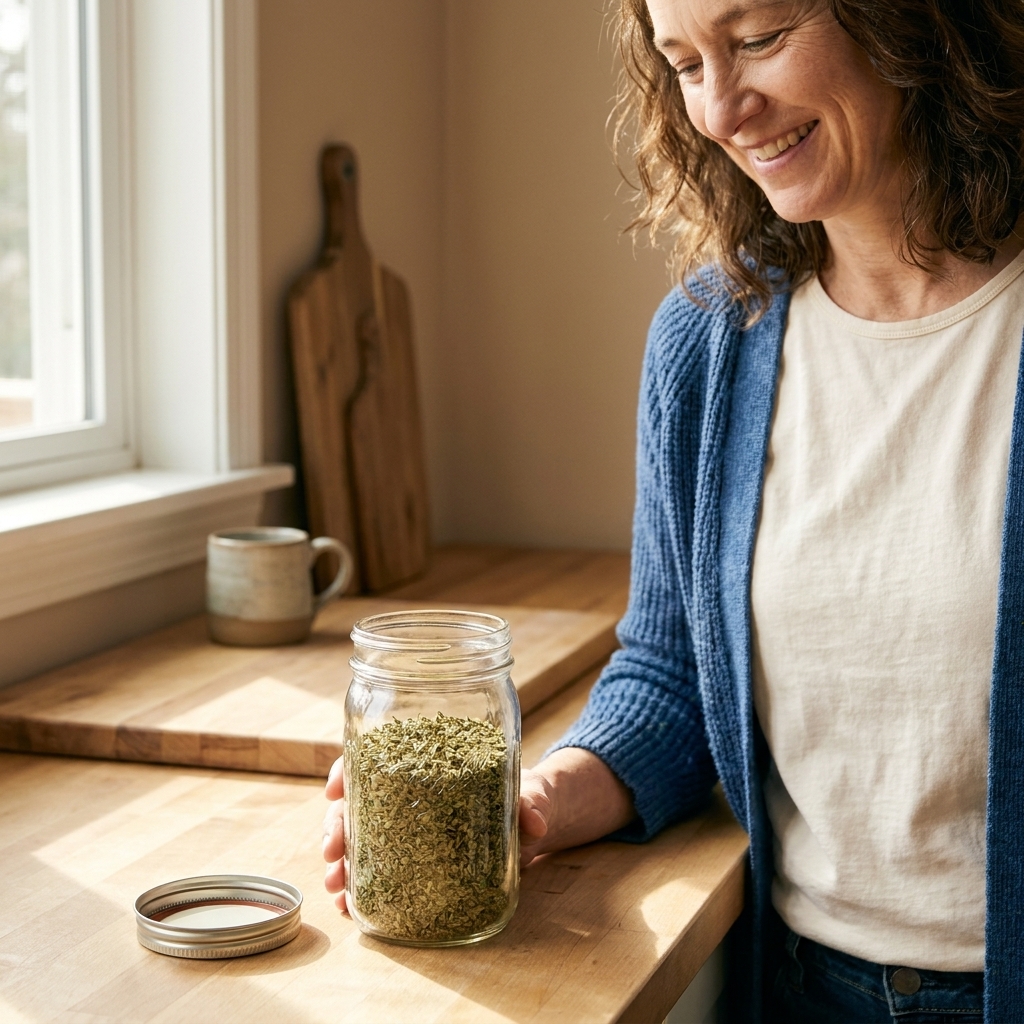
Ideal pantry conditions
The goal is to slow down the natural fade of flavor while keeping humidity out.
Where I store dried herbs
- A closed pantry cabinet away from the stove and dishwasher
- A lower shelf (heat rises, and upper cabinets tend to run warmer)
- In a box or basket inside the pantry if my jars are clear and the shelf gets light when the door is open
Where not to store them
- Above the stove: Constant heat and steam.
- Next to the kettle or coffee maker: Regular bursts of humidity.
- On an open shelf in direct light: Pretty, but it drains color and aroma.
- In the refrigerator: Refrigerators are often humid, and temperature swings can cause condensation inside the jar.
If your kitchen is naturally humid, prioritize airtight glass and be strict about keeping jars sealed except when you are actively measuring.
Whole vs. crumbled
This is one of the easiest ways to keep herbs flavorful longer.
Store herbs as whole as possible
Whole leaves hold onto essential oils better than finely crumbled herbs. I usually store:
- Leafy herbs: Whole or lightly crumbled
- Woody herbs: Whole needles or leaves, then crush right before using
- Seeds: Whole (like dill seed or coriander) and grind as needed
When you crush dried herbs, you expose more surface area to oxygen. That is great for releasing aroma into dinner, but not great for long-term storage.
A note on ground herbs
If you like to keep herbs already ground (or you bought them that way), plan on replacing them sooner. I store ground herbs in smaller jars so I open them less, use them up faster, and avoid keeping a half-full container for years.
How to prevent mold in jars
Mold in dried herbs usually comes from one of two things: herbs were not fully dry, or moisture was introduced during use. Here is how to avoid both.
Jar smart habits
- Cool herbs completely before sealing: Warm herbs can create condensation inside a closed jar.
- Use dry utensils: Never scoop herbs with a spoon that has been in a steaming pot. Pour a little into your hand or a dry bowl instead.
- Keep jars away from steam: Do not hold an open jar over boiling water, and do not shake herbs straight into a steaming pot.
- Open briefly: Measure quickly and close the lid right away.
Should you add a moisture absorber?
In most home pantries, you do not need desiccant packets if your herbs are truly dry and your jars seal well. If you live in a very humid climate and you have had mold issues before, food-safe desiccant can help, but it is not a substitute for proper drying.
What to do if you see mold
If you spot fuzzy growth, clumping that looks damp, or a musty smell, discard the entire jar. Do not pick out the “bad bits.” Mold can spread invisibly through dried plant material. Wash the jar with hot soapy water and let it dry fully before reusing.
If you are immunocompromised, pregnant, or particularly sensitive to mold, be extra cautious with any jar that smells even slightly musty and do not taste-test to “check.”
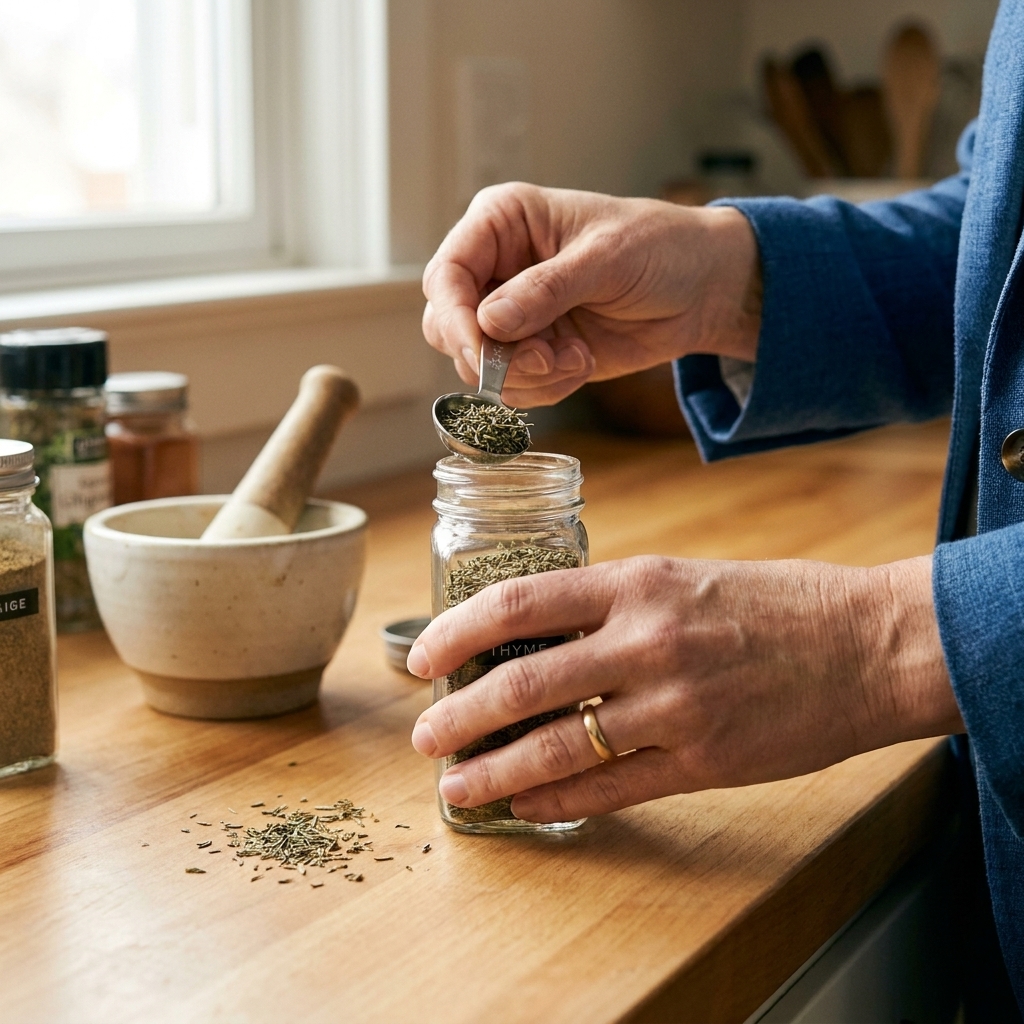
Labeling and dating
Dried herbs all start to look similar after a few months, especially once the bright summer green fades. A simple label prevents mystery jars and helps you use herbs at their peak.
What I write on my labels
- Herb name
- Part used if it matters (leaves, flowers, seed)
- Month and year dried
If you grow multiple varieties, add that too. “Greek oregano” and “marjoram” smell different, but only if you know which jar you grabbed.
How long dried herbs stay good
Dried herbs do not usually “spoil” the way fresh food does if they stay fully dry and clean. Most of the time, they simply go bland. That said, any sign of moisture, mustiness, or mold means the jar is no longer safe to use.
Shelf life varies by herb type, drying method, grind size, and how warm your storage spot runs. Think of the timelines below as typical “best flavor” windows.
Typical potency timelines
- Leafy herbs (basil, parsley, cilantro, dill leaf, mint): best within 6 to 12 months
- Heartier leaves (oregano, thyme, rosemary, sage): best within 1 to 2 years
- Flowers (lavender, chamomile): best within 6 to 12 months for strongest aroma
- Seeds (fennel seed, coriander, dill seed): best within 2 to 3 years, longer if kept whole
- Ground herbs and spices: often best within 3 to 12 months, depending on the plant and how they are stored
These are “best flavor” windows, not hard expiration dates. If a jar still smells wonderful, you can keep using it. If it smells like cardboard, it is time to compost it and celebrate making a fresh batch.
The sniff-and-crush test
Rub a pinch between your fingers. If the aroma blooms immediately, it is still potent. If you have to work hard to smell it, use more than usual or replace it.
Quick storage checklist
- Dry until leaves crumble and stems snap
- Cool completely before sealing
- Store mostly whole, crush right before cooking
- Use airtight glass jars or tight tins
- Keep in a cool, dark cabinet away from heat and steam
- Use dry utensils and keep open jars away from steam
- Label with herb name and month and year
- Trust your senses and discard anything musty or damp
FAQ
Can I store dried herbs in the freezer?
You can, but I rarely recommend it for dried herbs because opening and closing a freezer container can introduce condensation. Freezing is better for fresh herbs (like basil pesto cubes or chopped dill frozen in water or oil).
Is it okay to store dried herbs near the stove if they are in airtight jars?
Even airtight jars cannot protect herbs from repeated heat exposure. Heat speeds up flavor loss, so a cooler cabinet will keep them tasting better longer.
Why did my dried herbs clump in the jar?
Clumping usually means moisture got in. It could be from herbs not fully dried, a lid that does not seal well, or steam from cooking. If the clump feels at all damp or the smell is off, toss it.
Should I keep herbs in clear jars or amber jars?
Amber jars help protect aroma from light. Clear jars are fine if they are stored in a dark cabinet. If your pantry gets a lot of light when the door is open, amber jars or tins are a nice upgrade.