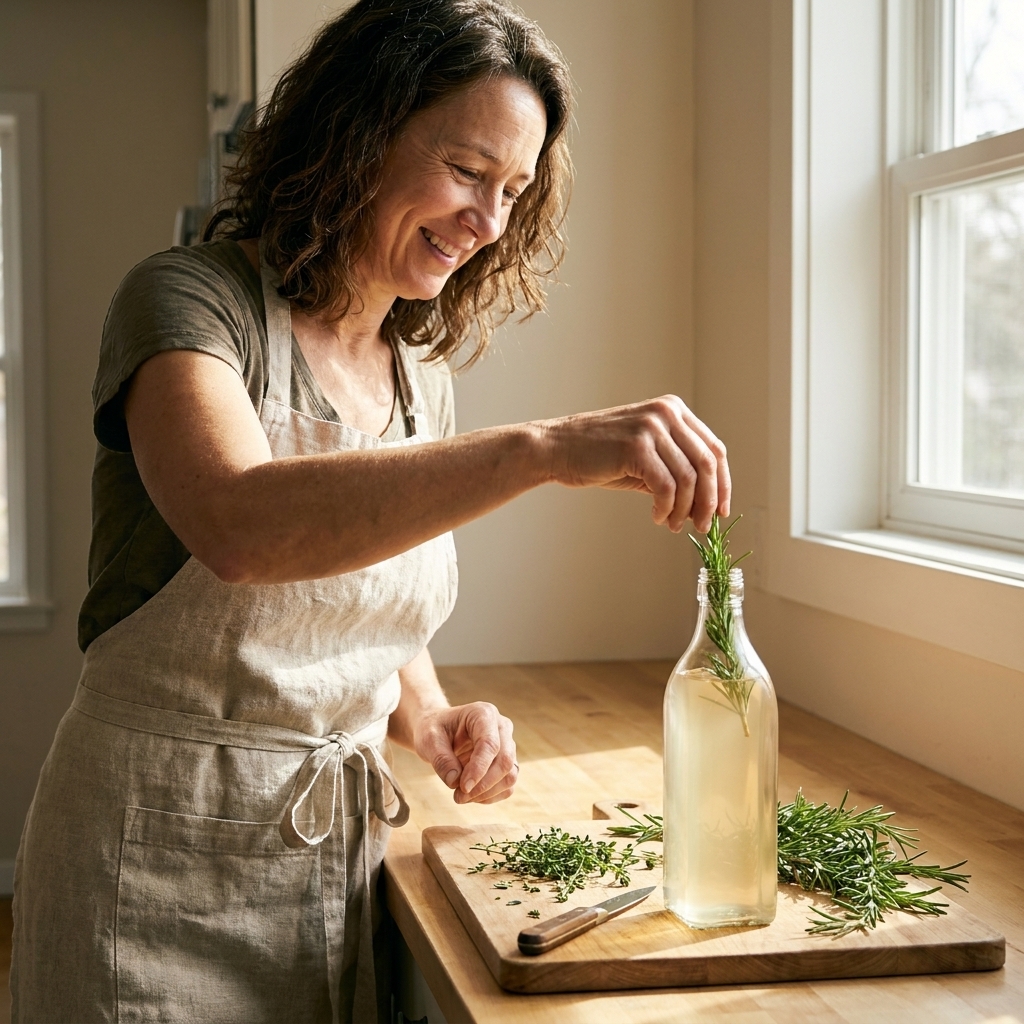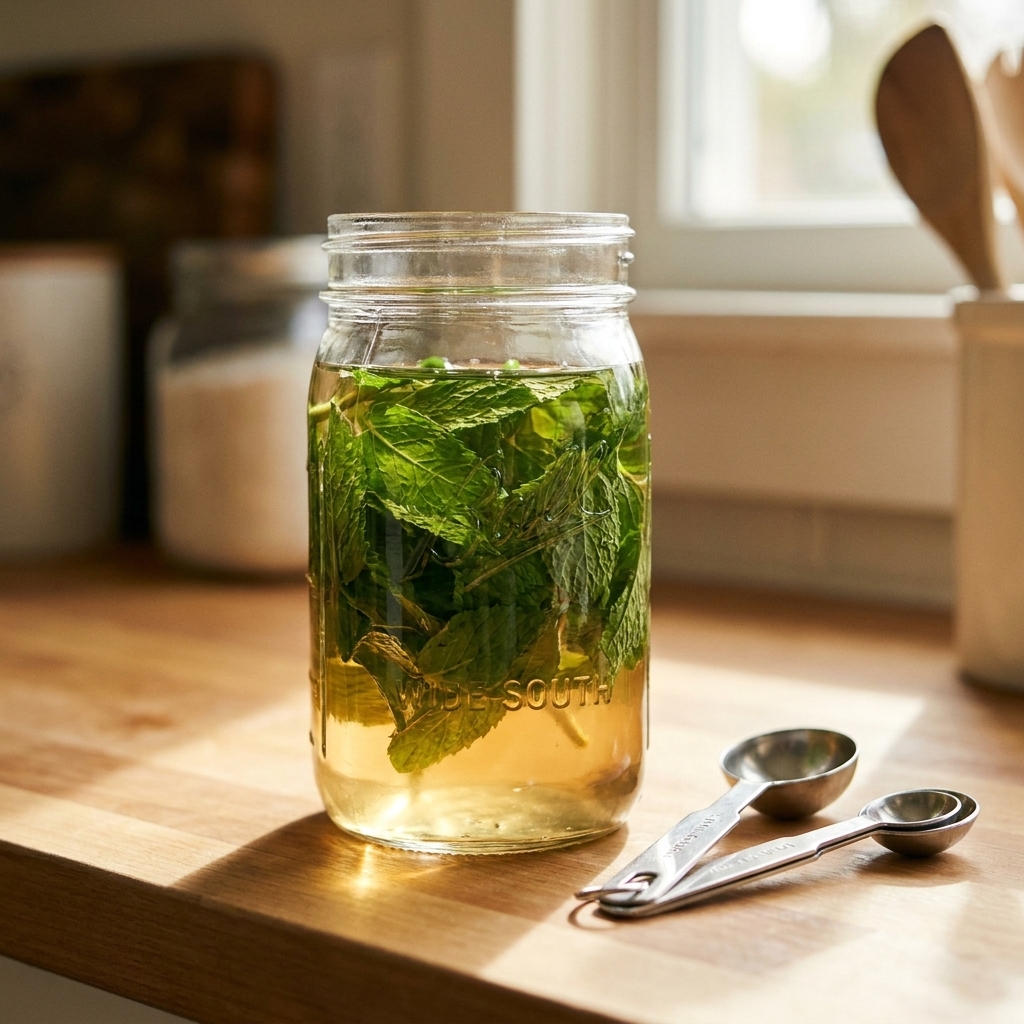
There is a particular kind of kitchen magic that happens when fresh herbs hit warm sugar syrup. The whole room smells like the garden after a gentle rain, and suddenly you are holding a bottle of something that makes a Tuesday feel a little more special.
Herb-infused simple syrup is exactly what it sounds like: sugar dissolved in water, then steeped with herbs until it tastes and smells like your herb bed or sunny windowsill. It is one of my favorite ways to use extra mint, basil tips, rosemary sprigs, and thyme that would otherwise overgrow, wilt, or end up composted.
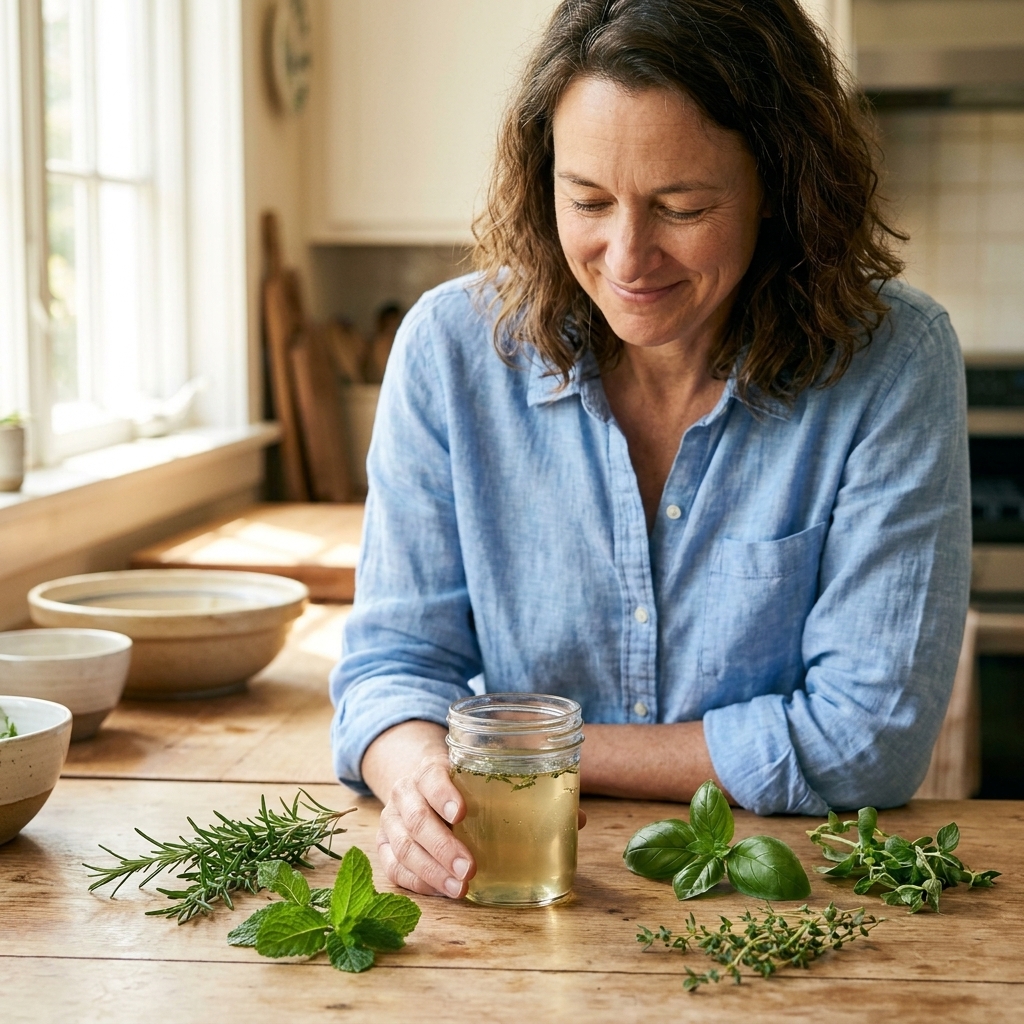
Below, I will walk you through the basic method, then show you how I make four of my most-used versions: rosemary, mint, basil, and thyme. We will also cover straining, safe storage, and lots of ideas for using these syrups in cocktails and desserts.
What it is
Classic simple syrup is equal parts sugar and water heated just enough to dissolve. Because the sugar is already dissolved, it blends smoothly into cold drinks and evenly sweetens desserts.
When you steep herbs in that warm syrup, you pull out aromatic oils and gentle plant flavors. You do not need a rolling boil. Think of it like making a strong herbal tea, only sweeter and far more stable than tea when refrigerated.
Best ratio
- Standard syrup (1:1): 1 cup sugar + 1 cup water. Light, easy to pour, great for cocktails, iced tea, and quick dessert drizzles.
- Rich syrup (2:1): 2 cups sugar + 1 cup water. Thicker, slightly longer-lasting in the fridge, and better for drinks where you want less dilution.
For herb syrups, I usually start with 1:1 because it feels most versatile in both cocktails and desserts.
Basic method
This method works for rosemary, mint, basil, and thyme, with small timing tweaks depending on how delicate the herb is.
You will need
- 1 cup granulated sugar
- 1 cup water
- About 1 loosely packed cup fresh herb leaves and tender stems (or start with 2 to 4 tablespoons dried herbs and adjust to taste)
- Small saucepan
- Fine-mesh strainer
- Clean jar or swing-top bottle with lid
Step-by-step
- Rinse and prep your herbs. Give them a quick rinse and gentle shake dry. Lightly bruise woody herbs (rosemary, thyme) by pressing with the back of a spoon. For tender herbs (mint, basil), a gentle pinch is enough.
- Dissolve the sugar. Add water and sugar to a small saucepan. Warm over medium heat, stirring until the sugar fully dissolves and the liquid looks clear, not grainy. You want steaming-hot, not a hard boil.
- Add herbs and steep. Remove the pan from heat, add herbs, and cover. Steep until it tastes distinctly like the herb, not just sweet.
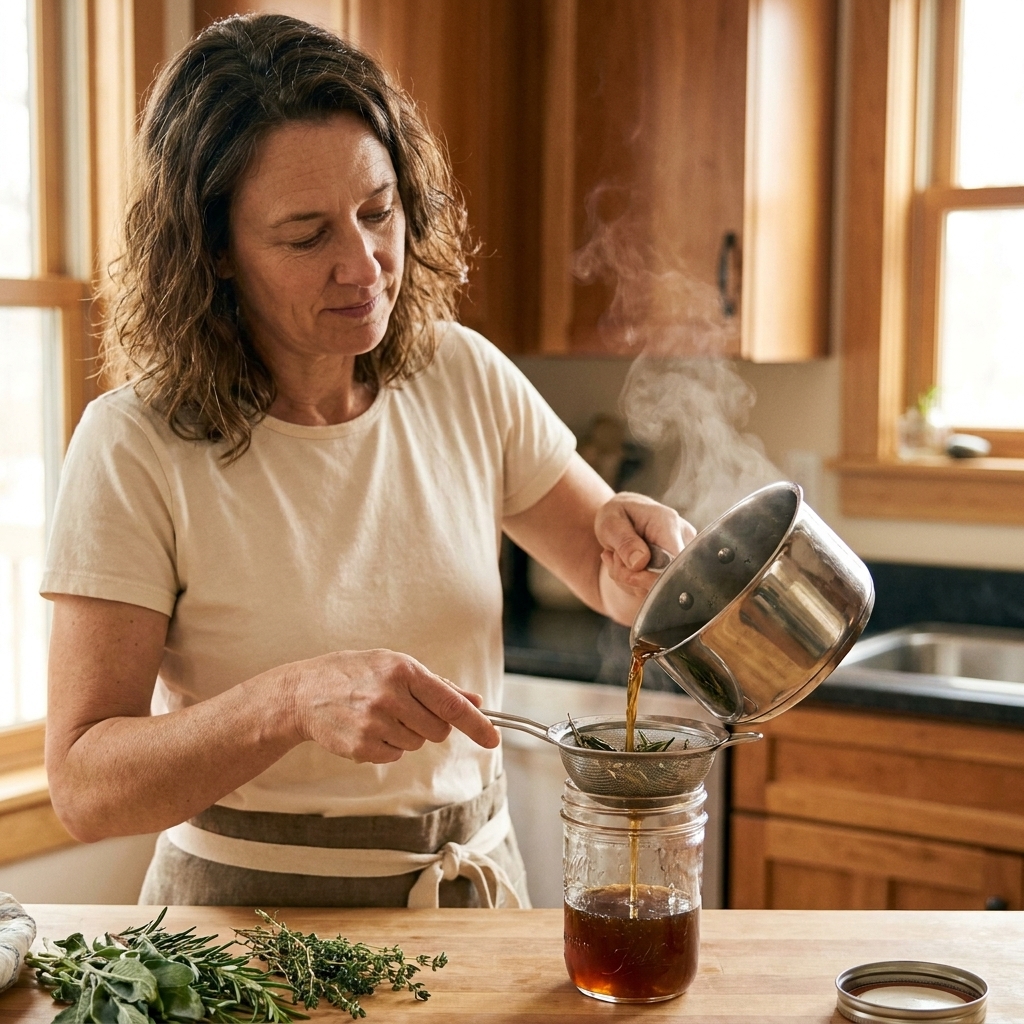
- Strain. Pour through a fine-mesh strainer into a clean jar. If you want a very clear syrup, strain a second time through a clean coffee filter, but know it will take longer.
- Cool and store. Cool to room temperature, then refrigerate.
Steeping times
- Rosemary: 20 to 45 minutes (strong, piney oils need time)
- Thyme: 20 to 40 minutes
- Mint: 10 to 20 minutes (too long can taste grassy)
- Basil: 5 to 15 minutes (quick, or it can turn peppery or dark)
Rosemary syrup
Rosemary syrup is bold and evergreen-y in the best way. It is the one I reach for when I want a cozy, wintry note in cocktails or a surprising herbal twist in fruit desserts.
Ingredients
- 1 cup sugar
- 1 cup water
- 3 to 4 large rosemary sprigs (about 20 to 30 grams)
Method
- Dissolve sugar in water over medium heat, then remove from heat.
- Lightly bruise rosemary sprigs and add to the hot syrup.
- Cover and steep 20 to 45 minutes, tasting at 20.
- Strain and cool, then refrigerate.
My favorite uses
- Grapefruit rosemary cocktail: 1.5 oz gin or vodka, 2 oz grapefruit juice, 0.5 oz rosemary syrup, splash of soda.
- Rosemary lemonade: Stir 1 to 2 tablespoons into a glass of lemonade with lots of ice.
- Poached pears: Add 2 to 4 tablespoons to poaching liquid with a strip of lemon peel.
Mint syrup
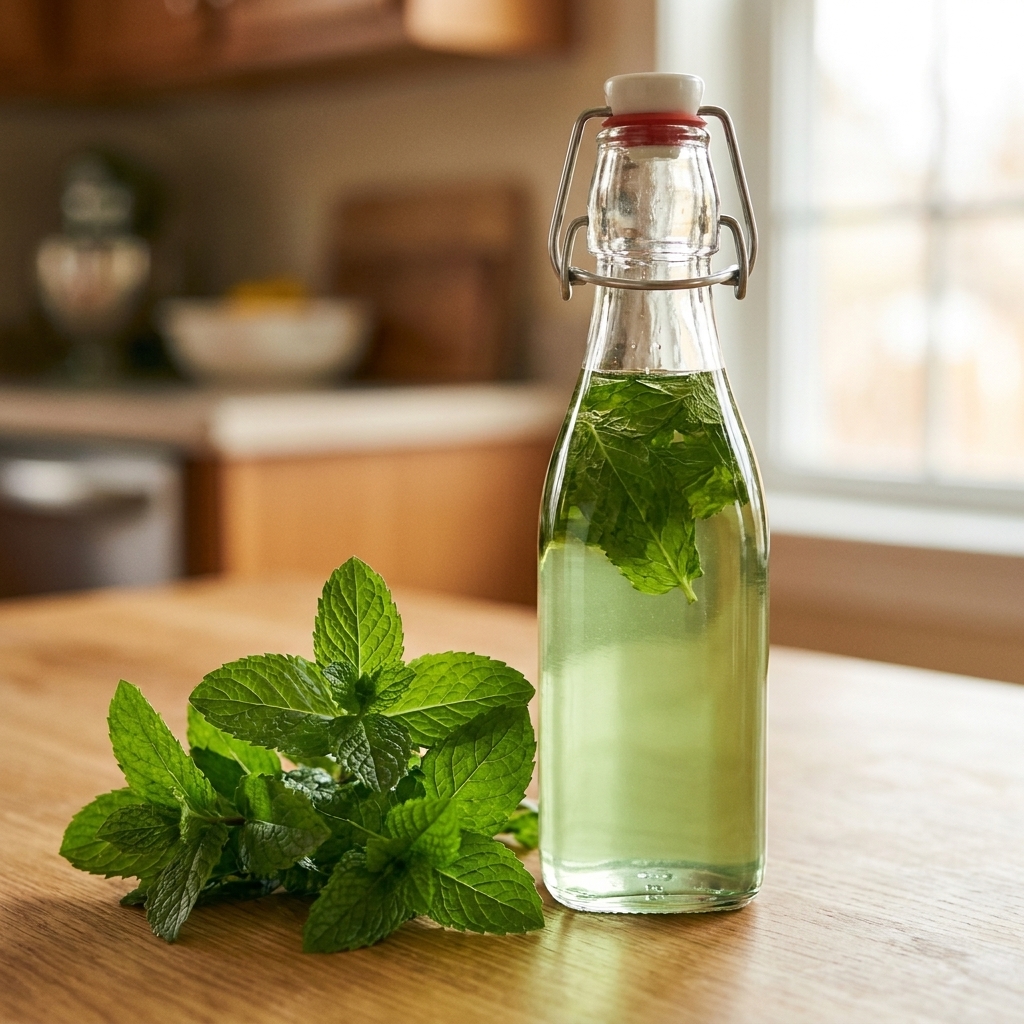
Mint syrup tastes like summer in a bottle. If you grow mint, you know it does not politely “produce.” It produces. This is one of the nicest ways to use big handfuls at once.
Ingredients
- 1 cup sugar
- 1 cup water
- 1 large handful mint (about 1 loosely packed cup leaves and tender stems)
Method
- Dissolve sugar in water, then remove from heat.
- Add mint, cover, and steep 10 to 20 minutes.
- Strain promptly when it tastes bright. Leaving mint too long can drift toward “mowed lawn.”
- Cool and refrigerate.
My favorite uses
- Mojito shortcut: 0.75 oz lime juice, 0.75 oz mint syrup, 2 oz white rum, top with soda. Add a mint sprig for aroma.
- Iced tea glow-up: Stir into black tea or green tea, add lemon.
- Fruit salad: Toss berries and melon with 1 to 2 tablespoons mint syrup and a squeeze of lime.
Basil syrup
Basil syrup is soft, sweet, and gently peppery. It plays especially well with strawberry, lemon, and anything creamy. Basil is delicate, so we steep it briefly and treat it kindly.
Ingredients
- 1 cup sugar
- 1 cup water
- 1 cup fresh basil leaves (tender stems are fine)
Method
- Dissolve sugar in water, then remove from heat.
- Add basil, cover, and steep 5 to 15 minutes.
- Strain as soon as the basil flavor is noticeable and lovely.
- Cool and refrigerate.
Keep it greener
Basil naturally darkens as it sits. Flavor-wise it is still wonderful, but if you want it lighter:
- Steep on the shorter end (5 to 8 minutes).
- Use very fresh leaves.
- Cool the syrup quickly by setting the saucepan in a larger bowl of ice water before bottling.
My favorite uses
- Strawberry basil fizz: 1 oz lemon juice, 0.75 oz basil syrup, 2 oz vodka or gin (optional), top with sparkling water.
- Whipped cream: Add 1 to 2 teaspoons basil syrup to softly whipped cream for berries.
- Vanilla ice cream: Drizzle a teaspoon over a scoop and add sliced strawberries.
Thyme syrup
Thyme syrup is quietly elegant. It is not as loud as rosemary, but it brings a gentle savory note that makes citrus, stone fruit, and honey-forward desserts taste more “grown up,” in a very friendly way.
Ingredients
- 1 cup sugar
- 1 cup water
- 10 to 15 thyme sprigs (about 1 loosely packed cup)
Method
- Dissolve sugar in water, then remove from heat.
- Add thyme (lightly bruise first), cover, and steep 20 to 40 minutes.
- Strain, cool, and refrigerate.
My favorite uses
- Thyme bee’s knees: 2 oz gin, 0.75 oz lemon juice, 0.5 oz thyme syrup. Shake with ice.
- Peach and thyme: Spoon over sliced peaches, then top with yogurt or mascarpone.
- Simple cake soak: Brush a tablespoon over warm pound cake before serving with berries.
Straining and clarity
For most home uses, a fine-mesh strainer is perfect. If you plan to use a syrup in cocktails where you want it crystal clear, strain twice.
- Fine-mesh strainer: Fast and easy, leaves a tiny bit of herb sediment sometimes.
- Coffee filter: Very clear syrup, but slow. Pour gently and be patient.
If your syrup looks cloudy right after straining, it often clears as it chills. A little cloudiness is normal, especially with mint and basil.
Safe storage
Simple syrup is friendly, but it is still a fresh homemade ingredient. Herb syrups can be a bit more finicky than plain syrup because the plant material adds tiny particles and can shorten shelf life. Keep it cold and keep it clean.
Storage basics
- Use a clean, fully dry bottle or jar. A run through the dishwasher on a hot cycle is great, or wash in hot soapy water and let it air-dry completely. If you want to be extra careful, rinse with boiling water and air-dry.
- Refrigerate. Store syrup in the fridge, tightly covered.
- Do not leave herbs in the bottle. It looks pretty, but it shortens shelf life and can introduce off flavors faster.
- Never skim mold. If you see any mold, discard the whole batch.
How long it lasts
- 1:1 syrup: About 1 to 2 weeks in the fridge if handled cleanly.
- 2:1 rich syrup: About 3 to 4 weeks, and sometimes a bit longer.
Trust your senses. If you see mold, smell fermentation (yeasty or boozy when it should not), or notice fizzing, toss it and make a fresh batch. Also note that syrups made with fruit, ginger, or anything juicy tend to spoil sooner.
Freezing
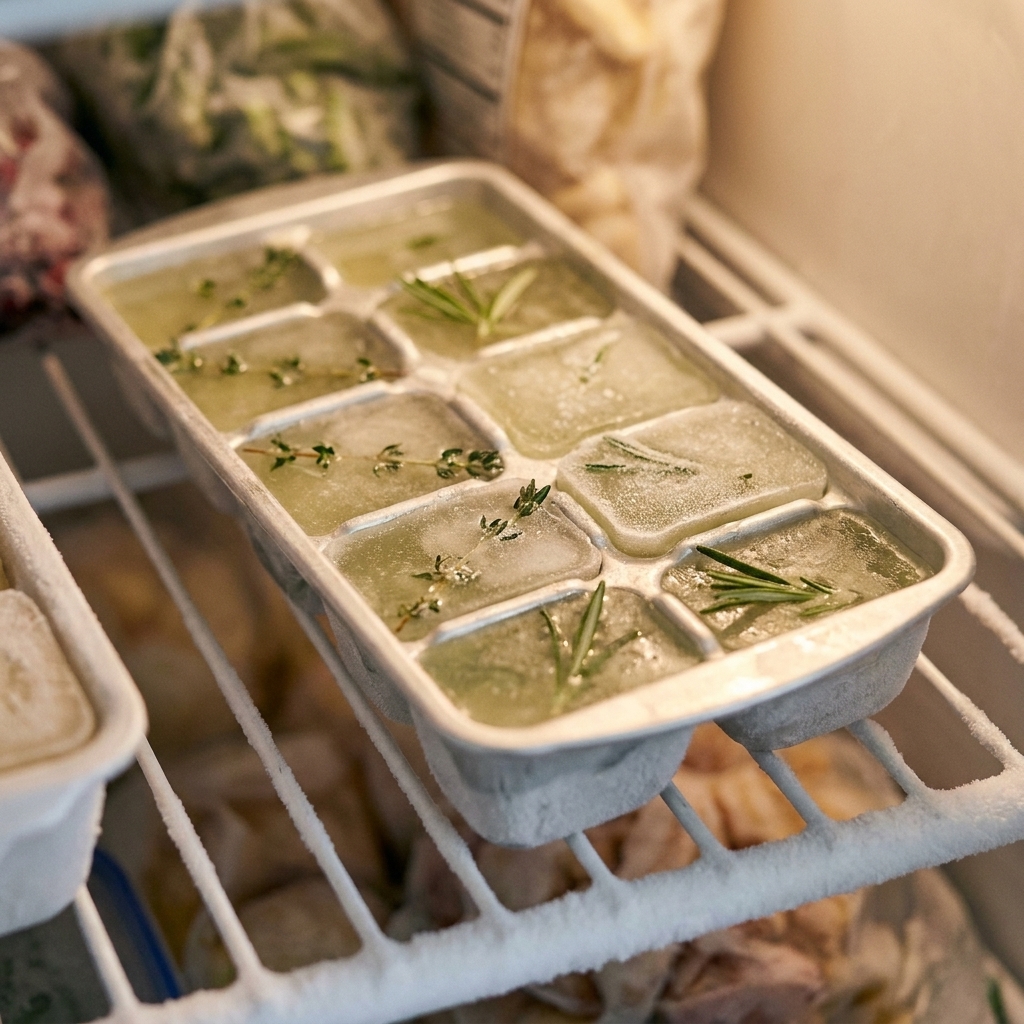
Yes, and it is a great trick if you have a lot of herbs all at once. Freeze in an ice cube tray, then pop the cubes into a freezer bag. For best flavor, use within 3 months.
Cocktail ideas
If you are new to syrup in drinks, start small. You can always add more sweetness, but you cannot take it out.
Quick measuring guide
- For a single cocktail: Start with 1/4 oz to 1/2 oz syrup.
- For lemonade or iced tea: Start with 1 tablespoon per glass.
- For sparkling water: Start with 2 teaspoons per glass, then adjust.
Easy pairings
- Rosemary: gin, vodka, grapefruit, lemon, cranberry
- Mint: rum, bourbon, lime, cucumber, watermelon
- Basil: vodka, gin, strawberry, lemon, peach
- Thyme: gin, vodka, lemon, pear, honey flavors
One little neighborly note: herbs can be powerful in a shaken drink. Taste as you go, especially with rosemary and thyme.
Dessert ideas
Desserts love herbal syrups because they add aroma without changing texture much. You can keep your cake recipe the same and still make it taste like something you would order at a cozy cafe.
My favorite ways to use them
- Brush on cakes: Spoon or brush a thin layer onto warm loaf cake, sponge cake, or cupcakes.
- Fruit maceration: Toss berries, sliced peaches, or citrus segments with a little syrup and let sit 10 minutes.
- Whipped cream and frosting: Add a teaspoon at a time to whipped cream or buttercream, tasting as you go.
- Panna cotta and custards: Drizzle on top just before serving.
- Sorbet shortcut: Stir syrup into store-bought lemon sorbet to soften and perfume it.
Troubleshooting
It tastes bitter or too strong
Likely over-steeped, especially basil or mint. Next time, steep off the heat and start tasting earlier. If it is only slightly intense, dilute with a little plain simple syrup or warm water.
It crystallized
This can happen if sugar concentration is high, if not all the sugar dissolved, or if the syrup is stored very cold. Warm it gently and stir to re-dissolve. Crystallization is more common with rich (2:1) syrup. For next time, make sure the sugar fully dissolves before steeping and avoid stirring once it has cooled.
It looks dark
Normal for basil and sometimes mint. Flavor is the real test. If it smells fresh and tastes good, it is fine.
It tastes flat
Use more herb, bruise woody herbs, and steep a bit longer. Also make sure the syrup is hot enough to extract oils before steeping.
Harvesting note
When I am harvesting for infused syrups, I aim for herbs at their most fragrant moment, usually late morning after the dew dries. For basil and mint, I snip just above a leaf node so the plant branches and gets bushier. For rosemary and thyme, I take a few longer sprigs from different parts of the plant, never more than about a third at once. That way, the syrup feels like a treat and the plant keeps on giving.
If you make a batch, I would love for you to experiment with it like you would in the garden. Start with a small pour, taste, adjust, and let your kitchen teach you what you like.