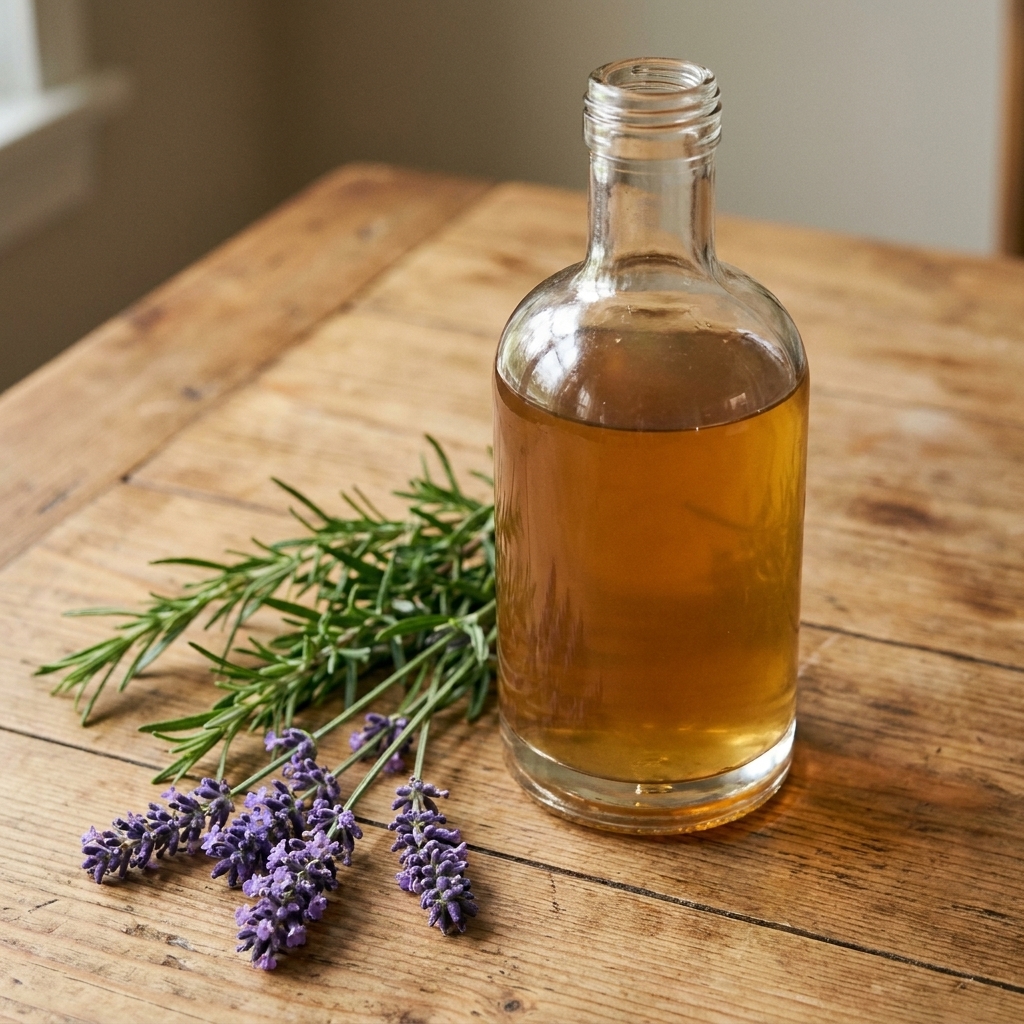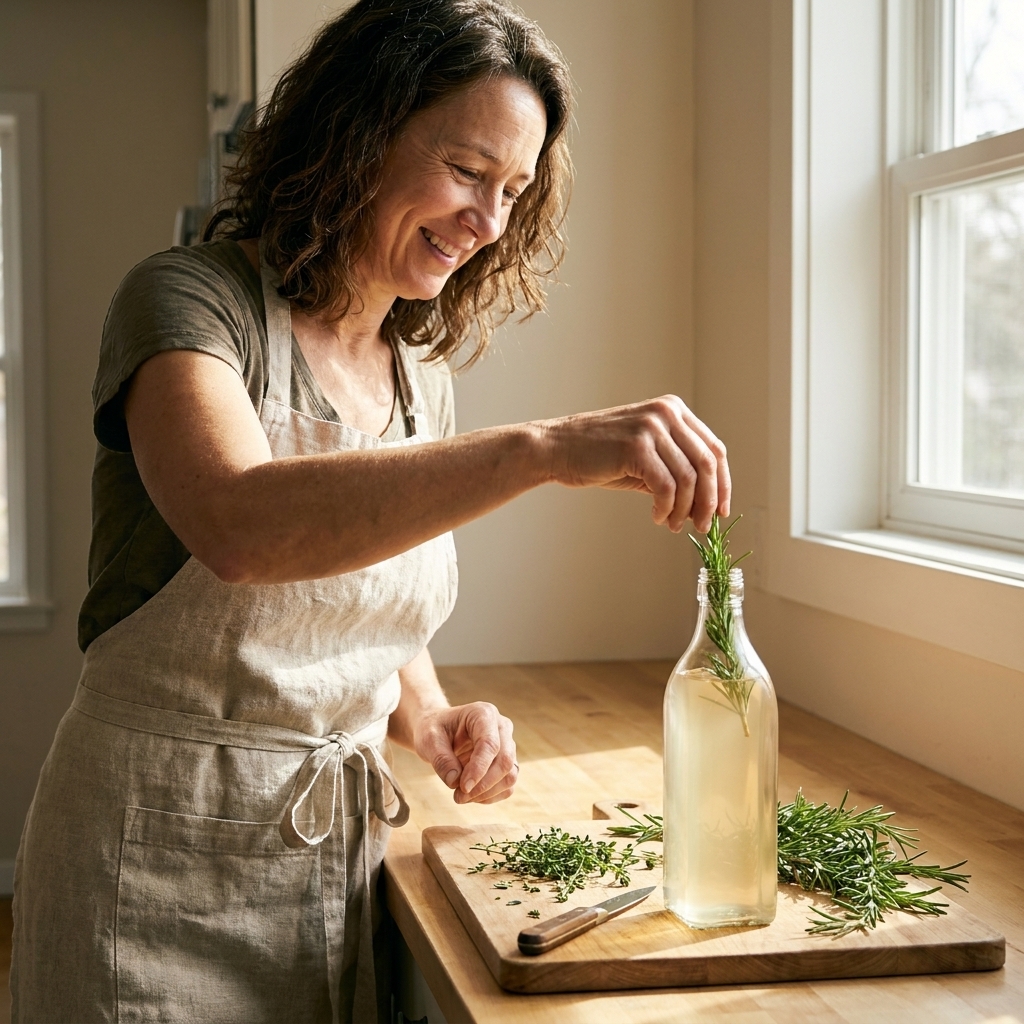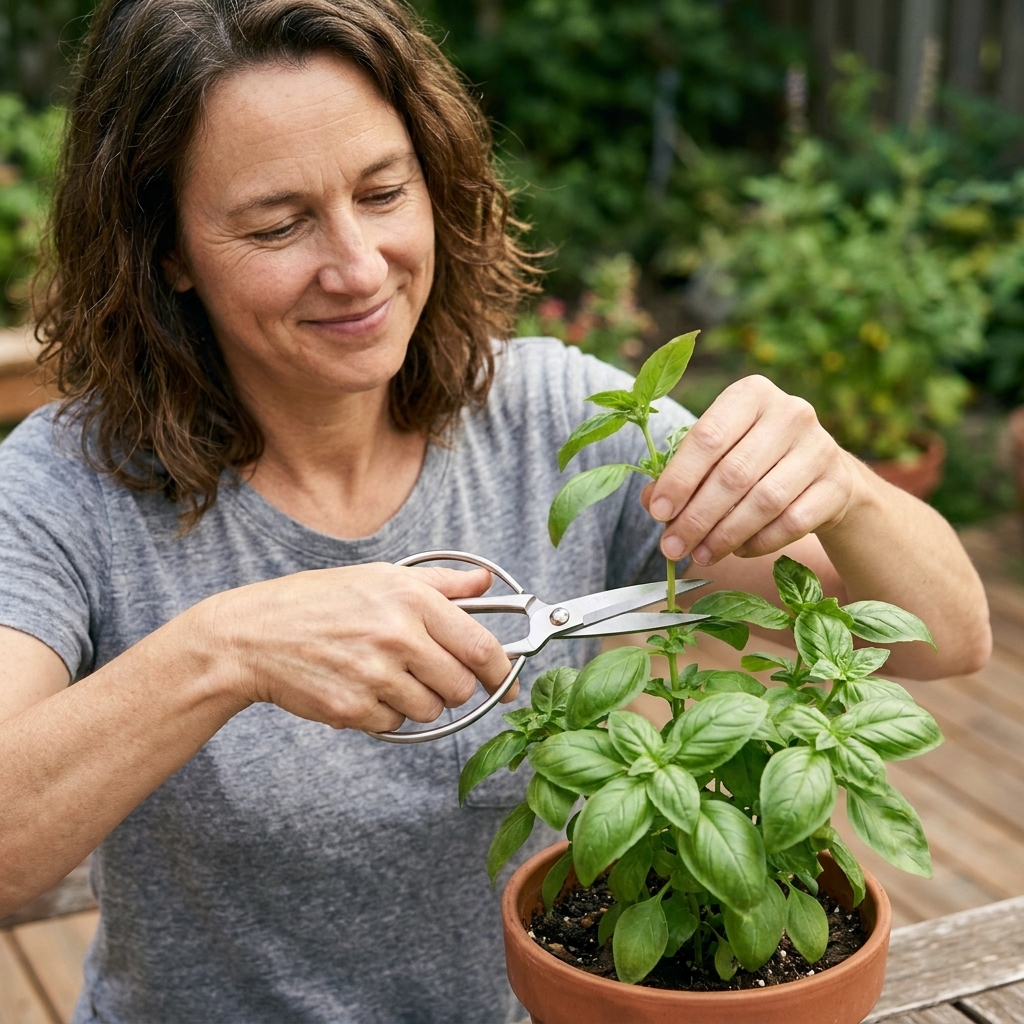
The older I get, the harder it is for me to toss anything from the herb garden that still has good life in it. Tender basil leaves go into pesto, of course, but the woody stems of rosemary, thyme, lavender, and sage used to head straight for the compost. Then I started steeping them in vinegar, and suddenly my “scraps” became the most-used cleaner under my sink.
Herb-infused vinegar is simple: you let vinegar pull aromatic oils out of tough stems and leaves, creating a natural cleaning concentrate that smells bright and herbal instead of like a science lab. From there, you dilute it into everyday spray bottles for countertops, glass, and sink wipe-downs.
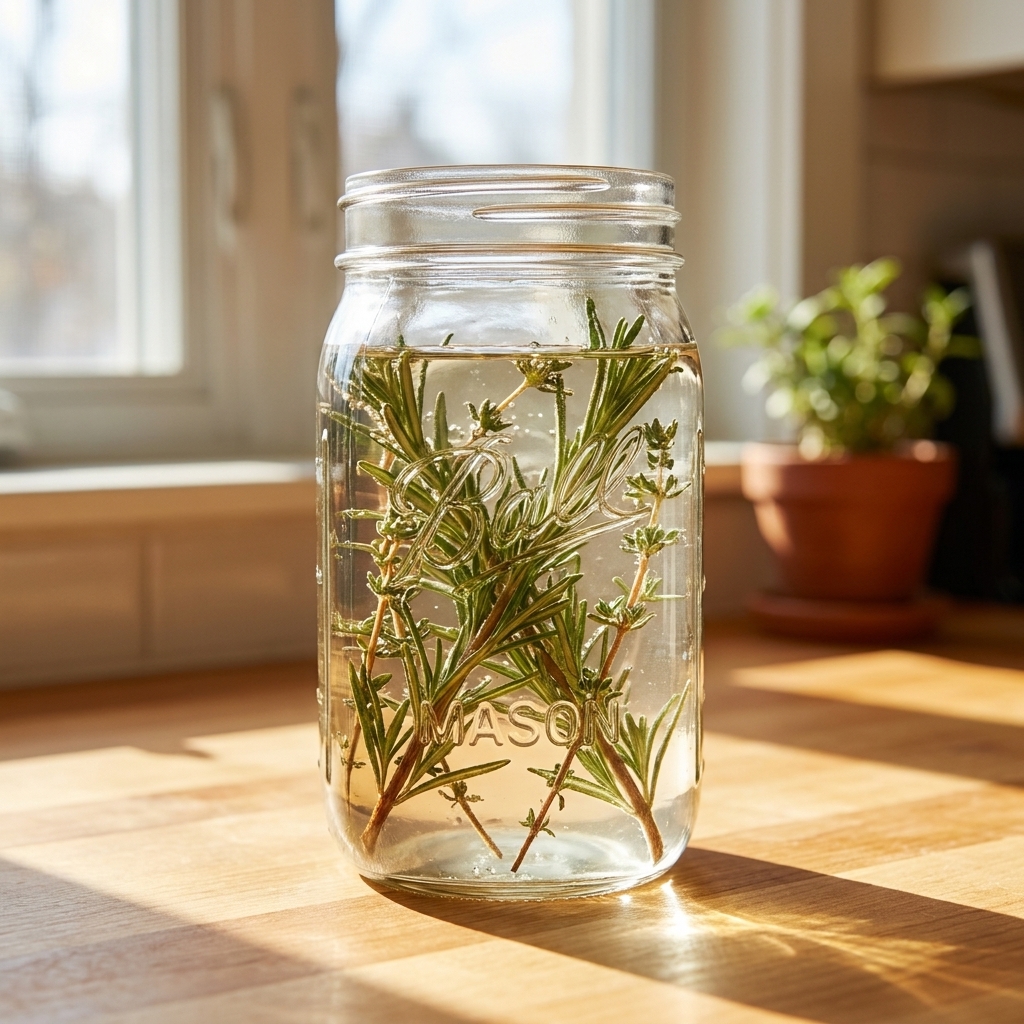
I will walk you through the whole process, including which herbs work best, how long to infuse, how to strain and store safely, and exactly how I mix my go-to sprays.
Why woody stems work
Woody herbs are packed with essential oils. Those oils are what you smell when you pinch rosemary between your fingers or brush past lavender on a warm afternoon. Vinegar is great at capturing that scent and turning it into something useful.
- You are using what you already grew. Stems and slightly tired sprigs still have plenty of aroma.
- White vinegar is naturally good at dissolving mineral buildup and soap scum. It is especially helpful around sinks and faucets.
- Infusing improves the smell. Plain vinegar is effective, but the scent can linger. Herb infusion softens it and leaves a clean garden note.
- It helps you keep a tidy “herb cycle.” Grow, harvest, cook, then repurpose the leftovers before composting.
Important note: Vinegar is an excellent everyday cleaner, but it is not a hospital-grade disinfectant. I use it for routine cleaning, grease and grime, and hard water marks, not as a replacement for disinfecting after raw meat or illness.
Best herbs to infuse
You can infuse almost any herb, but some hold up better and give a stronger, more “cleaning” scent. For this project, I lean heavily on sturdy stems that still smell great even after cooking.
My favorites
- Rosemary: Piney and sharp, very “fresh linen” feeling.
- Thyme: Earthy and clean, blends well with almost anything.
- Lavender: Floral and calming. Use a lighter hand so it does not become perfumey.
- Sage: Warm, resinous, and great for kitchen odors.
- Mint: Bright and cooling. Lovely in bathrooms, but avoid using on porous stone where any acid cleaner is a no.
Good mixers
- Lemon balm: Soft lemony note, gentler than citrus peel.
- Lemongrass: Crisp and spa-like if you grow it.
- Bay leaves: Subtle, slightly sweet, adds depth.
What I usually skip
- Delicate leafy herbs (parsley, cilantro, dill): They can smell a bit muddy in vinegar and do not contribute much lasting aroma.
- Very resinous herbs in huge amounts: A little goes a long way. You can always steep longer rather than cramming the jar.
If your herbs are from the garden, give them a quick rinse and a thorough pat dry. If they are from the grocery store, rinse well to remove any residue, then dry completely.
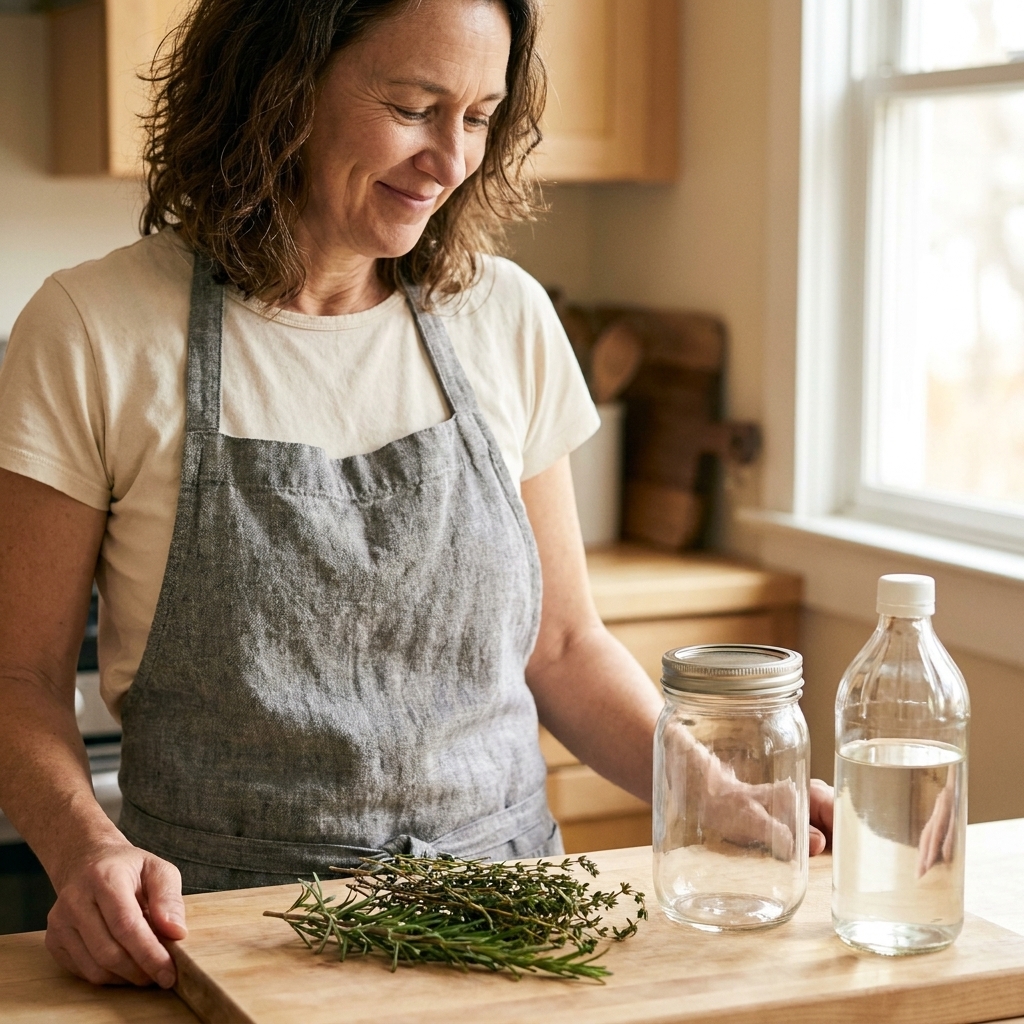
Make the concentrate
This is the base that everything else comes from. Once you have a jar infusing on a shelf, you will find yourself tucking stems into it all week like a little kitchen habit.
What you need
- A clean glass jar with a non-reactive lid (or place parchment under a metal lid)
- Woody herb stems and sprigs, lightly crushed
- White distilled vinegar (5% acidity is standard)
- Fine mesh strainer or cheesecloth
- A funnel and a clean bottle for storage
Step-by-step
- Fill the jar loosely. Add herb stems until the jar is about 1/2 to 2/3 full. Do not pack them tight. You want vinegar to move freely around the plant material.
- Bruise the herbs. A quick pinch and twist of rosemary or thyme wakes up the oils. You do not need to chop everything, just gently crush.
- Cover completely with vinegar. Make sure all herbs are submerged to prevent mold.
- Seal and label. Write the herb blend and the date. Your future self will thank you.
- Infuse 2 to 4 weeks. Store in a cool, dark cabinet. Shake the jar every few days if you remember.
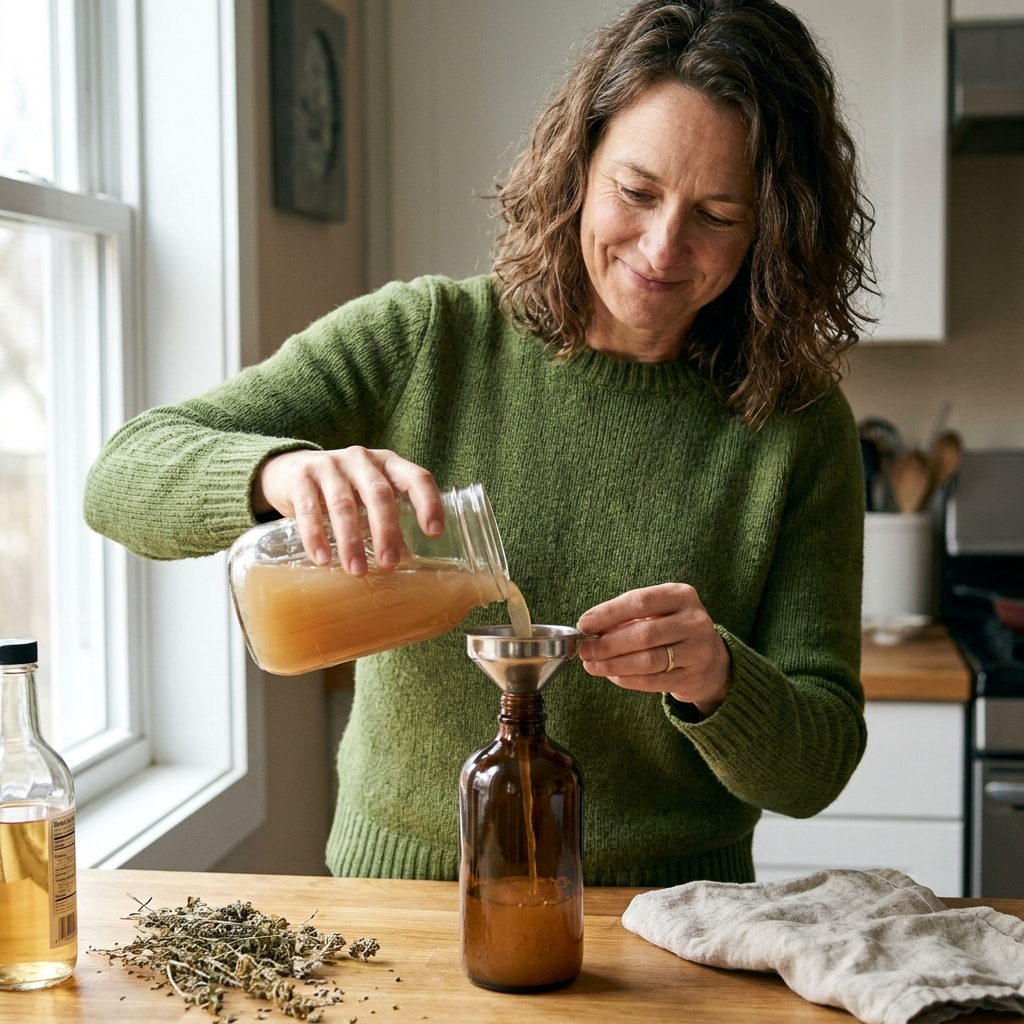
- Strain. When it smells strong and pleasant, strain through a fine mesh sieve. For a very clear concentrate, strain twice.
- Bottle and store. Keep the concentrate in a tightly closed glass bottle in a dark cabinet.
How long does it last? Properly strained and stored, I comfortably use it for several months. If you see cloudiness that is new, surface growth, or an “off” smell, toss it and start fresh.
Speed option: If you need it sooner, you can infuse for 3 to 7 days and use it lightly scented, but the deeper herbal smell really develops around the two-week mark.
My spray recipes
Once you have the concentrate, the sprays are quick. I always label the bottle with the ingredients and where I use it.
1) All-purpose spray
- 1 cup herb-infused vinegar
- 1 cup water
- Optional: 5 to 10 drops essential oil (rosemary or lemon works well, but it is not required)
Use for: sealed countertops, stovetops, cabinet fronts, fridge handles, trash can exteriors, and quick sink wipe-downs.
How I use it: Spray, let it sit 30 to 60 seconds, then wipe with a damp cloth for a streak-free finish.
2) Kitchen degreaser
- 1 cup herb-infused vinegar
- 1 cup warm water
- 3 to 5 drops liquid dish soap (a standard synthetic dish detergent)
Use for: greasy fingerprints near the stove, microwave splatters, and sticky cabinet handles.
Mixing tip: Add the dish soap last and swirl gently. Do not shake hard or you will end up with a bottle of bubbles.
Why dish soap, not Castile soap: True soap (like Castile) does not play nicely with vinegar. The acid can break the soap and leave curds or a greasy film. A few drops of regular dish detergent gives you that extra degreasing help without the mess.
3) Bathroom shine spray
- 1 1/2 cups herb-infused vinegar
- 1/2 cup water
Use for: shower doors, tub surrounds, faucet bases, and tile (as long as the tile and grout are not acid-sensitive).
How I use it: Spray, wait 2 to 5 minutes, then scrub with a soft brush and rinse well.
4) Glass and mirror spray
- 1/2 cup herb-infused vinegar
- 2 cups water
Use for: windows, mirrors, glass tables.
My streak trick: Wipe with a clean microfiber cloth and do a final buff with a dry corner.
Where not to use it
Vinegar is acidic, which is why it works so well on mineral deposits. That acidity is also why there are a few surfaces where I never use it.
- Natural stone: marble, granite, travertine, limestone. Vinegar can etch and dull the finish.
- Unsealed wood: it can raise the grain and damage the finish.
- Waxed surfaces: vinegar can strip wax.
- Cast iron: it can encourage rust if not rinsed and dried thoroughly.
- Some rubber gaskets and delicate finishes: occasional contact is usually fine, but repeated soaking can shorten life.
If you are unsure, spot test in an inconspicuous area and wait until it dries fully.
Herb blends I use
If you are staring at a tangle of stems after pruning day, here are a few blends that smell especially clean.
- Rosemary + thyme: my classic “kitchen clean” concentrate.
- Lavender + rosemary: bright but soft, perfect for entryway wipe-downs and bathroom counters.
- Mint + lemon balm: crisp and uplifting, great for the guest bathroom.
- Sage + rosemary: warm and grounding, my favorite in winter when the house feels closed up.
One gentle rule: let one herb be the leader (about 70%) and the others play backup. That keeps the scent from getting muddled.
Harvesting tips
This is a cleaning project, yes, but it starts in the garden. The nicest part is that you can gather stems while doing healthy pruning.
- Rosemary and lavender: snip just above a leaf node and avoid cutting into old bare wood unless you know your variety can handle it.
- Thyme: shear lightly and often. The stems you remove are perfect for infusing.
- Sage: take a few longer stems from the outside to encourage bushiness.
- Mint: cut aggressively. It will thank you by growing more.
And if your herbs are flowering, do not worry. Flowering stems still infuse beautifully, especially lavender and thyme.
Storage and labels
I am a big believer in making the “good habit” the easy habit. If your cleaning supplies feel fussy, you will not reach for them.
- Use glass spray bottles if you can, especially for stronger vinegar mixes. Amber glass helps protect scent over time.
- Label clearly: “Rosemary Vinegar 1:1” and the date mixed.
- Store away from heat and sunlight to keep the scent fresh.
- Reuse what you already have: old vinegar bottles make great concentrate storage once cleaned well.
Troubleshooting
My vinegar smells too sharp
Let it infuse longer, or blend in a second round of fresh herbs for a week. You can also dilute more heavily for everyday use, like 1 part infused vinegar to 2 parts water.
The infusion smells weak
Your herbs may have been older and dried out, or the jar was not filled enough. Add more stems and steep another 1 to 2 weeks.
There is cloudiness or bits floating
Strain again through a finer filter. If you see any surface growth or smell anything unpleasant, discard.
Can I add citrus peels?
You can, but I keep citrus separate. Citrus peels can add oils that sometimes feel sticky on certain surfaces if overdone. If you do add peel, use a small amount, strain well, and use within a couple months.
Quick safety reminders
- Never mix vinegar with bleach or products that contain bleach. That combination can create dangerous fumes.
- Keep sprays away from children and pets like any household cleaner.
- Do not use on stone or delicate finishes as noted above.
- Rinse food-contact surfaces after cleaning, especially cutting boards and counters where you prep ingredients.
Use the whole harvest
There is something deeply satisfying about pruning rosemary, cooking with the tender tips, then dropping the sturdy stems into a jar of vinegar that will clean your kitchen later. It makes the herb garden feel like it belongs to the whole house, not just dinner.
If you try an infusion blend you love, keep a note in your garden journal. The best “recipes” are the ones that come from your own hands, your own plants, and the way your home likes to smell.